Everything in CI/CD & Automation, page 10
Kustomize: Template-Free Kubernetes Configs
Kustomize manages environment-specific Kubernetes configs by layering patches on a base YAML, avoiding complex templating. Use it to tweak deployments for dev, staging, or prod. The footgun: the kubectl version can lag, causing unexpected behavior.
eBPF: Run Sandboxed Programs in the Linux Kernel
eBPF lets you run sandboxed programs directly in the Linux kernel, like adding programmable event handlers to your OS. This enables high-performance networking, security, and observability without changing kernel code.
Chaos Engineering: Break Systems to Build Confidence
Chaos Engineering is like a fire drill for your software: you intentionally break things in a controlled way to find weaknesses. It's used in distributed systems to test resilience against server failures or network latency.
Analyzing Flaky Tests
A flaky test passes and fails randomly without code changes, eroding trust in your CI pipeline. It often points to race conditions or external dependencies. The biggest footgun is ignoring them, as this teaches developers to dismiss real failures.
Pipeline Analytics: Measuring Your CI/CD Health
Pipeline analytics is a fitness tracker for your CI/CD, revealing if builds are getting slower or less reliable. Use it to spot bottlenecks, track failure rates, and compare branches. The footgun is ignoring the P95 duration, which hides worst-case outliers.

DORA Metrics: Vital Signs for Your CI/CD Pipeline
DORA metrics are four vital signs for your software delivery process, balancing speed and stability. They benchmark DevOps performance from commit to production. The main footgun is optimizing for speed while ignoring stability, leading to frequent outages.
Synthetic Monitoring: Probing Your App Like a Robot User
Synthetic monitoring is like having a robot user click through your app's critical paths 24/7 to catch issues before real users do. It tests key flows like login or checkout, providing a consistent baseline for performance.
Real User Monitoring (RUM): See Your App Through Users' Eyes
Real User Monitoring (RUM) is like a flight recorder for your app, capturing real user clicks, load times, and errors. It's used to measure actual performance and diagnose slowdowns, revealing issues that lab testing misses.
Service Level Objective (SLO): A Measurable Promise
An SLO is a precise, measurable promise about your service's performance, like "99.9% of requests will succeed." It's the internal engineering target that backs up a customer-facing SLA. The footgun is setting a 100% SLO, which leaves no room for failure.
Distributed Tracing: Following a Request Across Microservices
Distributed tracing is like a passport for a request, stamped at every service it visits. It's essential for debugging microservices where one click can trigger many calls. The footgun is trying to debug without it, piecing together isolated logs.
Bug Tracking Systems: The Central Log for Software Defects
A bug tracker is the central log for a project's known defects. It’s used in software development to keep track of reported bugs, coordinate fixes, and manage the lifecycle of an issue. The footgun is undervaluing the quality of bug reports.
Structured Logging: Logs as Data, Not Strings
Treat logs as structured data (like JSON), not just plain text. This makes them machine-readable and queryable, letting you filter, search, and create dashboards on specific fields (e.g., user_id, trace_id).
Observability: Seeing Inside Your System
Observability is the ability to ask new questions about your system's health without shipping new code. It's crucial for debugging distributed systems and is the first step in triaging an outage.
CI/CD and the Principle of Least Privilege
Treat your CI/CD pipeline like a temporary worker, not a superuser. Grant it only the minimum permissions needed for its specific task, like building code or deploying to staging.
RASP: An Immune System for Your Application
Think of RASP as an application's immune system, using runtime instrumentation to block attacks from within. It provides real-time protection against threats that static analysis or network firewalls miss.

The Vulnerability Management Lifecycle: A Continuous Loop
Think of vulnerability management not as a one-off task, but a continuous cycle of finding, prioritizing, fixing, and verifying security weaknesses. This process is crucial for securing any system by systematically reducing its attack surface.
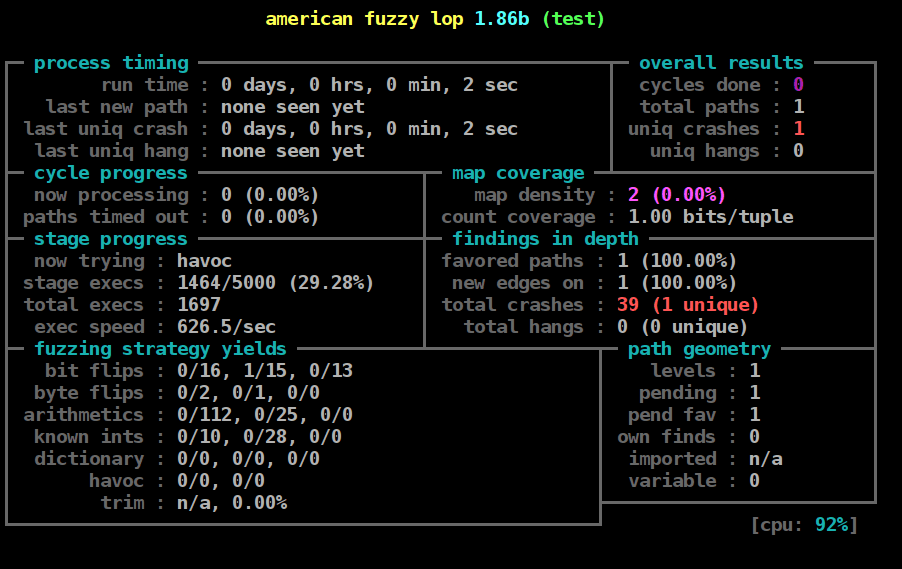
Fuzz Testing: Finding Bugs with Random, Invalid Inputs
Fuzz testing is automated chaos engineering for your inputs. It feeds your program semi-random, invalid data to uncover crashes and security flaws, especially in code that parses files or network protocols.
Software Composition Analysis (SCA): Know Your Dependencies
Software Composition Analysis (SCA) is like checking the ingredient list for your software. It scans the open-source libraries you use for known vulnerabilities, license issues, and outdated versions.
SAST: A Security Spellchecker for Your Code
SAST is like a spellchecker for security, scanning your source code for vulnerabilities before it ever runs. It integrates into your CI/CD pipeline to give feedback on every commit. The main footgun is noise: false positives can overwhelm developers.
Threat Modeling: Thinking Like an Attacker
Threat modeling is thinking like an attacker to find security flaws before they're exploited. It systematically analyzes your system to prioritize defenses against the most likely threats. The footgun is treating it as a one-off task, not a continuous process.
We are hiring for this. Every open role lists the topics its interview covers, so you can prepare for the real thing rather than guessing.
See open roles