Intermediate everything in Content & Copywriting, page 3
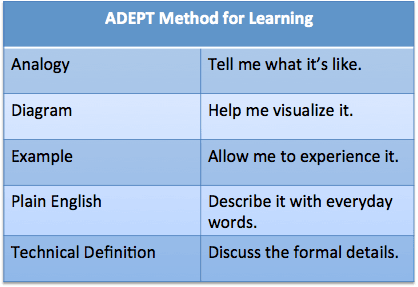
How would you script a concurrency analogy for junior developers?
This tests scaffolding hard ideas via ADEPT. A strong answer sequences analogy, diagram, example, plain-English reasoning, and technical notation while flagging where metaphor breaks. A red flag is treating the analogy as proof or ignoring its failure modes.

What techniques make complex technical topics understandable in audio-only podcasts?
Great answers cite relatable analogies, vocal signposting, and narrative framing without visual references.

Describe architecture for live UI text updates without deployment
Structured API, webhook sync, client or edge rendering with cache versioning, and rollback.

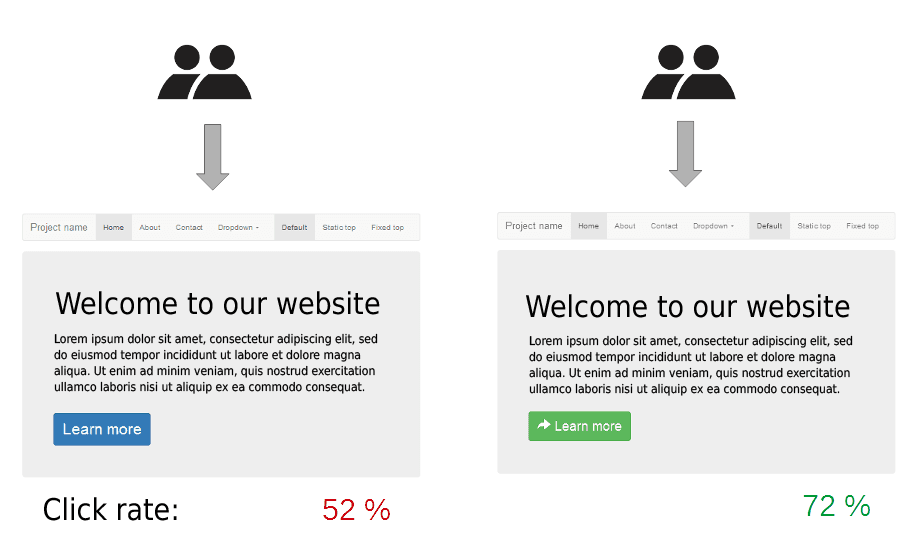
How do you implement a CTA A/B test and attribute conversions?
This tests experiment architecture from bucketing to attribution. A strong answer covers: stable user bucketing, server or client-side rendering, and conversion events tagged with experiment and variant IDs.
How do you attribute a delayed direct conversion to original ad copy?
Persist copy IDs in first-party cookies at landing, read at conversion to fire server-side events in a 90-day window.
Outline the architecture of a Dynamic Creative Optimization system
Tests distributed system design for combinatorial ad optimization. A strong answer maps a creative asset service, combination engine, real-time ad server with A/B testing, performance feedback pipeline, and campaign config UI.
Architect email subject line A/B testing for a large user base
Tests distributed systems and statistical rigor. Covers deterministic user bucketing, isolated variant delivery, deduplicated tracking, and pre-powered significance. Red flag: daily re-randomization or using open rate without confidence intervals.
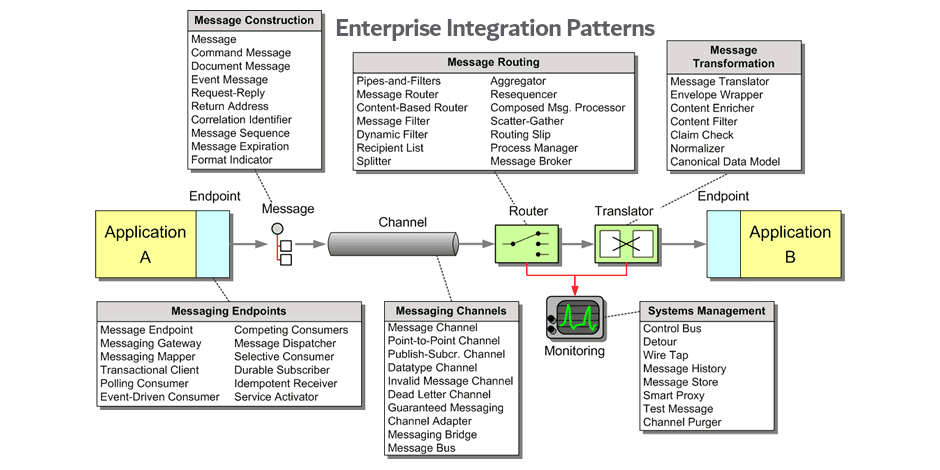
How would you design an idempotent order confirmation email sender?
Tests preventing duplicate side effects in distributed systems. Strong answers use deduplication keys, idempotency windows, and distinguish client retries from broker redelivery. Red flag: using a read-before-write check without unique constraints or TTLs.
How does email open and click tracking work?
This tests beacon and redirect mechanics plus event schema design. A strong answer covers a 1x1 pixel fetched on open, a redirect link that logs then forwards, and data like IP, timestamp, and UA. A red flag is omitting image blocking or privacy implications.
How would you architect a related articles feature?
Start with tag overlap for speed; move to embeddings with ANN for semantics; compare latency, cost, and coverage.
Design a system to A/B test headlines for a single article URL
Hash users for sticky variants; store separately; emit events; compute CTR.

Outline a strategy to improve LCP and CLS for blog article pages
Fix LCP with server speed, resource hints, critical CSS; fix CLS with explicit sizes and font-display.
How would you design an auto-generated sitemap.xml for a large blog?
This tests scalable SEO automation. A strong answer proposes an async pipeline, sitemap index files past 50,000 URLs, and loc, lastmod, and priority. Red flag: manual edits, static files in git, or ignoring the 50,000 URL limit.

How would you track multiple CTAs to the same conversion goal?
Tests granular event attribution beyond aggregate counts. A strong answer uses unique data attributes per CTA, routes clicks through GTM into GA4 events, and ties them to the conversion. Red flag: relying only on destination URLs, which fails if paths match.
Explain a conversion pixel, click-to-signup flow, and failure points
Tests cross-session attribution state. Strong answers trace the GCLID from URL parameter to cookie or local storage, then to the conversion tag, plus list failure modes like ITP, ad blockers, and race conditions.
A/B test copy in a native app without app store releases
Tests native release friction versus web. Strong answers cite app store review, binary caching, and stale config; then remote fetch, local defaults, and user targeting. A red flag is assuming updates are instant like the web.

How would you architect personalized email and coupon delivery at scale?
This tests decoupled rendering and atomic coupon reservation. A strong answer uses template rendering, atomic coupon reservation, an idempotent queue, and batched ESP delivery. Red flag: generating coupons during SMTP without reservation risks overspend.
Design a content gap tool: data sources and core logic
Tests system design for SEO pipelines. Strong answers cite APIs (Ahrefs, Semrush, GSC), explain normalization, and frame logic as a left-anti-join on keyword plus geo and device filtered by rank. Red flag: dismissing API cost, rate limits, and freshness.
How would you use NLP to analyze top articles for semantic themes?
This tests practical NLP pipeline design for SEO. A strong answer covers preprocessing, NER with spaCy or BERT, topic modeling with LDA or BERTopic, and semantic similarity via embeddings.
Design a system to suggest internal links for new articles
This tests large-scale retrieval design. A strong answer uses an offline embedding index for candidate retrieval and a real-time ranker scoring topical overlap and anchor fit. Red flag: scanning the full corpus per request or omitting index architecture.
We are hiring for this. Every open role lists the topics its interview covers, so you can prepare for the real thing rather than guessing.
See open roles