Interview questions in Design & UX, page 5
Architecting global and local theming with context
A top-level provider supplies global tokens, nested providers merge local overrides, components read the nearest theme, often backed by CSS variables.
Data model for an editorial calendar
A content entity with publish_date and a status enum, a foreign key to authors, indexes on date and status.
Design a one-week lean research plan for a high-risk decision
This tests trading rigor for speed without losing decision signal. A strong answer matches the riskiest assumption to a fast method, sequences generative and validation across five days, and defends bias.
How do you build a responsive card with Auto Layout?
Tests nested Auto Layout and resizing logic. Answer: vertical hug frame, nested vertical text stack with hug height, image set to fill width, plus padding. Red flag: fixed-height text or absolute positioning breaks responsiveness.
Headless components and a headless Combobox
A headless component owns state, logic, and accessibility but renders no UI, exposing state and prop-getters so consumers supply markup.
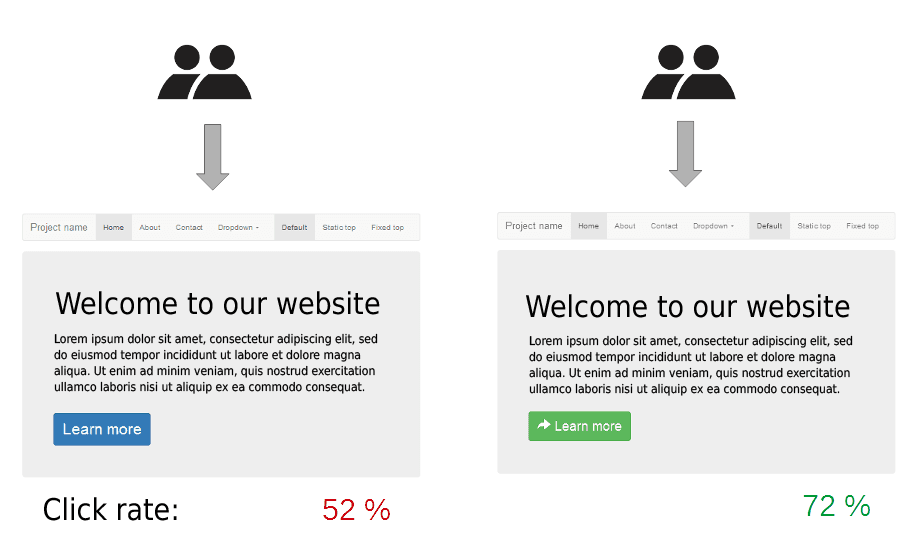
How would you structure a backend architecture A/B test and define metrics?
This tests causal inference rigor for infrastructure changes. A strong answer covers sticky user routing, controlling for geography and time, and paired primary metrics like P99 latency and error rate.
How do you pin a Close icon to a modal's top-right corner?
This tests Figma constraint knowledge for responsive resizing. A strong answer sets horizontal to Right and vertical to Top so the icon pins to the corner as the modal resizes.
Design a content versioning system with history and revert
Versions table with article_id, version_num, content_snapshot, timestamp; APIs for createVersion, getHistory, restoreVersion.
Composing Input and Button into a SearchForm
Wrap Input and Button in a form, expose value/placeholder props, emit onSearch on submit, keep it controlled.

Design a screener survey to identify non-Feature X mobile users
Ask broad frequency first, use indirect disqualifiers for Feature X without naming it, add attention checks, and over-recruit 7-8 to secure 5.
How would you structure Figma colors for light and dark themes?
Fluency with token layers and Figma's mode-aware raw values. Use aliased color variables for semantics, switch themes via variable modes, and apply variables to styles not relying on styles for modes. Suggesting styles handle theming instead of variables.

Design architecture for multi-channel article distribution from a single source of truth
Tests separation of content and presentation via headless CMS. Strong answers cite a central structured CMS, content API, channel-specific rendering layers, and webhook push. Red flag: manual duplication or direct database sharing without API abstraction.
Building a flexible Card with optional content
Use optional props or named slots for image, title, and text, conditionally render present ones, and prefer composition for ordering.
What two techniques mitigate professional-tester bias in screener design?
Swap guessable questions for behavioral ones about real tasks, and add exclusion criteria to block web-savvy professional testers.
How would you use Auto Layout for a button with optional icon?
This tests Figma Auto Layout for responsive components. Answer: apply horizontal auto layout, set fixed padding and spacing, set text to hug contents, and set the frame to hug so it resizes when text changes. Red flag: using fixed widths or manual resizing.
How would you technically approach building a related articles feature?
Tests decomposition of a content recommender into data, similarity, and serving layers. Strong answers use TF-IDF, embeddings, or tag overlap with caching and cold-start fallbacks.
Build a compliant participant recruitment database
Capture granular, timestamped consent with lawful basis; minimize, encrypt, and retention-limit storage; and build self-service deletion that cascades.
Designing a responsive Grid with breakpoint props
Accept per-breakpoint column props, map them to CSS Grid and media queries or container queries, expose a gap prop.
Difference between 'Space between' and fixed spacing in Auto Layout
Tests your grasp of distribution logic versus fixed gaps. Fixed spacing sets a constant pixel gap; Space between splits free space to push items to edges. Use fixed spacing for lists, Space between for wide toolbars. Red flag: calling them interchangeable.

Design a highly scalable headless CMS architecture
Tests write-heavy authoring versus read-heavy delivery separation at scale. Strong answers outline dual-cluster isolation, event-driven invalidation, and CDN edge caching. Red flag: a monolithic service with only database query caching.
We are hiring for this. Every open role lists the topics its interview covers, so you can prepare for the real thing rather than guessing.
See open roles