Concepts in DevOps & Cloud, page 15

Ephemeral Environments: A Staging Server for Every PR
Ephemeral environments are disposable, production-like test servers created for every pull request. They let developers test changes in isolation without waiting for a shared staging server, catching integration bugs earlier.

Release Candidate: The Final Dress Rehearsal
A Release Candidate (RC) is the final dress rehearsal before a software launch—a version believed to be stable enough to ship. It's used for final validation to catch show-stopping bugs.

Kubernetes: Inject ConfigMaps & Secrets as Env Vars
Injecting ConfigMaps and Secrets as environment variables decouples your app from its configuration. Kubernetes passes these key-value pairs into your container at startup, perfect for things like API keys or feature flags.
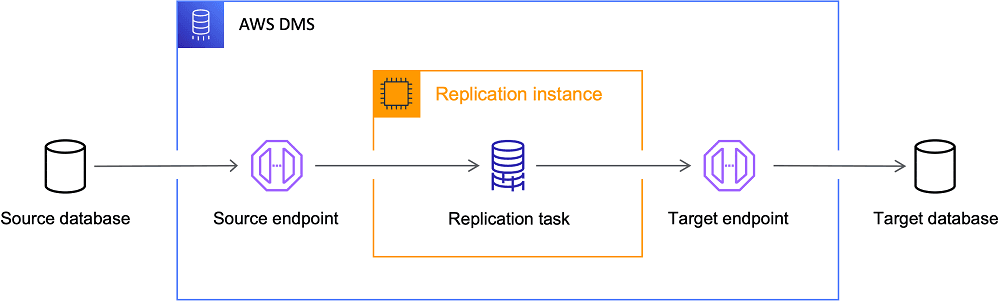
AWS DMS: Automating Database Migrations
AWS DMS automates moving data between databases, not just as a simple data pump. Use it for one-time migrations to the cloud or for continuous replication. The footgun is assuming DMS also converts your schema; for different engines, you must use the Schema…

Pulumi: Infrastructure as Code with Real Programming Languages
Pulumi is Infrastructure as Code using real languages like Python or TypeScript, not a special DSL. This lets you use loops, functions, and classes to define resources. The main footgun is writing overly complex, clever code that becomes unmaintainable.
Continuous Delivery: Ship Reliably, Anytime
Continuous Delivery (CD) makes software releases a boring, routine event. Your codebase is always in a deployable state, allowing you to ship small, incremental updates reliably and at any time. The footgun is confusing it with Continuous Deployment.
Projected Volumes: Mount Config as Live Files
A projected volume mounts ConfigMaps and Secrets as files inside your Pod, which update automatically when the source object changes. Use this for apps that can hot-reload config, avoiding restarts. The footgun: updates aren't instant; there's a delay.
AWS Elastic Beanstalk: Your App, Not Your Servers
Elastic Beanstalk is a PaaS-like wrapper for AWS infrastructure. You upload your code, and it handles provisioning servers, load balancers, and scaling. It's great for standard web apps but its abstraction is leaky; debugging often requires knowing the…
Terragrunt: A Thin Wrapper for DRY Terraform
Terragrunt is a thin wrapper for Terraform/OpenTofu that automates common tasks. Just add an empty terragrunt.hcl file to get features like automatic init.
Feature Flags: Ship Code Now, Release It Later
Feature flags are like light switches for your code, letting you turn features on or off in production without a new deployment. This enables canary releases and A/B tests. The main footgun is letting old flags accumulate, creating a maze of dead code.
The Kubernetes Downward API: Pod Self-Awareness
The Downward API gives a container self-awareness, injecting Pod metadata like its name or IP address as environment variables or files. Use it so apps can self-configure without calling the main K8s API.

Procfile: Declare Your App's Startup Commands
A Procfile is the start script for your cloud app, telling the platform what commands to run. You use it to define processes like a web server for HTTP traffic or workers for background jobs.
Open Policy Agent (OPA): Centralized Policy as Code
OPA decouples policy decisions from your app's code. Instead of scattering if statements, you query a central engine: 'Is this allowed?' It enforces rules in Kubernetes, CI/CD, and API gateways. A common footgun is only using it for yes/no decisions.
AWS SDK: Code That Operates Your Cloud
The AWS SDK turns AWS API calls into native code so your app can command S3 or DynamoDB directly. It handles auth, retries, and formatting automatically. The footgun: forgetting region or credentials causes silent failures that look like network errors.
Quality Gates: Your Automated Release Checklist
A quality gate is an automated checklist that decides if code is ready for release. It runs in your CI pipeline, blocking merges or failing builds if metrics like code coverage or bug counts don't meet predefined standards.
Immutable Secrets & ConfigMaps: Write-Once Configuration
Treat your Kubernetes configuration like a container image: create it once, then create a new version to update it. The immutable flag enforces this "write-once" pattern for Secrets and ConfigMaps, reducing API server load and preventing accidental updates.
Cloud-Init: Bootstrapping Cloud Instances
Cloud-init is the script that runs on a generic VM's first boot to turn it into *your* server. It's used by cloud providers to apply your user-data (like SSH keys and startup scripts) at launch. The biggest footgun: it only runs once on first boot.
Continuous Deployment: Shipping Code on Every Commit
Continuous Deployment isn't just automation; it's shipping every merged change to production automatically. It's for teams with high test coverage and robust monitoring to reduce lead time.
Kustomize: Template-Free Kubernetes Configuration
Kustomize is a patch tool for Kubernetes YAML, letting you manage environment-specific configurations without complex templates. Use it to define a base config and apply overlays for dev, staging, and prod. The footgun is treating it like a templating engine.
The Twelve-Factor App: A Blueprint for Portable Cloud Apps
The Twelve-Factor App is a blueprint for building portable, resilient cloud apps. It's used for microservices or apps on platforms like Kubernetes, ensuring they can be easily deployed and scaled. The footgun is treating it as dogma, not a guide.
We are hiring for this. Every open role lists the topics its interview covers, so you can prepare for the real thing rather than guessing.
See open roles