Concepts in DevOps & Cloud, page 16
Environment Variables: Configuration Outside Code
Environment variables are settings passed to your app from the outside world, letting you change behavior without touching code. Use them for API keys or database URLs. The biggest footgun is committing secrets to version control instead of using variables.

Shadow Deployment: Test in Production, Safely
Shadow deployment copies live user traffic to a new "shadow" service for testing without user impact. It's used to validate new code versions with real-world load or to analyze traffic for security threats.

Kubernetes ServiceAccounts: Identity for Pods
A ServiceAccount is an ID badge for a Pod, letting it securely talk to the Kubernetes API. It's used when your app needs to list other Pods or read Secrets.
AWS CodePipeline: Your CI/CD Orchestrator
AWS CodePipeline is an orchestrator for your software release workflow, connecting source, build, and deploy stages. It's used to automate continuous delivery, triggering actions on every code change. The footgun: it only *manages* the pipeline.
Configuration Files: Separating Code from Settings
A config file separates a program's behavior from its code, allowing you to change settings like database URLs without recompiling. They're used for API keys, feature flags, and environment-specific values. The footgun is committing secrets to version control.
Load Testing: Simulating Real-World User Traffic
Load testing answers 'Can our system handle expected traffic?' by simulating many users at once. Use it before a big launch to find bottlenecks. The footgun is confusing it with stress testing, which pushes a system past its limits to see how it breaks.
External Secrets Operator: Sync Secrets into Kubernetes
Treat your cloud's secret manager as the source of truth. The External Secrets Operator (ESO) fetches secrets from external APIs like AWS Secrets Manager or Vault and injects them into native Kubernetes Secrets, keeping them in sync.
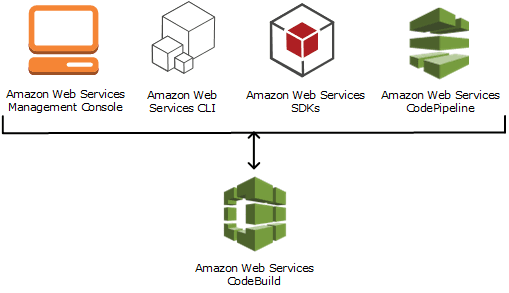
AWS CodeBuild: Managed Builds Without the Servers
Think of AWS CodeBuild as an on-demand build server you don't manage. It's used in CI/CD to compile code, run tests, and create artifacts. The main footgun is thinking it's a full CI/CD platform; it's just the 'build' step, needing an orchestrator.
The Twelve-Factor App: Store Config in the Environment
Your app's code is the blueprint; its config is the specific address and utility hookups. Store config—database URLs, API keys—in environment variables, not in the code. The footgun is hardcoding secrets, making your code base impossible to open-source safely.
Stress Testing: Finding Your System's Breaking Point
Stress testing finds a system's breaking point by pushing it beyond normal limits. It's used for mission-critical software to test robustness and availability under extreme load, not just normal function.
Sealed Secrets: Safely Commit K8s Secrets to Git
Sealed Secrets lets you commit encrypted Kubernetes secrets to a public Git repo. In a GitOps workflow, this allows all configuration to live in version control. The footgun: a SealedSecret is a one-way street; only the target cluster can decrypt it.
AWS CodeDeploy: Automated, Safe Application Updates
AWS CodeDeploy automates pushing your application to servers, Lambda, or ECS. It handles complex updates across many targets, letting you release new features rapidly while minimizing downtime.
Benchmarking: Know Your System's Limits
Benchmarking finds your system's limits by measuring its responsiveness and stability under a controlled workload. Use it to catch performance regressions, compare tech choices, or for capacity planning. The footgun: trusting benchmarks run on your laptop.
Rolling Updates: Deploying Code Without Downtime
A rolling update deploys new code by gradually replacing old application instances with new ones, ensuring zero downtime. It's the default for stateless services in orchestrators like Kubernetes.

Configuration as Code: Treat Your Settings Like Source Code
Configuration as Code (CasC) treats your settings like source code, storing them in version control. This ensures every environment is identical, with changes automatically tested and deployed via CI/CD.
GitLab Pipeline Configuration Hierarchy
GitLab pipeline settings stack like access-control layers. Project visibility, pipeline toggles, and role permissions interact to determine who sees logs, artifacts, or can cancel jobs.
Soak Testing: Finding Bugs That Only Time Reveals
Soak testing is like running a marathon, not a sprint, to find bugs that only time reveals. It applies a typical production load over a long period to uncover slow memory leaks or resource exhaustion. The footgun is confusing it with stress testing.

Promoting Code with Pipeline Stages
Think of pipeline stages as quality gates. Code must pass one gate, like 'build', before being promoted to the next, like 'deploy to staging'. This is core to CI/CD, moving code safely from dev to production. The footgun is making later stages less strict.
Scalability Testing: Will More Hardware Fix It?
Scalability testing answers 'Will more hardware fix it?' by measuring how performance improves when you add resources. The common footgun is confusing it with load testing, which just finds the breaking point under a given load.
PersistentVolumeClaim: How Pods Request Storage
A PersistentVolumeClaim (PVC) is a request for storage, like a claim check for a storage locker. Pods use it to mount durable storage for databases or file uploads. The footgun: a PVC is just a request; a matching PersistentVolume must exist to fulfill it.
We are hiring for this. Every open role lists the topics its interview covers, so you can prepare for the real thing rather than guessing.
See open roles