Concepts in DevOps & Cloud, page 18
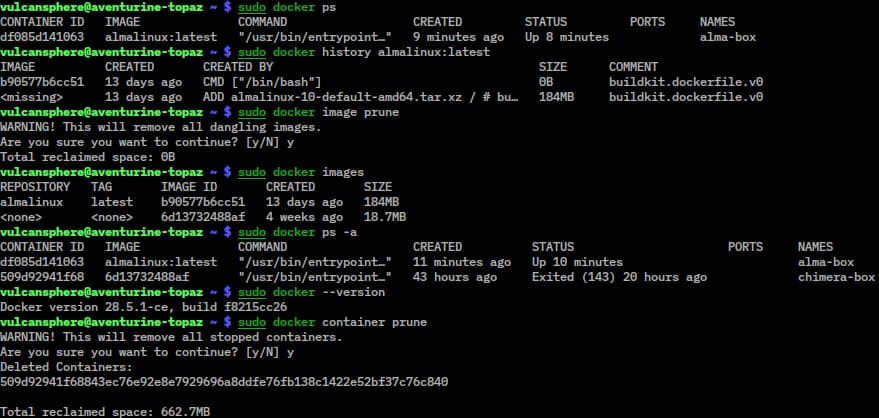
Dockerfile: The Recipe for Your Container
A Dockerfile is a recipe for building a container image. It's a text file of commands that automates an application's environment setup, ensuring it runs identically anywhere. The footgun is creating bloated images with unnecessary build tools.
Persistent Volume and Persistent Volume Claim
Kubernetes separates storage provisioning from consumption. A PersistentVolume is a cluster storage resource an admin or driver provisions; a PersistentVolumeClaim is a pod's request for storage.

Universal Scalability Law: The Physics of Scaling
The Universal Scalability Law (USL) models throughput by quantifying the two costs of parallelism: contention and coherency. Use it to forecast performance and diagnose bottlenecks.
Kubernetes Volume Snapshots: A Save Point for Data
A Volume Snapshot is a point-in-time copy of your persistent data in Kubernetes, like a game save. Use it to back up a database before an upgrade or clone a prod environment. The footgun: it's not a true backup; a storage failure can lose both.
Container Image: A Blueprint for Your Application
A container image is a static blueprint for your application, bundling code, runtime, and settings. You build images to ship software for Docker or Kubernetes, which then run them as live containers.
Non-Functional Requirements: How a System Should Be, Not Just What It Does
Non-Functional Requirements (NFRs) define *how well* a system performs its tasks, not *what* tasks it performs. They're the adjectives (fast, secure, reliable) for a system's verbs.
Kubernetes StatefulSet: Pods with Stable Identity
A StatefulSet gives Kubernetes pods a stable identity and dedicated storage, like assigning a permanent desk and locker to an employee. Use it for databases or clustered apps where nodes need to find each other and retain data across restarts.
Docker Compose: A Tool for Containerized Applications
Docker Compose is a tool in the Docker suite for running applications in containers. It ensures your app runs the same everywhere by packaging it with its dependencies, solving the 'works on my machine' problem.
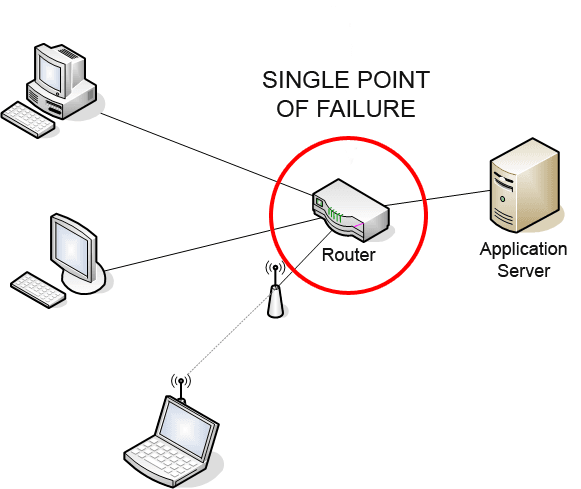
Single Point of Failure: Your System's Achilles' Heel
A single point of failure (SPOF) is your system's Achilles' heel—one component whose failure causes a total outage. This is critical in high-availability design, like ensuring a website survives a server crash. The footgun is missing implicit SPOFs.
Managed Kubernetes: Your Cloud's K8s Control Plane
A managed Kubernetes service (EKS, AKS, GKE) runs the complex K8s control plane for you, letting you focus on deploying apps, not managing infrastructure. Use it to run containers without the overhead of maintaining masters.
Kubernetes: The Operating System for Your Cluster
Think of Kubernetes as an OS for your entire datacenter. It automates deploying, scaling, and managing containerized applications across a fleet of servers. The footgun is adopting it for simple projects, where its complexity outweighs its benefits.
Horizontal Scaling: Add More Machines, Not Bigger Ones
Horizontal scaling (scaling out) means handling more load by adding more machines to your resource pool, not upgrading a single one. It’s used for web servers behind a load balancer. The footgun is that your app must be stateless to avoid losing user data.
Kubernetes Taints and Tolerations: Repelling Pods
Taints act like 'No Trespassing' signs on Kubernetes nodes, repelling pods. Tolerations are the keys that let specific pods ignore those signs. Use this to reserve nodes for special hardware or critical workloads, preventing general pods from landing there.
Horizontal Pod Autoscaler (HPA): Scale on Demand
A Horizontal Pod Autoscaler (HPA) is a thermostat for your app's capacity, adding or removing pods based on load. It's used to handle traffic spikes by watching metrics like CPU, but a common footgun is setting aggressive thresholds that cause flapping.
Kubernetes Pods: The Atomic Unit of Deployment
A Kubernetes Pod is the atomic unit of deployment, a logical host for containers sharing a network and storage. This is ideal for co-locating a main app with a helper "sidecar" container. The footgun: a Pod is not a container; you scale by adding more.
Graceful Degradation: Failing Better, Not All at Once
Instead of total failure, graceful degradation lets a system shed non-essential features to stay partially available. It's a fault tolerance strategy for when a component fails, ensuring core functions survive. The footgun is not defining what's 'core.'
Node Affinity: Tell Your Pods Where to Go
Node affinity is like giving pods a 'preferred seating' list for nodes. You guide the scheduler to nodes with specific labels, like those with GPUs or in a certain zone. The footgun is confusing 'required' (a hard rule) with 'preferred' (a suggestion).

API Gateway: The Front Door for Your Microservices
An API Gateway is the single front door for all your backend services. It handles tasks like authentication and rate limiting before routing requests to the correct microservice. The footgun is treating it as a simple proxy; it can become a bottleneck.
Kubernetes Deployment: Declarative App Updates
A Kubernetes Deployment is your app's blueprint. You declare the desired state—like '3 replicas of image v2'—and Kubernetes makes it happen. It's the standard for stateless apps like APIs. The footgun: don't manage Pods directly; manage the Deployment.
Rate Limiting: Your API's Bouncer
Rate limiting acts as a bouncer for your API, controlling traffic to protect your service. It's used on public APIs to prevent abuse, ensure fair usage, and defend against denial-of-service attacks.
We are hiring for this. Every open role lists the topics its interview covers, so you can prepare for the real thing rather than guessing.
See open roles