Concepts in DevOps & Cloud, page 24
Helm: The Package Manager for Kubernetes
Helm is like apt or Homebrew for Kubernetes. It bundles all your app's YAML files into a single manageable package called a Chart, solving "YAML sprawl." Use it to install complex apps with one command or to package your own for repeatable deployments.
Cloud Unit Economics: Tying Spend to Value
Instead of just a total cloud bill, unit economics calculates cost per meaningful unit, like 'cost per customer.' This helps justify rising costs with business growth and lets product owners make data-driven pricing tradeoffs.
Structured Logging: Logs as Data, Not Strings
Treat logs as structured data (like JSON), not just plain text. This makes them machine-readable and queryable, letting you filter, search, and create dashboards on specific fields (e.g., user_id, trace_id).
Service Maps: A Live Blueprint of Your Architecture
A service map is a live blueprint of your distributed system, generated from telemetry data. It visualizes service dependencies and health, letting you instantly see an incident's blast radius instead of hunting through Slack for tribal knowledge.
Bug Tracking Systems: The Central Log for Software Defects
A bug tracker is the central log for a project's known defects. It’s used in software development to keep track of reported bugs, coordinate fixes, and manage the lifecycle of an issue. The footgun is undervaluing the quality of bug reports.

Time-Series Compression: Storing More with Less
Time-series compression stores data more efficiently by saving the *difference* between consecutive points, not the full values. It's key for managing terabyte-scale monitoring and IoT data, often saving over 90% on storage.
Helm Repository: Your Private App Store for Kubernetes
A Helm repository is a private app store for your Kubernetes applications. It's just an HTTP server with a catalog file (index.yaml) pointing to your packaged charts. Use it to share reusable app templates across teams without using public registries.
MapReduce: Divide and Conquer for Big Data
MapReduce breaks a huge data job into smaller, parallel tasks across a cluster. It's ideal for batch processing massive datasets, like indexing the web. The common footgun is using it for real-time queries; it's built for throughput, not speed.
Distributed Tracing: Following a Request Across Microservices
Distributed tracing is like a passport for a request, stamped at every service it visits. It's essential for debugging microservices where one click can trigger many calls. The footgun is trying to debug without it, piecing together isolated logs.

Escalation Policy: When to Stop Shipping and Start Fixing
An escalation policy is a pre-agreed plan for when to divert engineers from feature work to fix reliability. When a service's error budget burns too fast, the policy's thresholds trigger specific actions. The footgun is thinking a quick rollback is enough.
Batch vs. Stream Processing: When to Process Data
Batch processing is like a nightly report, crunching a full day's data at once. Stream processing is a live feed, handling events as they arrive. Use batch for ETL jobs and stream for real-time fraud detection.
Service Level Objective (SLO): A Measurable Promise
An SLO is a precise, measurable promise about your service's performance, like "99.9% of requests will succeed." It's the internal engineering target that backs up a customer-facing SLA. The footgun is setting a 100% SLO, which leaves no room for failure.
Post-Incident Review: Learning from Failure, Blamelessly
A Post-Incident Review (PIR) is a blameless process to learn from an outage, not to assign blame. Use it after a production incident to identify systemic flaws and create action items to prevent repeats.
Helm Templates: Turning Static YAML into Dynamic Manifests
Think of Helm templating as a mail merge for Kubernetes. It combines static YAML templates with dynamic values to generate manifests for different environments. Use it to manage configurations for dev, staging, and prod.
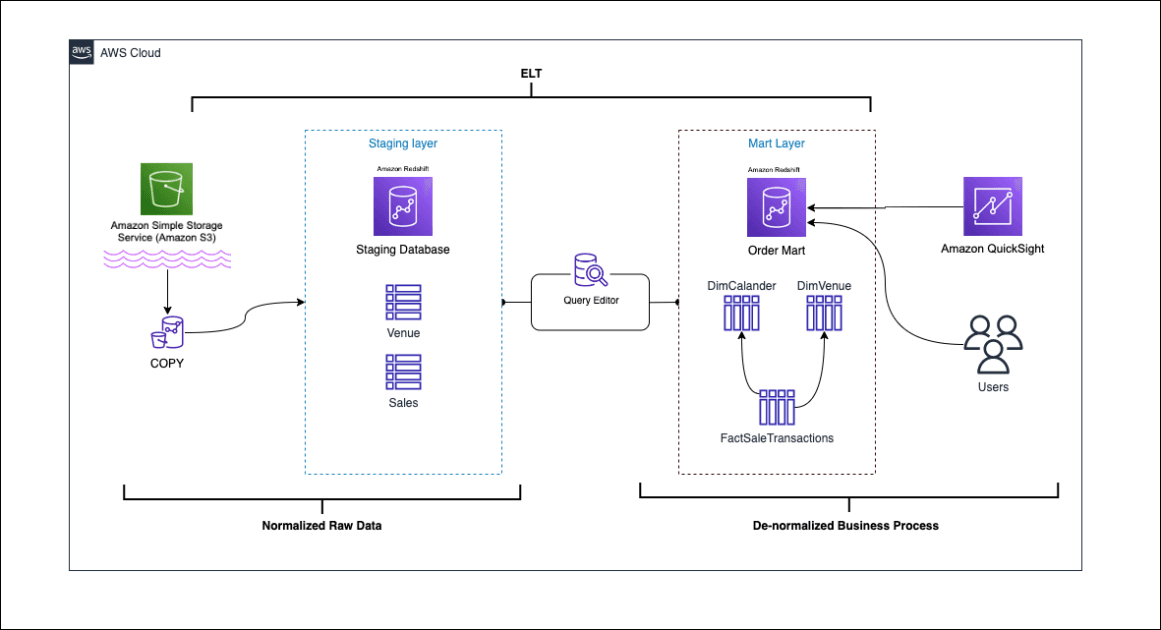
Dimensional Modeling: Facts vs. Dimensions
Dimensional modeling organizes data like a story: 'facts' are what happened (sales numbers) and 'dimensions' are the who, what, and where (customer, product). It's the foundation for data warehouses, turning raw data into analyzable BI reports.
Real User Monitoring (RUM): See Your App Through Users' Eyes
Real User Monitoring (RUM) is like a flight recorder for your app, capturing real user clicks, load times, and errors. It's used to measure actual performance and diagnose slowdowns, revealing issues that lab testing misses.
Configuration Drift: When Live State Betrays Git
Configuration drift is when your live system's state no longer matches its Git source of truth. GitOps tools like Argo CD detect this by constantly comparing live resources to Git, flagging any discrepancies.
Apache Airflow: Code-Defined Data Pipelines
Airflow lets you define, schedule, and monitor complex data workflows as code, replacing brittle cron jobs. It's used for ETL jobs or ML training pipelines. The footgun is treating it as a data processing engine; it's an orchestrator, not the worker.
Synthetic Monitoring: Probing Your App Like a Robot User
Synthetic monitoring is like having a robot user click through your app's critical paths 24/7 to catch issues before real users do. It tests key flows like login or checkout, providing a consistent baseline for performance.
Load Balancing Algorithms: How to Pick a Server
Load balancing algorithms are the rules a client uses to pick one server from a pool of identical backends. They're used by web proxies routing user traffic and by microservices calling each other.
We are hiring for this. Every open role lists the topics its interview covers, so you can prepare for the real thing rather than guessing.
See open roles