Intermediate interview questions in DevOps & Cloud, page 10
Resource faults versus network faults: when each matters?
Resource faults probe local saturation and autoscaling; network faults probe distributed-call resilience like timeouts and retries.
How would you speed up slow single-GPU training?
Vertical scaling to bigger or multi-GPU instances, then data-parallel or model-parallel distributed training across nodes.

Diagnose CI/CD queue bottlenecks and propose three throughput improvements
This tests CI/CD scheduling and queuing theory. A strong answer profiles queue versus execution time, then proposes right-sizing parallelism, aggressive caching, and workload sharding. A red flag is jumping straight to adding agents without measuring first.
Automating chaos in CI/CD for continuous verification?
Run codified experiments against staging or canary with pass/fail on steady-state SLIs; prerequisites are observability, automated abort, and isolation.
How would you collect metrics and KPIs for your Internal Developer Platform?
This tests product-thinking: treating developers as customers, not captive users. Strong answers cover adoption (golden-path usage), developer experience (deploy speed, NPS), and business value. Red flag: tracking CPU or uptime without linking to adoption.
Design a Docker artifact system for cost, traceability, and speed
Tests cost-speed-auditability tradeoffs for artifacts at scale. Strong answers cover tiered storage with lifecycle policies,immutable build provenance,regional caching, and automated garbage collection. Red flag: infinite mutable storage with no cleanup rules.
Helm upgrade and rollback workflow
Helm upgrade creates a new revision; helm history lists revisions; helm rollback reverts to a prior one; --atomic auto-rolls-back on failure.
Design a highly available web application
Redundant stateless instances across multiple zones behind a load balancer with health checks, auto-scaling, and a replicated multi-AZ datastore.
How GitOps controllers detect drift and sync
The controller renders desired manifests from Git, diffs them against live cluster objects, marks OutOfSync, then a sync applies the diff to converge.
A team keeps blowing its error budget. First steps?
Analyze where the budget is burning via SLIs and postmortems, validate the SLO and SLIs are sound, then partner blamelessly on the top fixes.
Explain the Strangler Fig pattern
A facade routes traffic, new services gradually replace legacy features one slice at a time, and the old system is retired when fully strangled.
Managing secrets in a GitOps workflow
Never commit plaintext; encrypt with Sealed Secrets or SOPS, or reference an external store via External Secrets Operator.
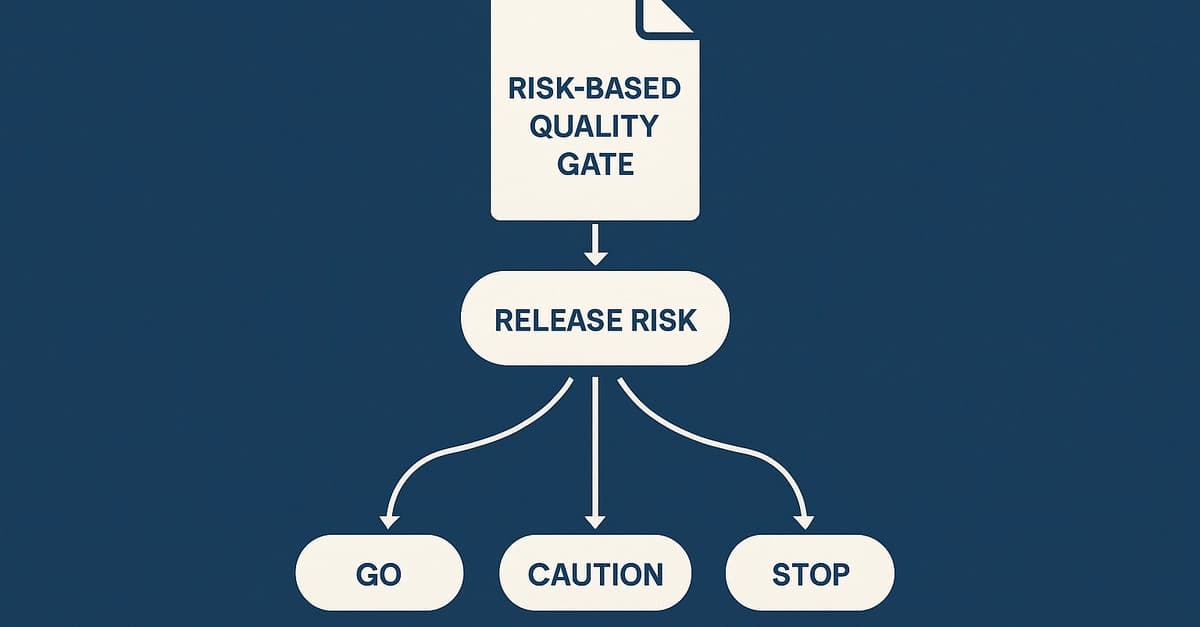
Design a dynamic, risk-based quality gate system
Tests if you can move CI/CD from binary pass/fail to contextual risk scoring. Strong answers define criticality tiers, weight signals by severity and blast radius, and emit GO/CAUTION/STOP states.
Embedded vs consulting SRE engagement models
Embedded SREs sit inside one team for deep impact but limited reach; consulting SREs advise many teams broadly but shallowly.
Managed services versus self-hosting trade-offs
Managed services cut operational burden and speed delivery but cost more and limit control; self-hosting offers full control and tuning at the price of patching, scaling, and reliability work.
Argo CD App of Apps pattern
A parent Application whose manifests are themselves Application resources, so syncing one app declaratively manages many.
Compare monorepo and polyrepo strategies in CI/CD
Tests repo structure impact on builds, dependencies, and pipeline triggers. Contrast monorepo atomicity with polyrepo autonomy; cover monorepo change-detection versus polyrepo versioning and contract tests.
Conducting a Production Readiness Review
Assess monitoring and alerting, capacity and load testing, failure modes and dependencies, on-call and runbooks, and rollback or release safety.
.webp&w=1600&q=75)
How would you design an automated artifact repository cleanup policy?
Balancing cost, compliance, and speed via tiered artifact retention. A strong answer covers age rules, deployment state, protected tags, and dry-run gates.
Keeping a postmortem blameless after an admission
Acknowledge the courage, redirect from who to why the system allowed it, ask what guardrails were missing.
We are hiring for this. Every open role lists the topics its interview covers, so you can prepare for the real thing rather than guessing.
See open roles