Interview questions in DevOps & Cloud, page 15
Purpose and setup of a Dead-Letter Queue
A DLQ captures messages that repeatedly fail so they neither block the queue nor get lost; configure a redrive policy with a max receive count and alarm on it.
Design a zero-downtime Kubernetes Deployment strategy for a stateless microservice
Set RollingUpdate with maxSurge 1 and maxUnavailable 0; use readiness probes to gate traffic; set terminationGracePeriodSeconds and preStop to drain requests.
Reviewing a large-scale cascading outage
Dedicated facilitator, cross-team timeline reconciliation, map cascade chains and multiple contributing factors, layered action items.
What are PersistentVolumes and PersistentVolumeClaims for?
A PV is a cluster storage resource the admin provisions; a PVC is a user's request for size and access mode; Kubernetes binds them, decoupling Pods from storage details.
State machines versus long-running functions
State machines externalize state, pause for human input without running compute, give built-in retries and audit history, and bill per transition.

Rolling vs blue/green deployments: differences and trade-offs
Tests risk-cost-downtime judgment. Contrast rolling's gradual swap with blue/green's parallel swap; rolling is cheaper but mixes versions, while blue/green doubles capacity for instant rollback. Red flag: saying blue/green cheaper or rolling double-capacity
Automating a recurring manual cache clear
Recognize the repetitive manual task, document the runbook, then automate it into the deploy pipeline as a post-deploy hook with monitoring.
What happens to volume data when a Pod is deleted?
EmptyDir is tied to the Pod and erased when the Pod is deleted; a PVC-backed PV with Retain keeps the data after the PVC is released for manual recovery.
Idempotency in event-driven systems
Idempotency means repeated processing yields the same end state; it matters because messages get redelivered; achieve it with idempotency keys and conditional writes.
Explain canary releases and why choose them over rolling updates
This tests risk mitigation via user routing versus in-place replacement. A strong answer defines canary as exposing a subset to the new version first, contrasts rolling updates lacking user segmentation, and cites fast rollback.
Distinguishing toil from necessary ops work
Toil is manual, repetitive, automatable, tactical, and scales with growth; engineering and judgment-heavy work is not toil.
Bind mounts vs named volumes for persisting Docker data?
Persist data outside the writable container layer via a bind mount (a host path you control) or a named volume (Docker-managed under its data dir, portable and the recommended default).
Distributed tracing for serverless apps
Propagate a trace context through every hop, instrument with OpenTelemetry or X-Ray, capture spans including the database, and correlate traces with structured logs.

What problem can a breaking API change cause during a rolling update?
Tests if you know rolling updates run mixed versions, so breaking API changes crash cross-traffic. Good answer: note old and new pods serve together, watch probes fail, and monitor 5xx spikes. Red flag: claiming Kubernetes isolates versions during rollout.
Automate temporary elevated database access securely
Self-service request with approval, short-lived auto-expiring grants scoped to least privilege, and full audit logging.
StatefulSet vs Deployment: what's the difference?
Deployments treat Pods as interchangeable; StatefulSets give stable ordinal names, stable per-Pod storage via volumeClaimTemplates, and ordered rollout.
Serverless functions with a relational database
Concurrent function instances each open connections and exhaust the database's bounded pool; fix with a connection proxy or pooler, init-phase reuse, or capped concurrency.
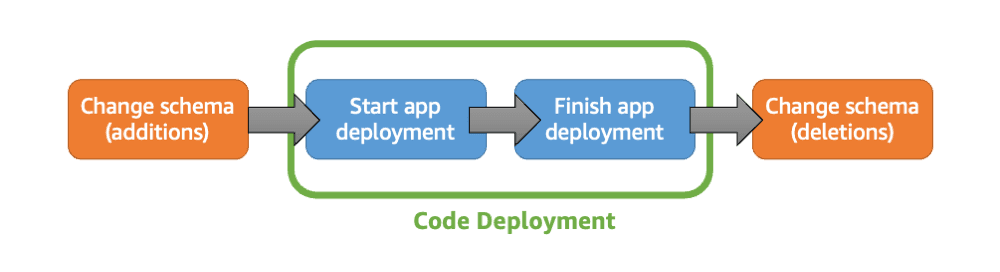
What are the major challenges of blue/green deployments with relational databases?
Tests decoupling schema and code changes in stateful blue/green deployments. Strong answers cover the additive-then-deletive pattern, backward compatibility for both app versions, and shared DB risks. Red flag: split DBs with no rollback or sync plan.
Idempotency in infrastructure provisioning scripts
Idempotency means repeated runs converge to one end state; achieve it via desired-state reconciliation or idempotency keys with read-before-write.
What is a StorageClass and dynamic provisioning?
A StorageClass names a provisioner and parameters; a PVC referencing it triggers on-demand PV creation, so admins do not pre-create volumes.
We are hiring for this. Every open role lists the topics its interview covers, so you can prepare for the real thing rather than guessing.
See open roles