Interview questions in DevOps & Cloud, page 21
The small files problem in data lakes
Too many tiny files inflate metadata and per-file overhead, slowing queries; caused by streaming micro-batches and over-partitioning; fix with compaction and table formats like Iceberg, Delta, or Hudi.
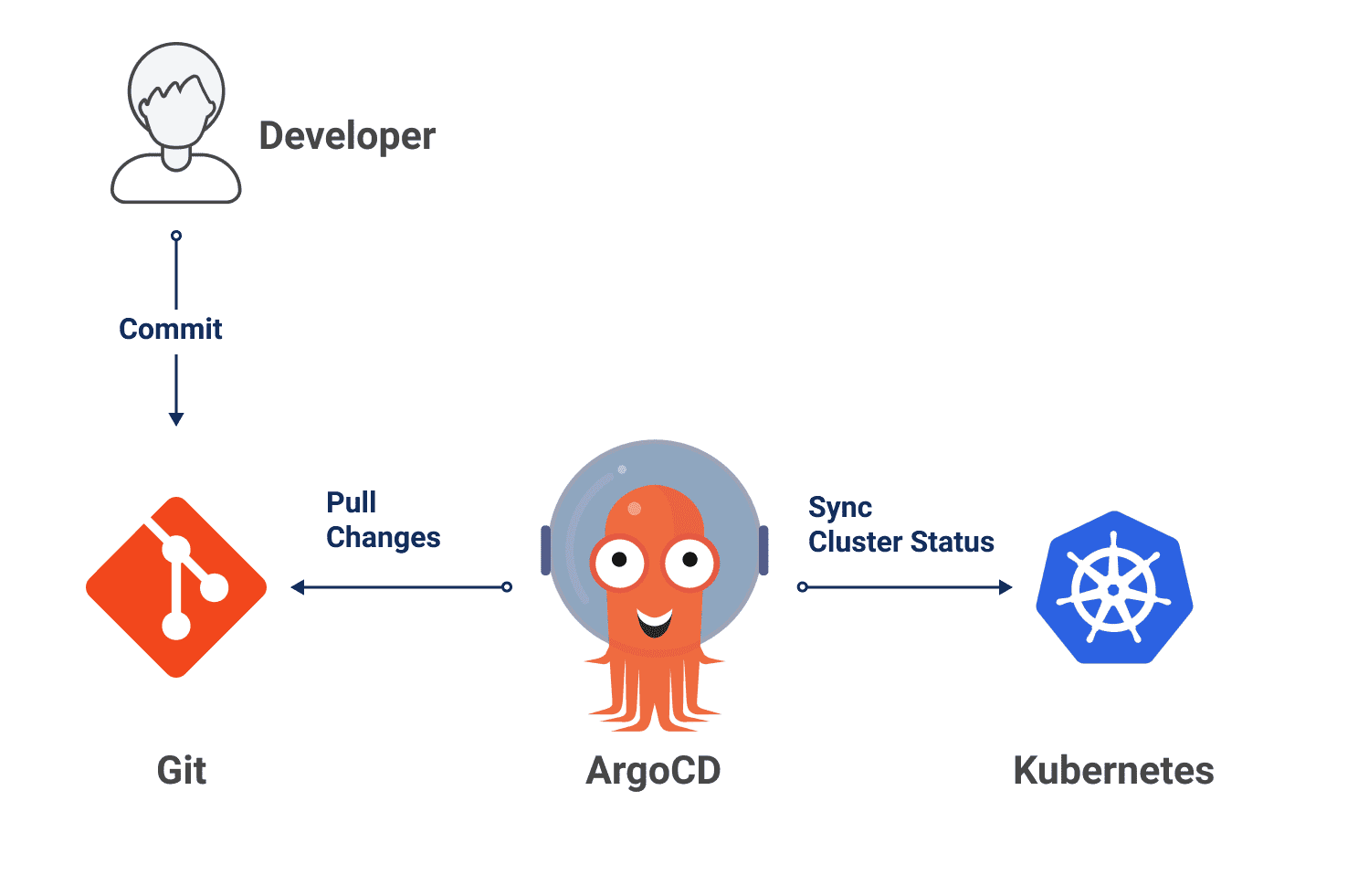
What is configuration drift in GitOps and how do tools handle it?
This tests declared and actual state and GitOps reconciliation. A strong answer defines drift as out-of-band changes, notes auditability, and contrasts self-healing sync with read-only detection. A red flag is suggesting manual patches rather than fixing Git.
Reliability paved roads for an internal PaaS?
Built-in observability, safe deploys with health checks and rollback, sane timeouts/retries/limits, and SLO tooling.
Auto-discovering app pods for Prometheus scraping
Use kubernetes_sd_configs with role pod, relabel on pod annotations like prometheus.io/scrape to filter, and set path and port; with the Operator use a PodMonitor or ServiceMonitor.
Schema evolution without rewriting history
Use a table format with metadata-level evolution, add a new column rather than mutating the old, and reconcile types at read time; avoid rewriting petabytes.

Describe a robust strategy for GitOps database schema migrations
Tests imperative-to-declarative schema reconciliation. Strong answers version idempotent pre-sync jobs and colocate schema state in Git. They use dedicated operators, not infra tools, for live execution.
How does chaos engineering differ from other testing?
It experiments on real systems by injecting faults to test a steady-state hypothesis, versus verifying known behaviors like integration or load tests.
EFK centralized logging architecture
Fluentd runs as a DaemonSet collecting node container logs, parses and forwards to Elasticsearch for indexed storage, and Kibana queries and visualizes them.
Pre-built AI service vs custom model
Choose a managed service for speed, no ML expertise, and common tasks; build custom for domain-specific needs, control, or cost at scale.
How would you use GitOps to manage Kubernetes cluster lifecycles?
This tests cluster lifecycle GitOps, not just app delivery. A strong answer uses Flux plus Cluster API on a hub cluster, stores cluster definitions in Git, and rolls upgrades via MachineDeployments.
What is blast radius and how do you limit it?
Blast radius is the scope of users or systems an experiment can harm; limit it by targeting a small traffic percentage and by having an automated abort.
PromQL for top 5 CPU-consuming pods
Apply rate() to the counter over 15m, sum by pod to combine containers, then wrap in topk(5); rate handles counter resets.
Feeding large object-store data into training
Stream data instead of copying it all to disk, use streaming/pipe modes, shard and prefetch in parallel, and pack many small images into larger files.
How do you architect self-service GitOps with central policy enforcement?
What it tests: balancing self-service GitOps with hard guardrails. A strong answer covers namespace-scoped controllers, OPA/Kyverno deny policies, and a centralized policy repo. Red flag: proposing manual ticket reviews instead of automated admission gates.
Design a simple chaos experiment for a cache dependency?
Hypothesis that the service degrades gracefully when Redis is unavailable, monitor error rate, latency, DB load, and cache hit rate.
Alerting on under-replicated Deployments
Write an alerting rule comparing kube_state_metrics available vs desired replicas with for: 5m, Prometheus evaluates and fires to Alertmanager, which dedupes/routes/notifies.
Deploying a real-time inference endpoint
Package the model artifact and inference code in a container, choose instance type and autoscaling, configure the endpoint with health checks, and plan safe rollout like canary plus monitoring.

Describe high-level steps to onboard a microservice via self-service CI/CD
Tests platform thinking and developer experience design. A strong answer outlines a golden path: templated repo setup, standardized build/test stages, environment promotion, and observability hooks, plus guardrails not blockers.
How do you run your first production chaos experiment?
Pick a low-risk known weakness, define a measurable hypothesis, brief stakeholders and on-call, run small with an abort, then analyze and fix.
Inference performance bottlenecks on Lambda
Cold starts loading the model, memory and CPU limits, no GPU, and package size dominate; mitigate with provisioned concurrency, loading the model once outside the handler, smaller models, and right-sized…
We are hiring for this. Every open role lists the topics its interview covers, so you can prepare for the real thing rather than guessing.
See open roles