Interview questions in DevOps & Cloud, page 24
GitOps repo layout for environment promotion
Shared base plus per-env overlays via Kustomize or value files, promotion by PR moving a pinned version forward, separating app source from config repos.
.webp&w=1600&q=75)
How would you design an automated artifact repository cleanup policy?
Balancing cost, compliance, and speed via tiered artifact retention. A strong answer covers age rules, deployment state, protected tags, and dry-run gates.
Keeping a postmortem blameless after an admission
Acknowledge the courage, redirect from who to why the system allowed it, ask what guardrails were missing.
Design an enterprise cloud landing zone
Multi-account or subscription structure, centralized identity and SSO, network topology like hub-and-spoke, guardrails via policy and SCPs, and centralized logging.
Helm migration hooks under GitOps
Use a pre-upgrade hook Job with weights and delete policy; the challenge is GitOps tools render statically and reconcile, conflicting with Helm's imperative hook lifecycle.

How would you implement zero-downtime secrets rotation?
Inventory secrets and app caching; baseline monitoring; dual-phase rotation with overlapping secrets; verify before revoking old.
Designing an error budget policy
Define SLO and budget, tiered consequences as burn worsens, a feature freeze on exhaustion, and concrete earn-back criteria.
Migrate an OLTP database with minimal downtime
Take an initial bulk load, then use change data capture to replicate ongoing changes until source and target are in sync, validate, then cut over during a brief window with a rollback plan.
What is a Custom Resource Definition?
A CRD registers a new resource kind so the API server stores and serves it like built-ins; it lets you model domain concepts declaratively.
How do you keep one build artifact immutable across environments?
This tests separation of build and run stages. A strong answer packages one artifact with zero embedded config, then injects env vars or mounted secrets at deploy time via the platform. Red flags include per-stage rebuilds or config baked into the image.
Calculating downtime for a 99.9% SLO
0.1% of 30 days is roughly 43 minutes of allowed downtime; healthy budget enables faster shipping while depletion slows or freezes deploys.
Balance agility and compliance in regulated cloud
PaaS for speed where allowed, IaaS where control is required, enforced by encryption, IAM least privilege, network isolation, policy-as-code guardrails, and continuous audit logging.
Core components of a Kubernetes Operator
A CRD defines the type, a controller watches instances via the API server and runs a reconcile loop, encoding operational knowledge to drive real state.
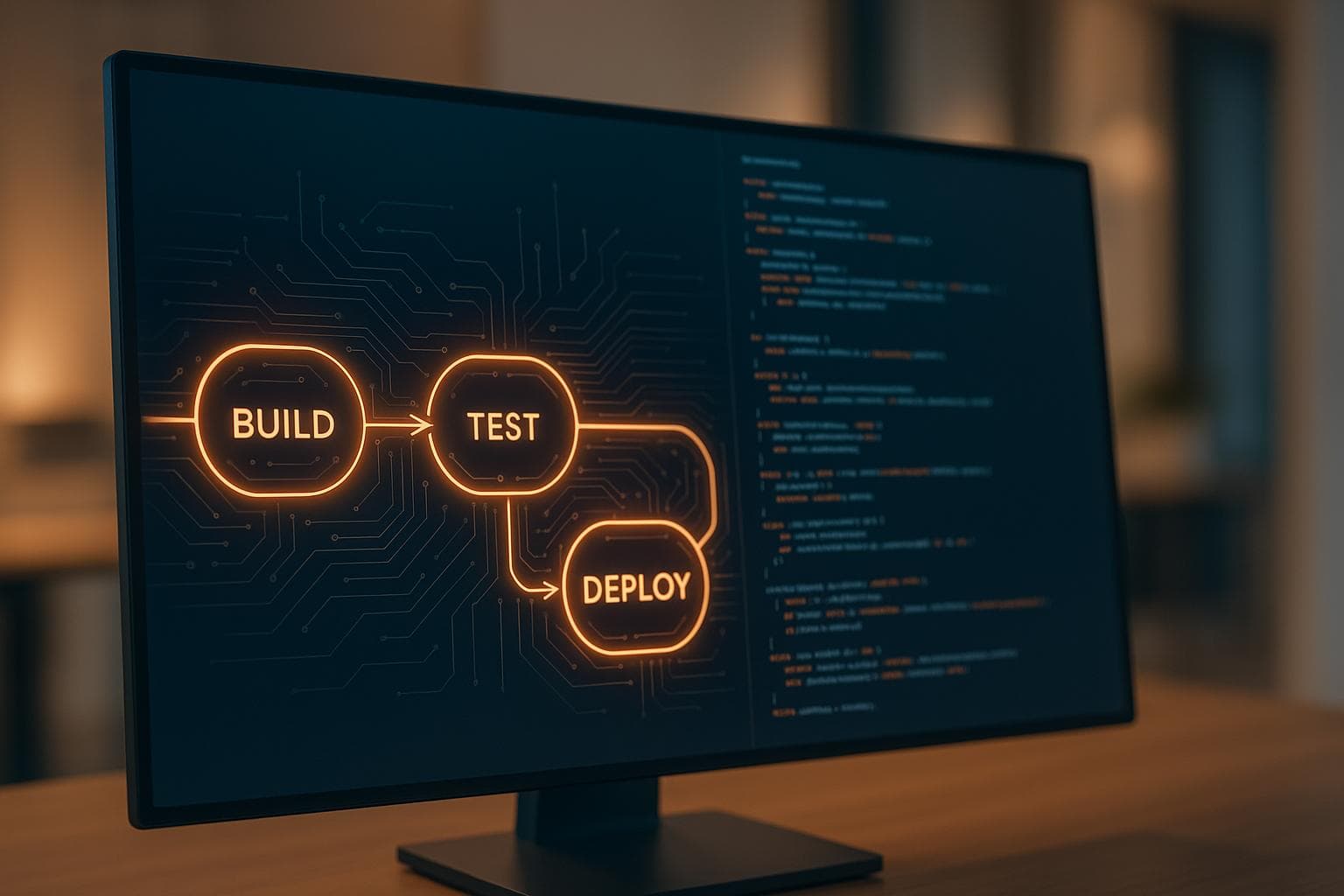
How would you add E2E tests to CI and what challenges arise?
This tests CI/CD pipeline design. Cover Dockerized environments, parallel runs, flaky-test retries, and selective execution such as critical tests per commit and full suites nightly. Red flag: running all tests on every commit without isolation or retries.
Writing high-quality postmortem action items
Good action items are specific, assigned to an owner, prioritized, tracked to completion, and ideally prevent recurrence rather than just detect faster.
When to choose bare metal over a VM
Bare metal suits latency-sensitive or high-throughput workloads needing no hypervisor overhead, single-tenant isolation for compliance, or direct hardware and licensing access.
Creating an instance of a custom resource
Write a manifest with apiVersion (group/version), kind, metadata.name, and a spec matching the CRD schema, then kubectl apply -f it.

How do you speed up slow integration tests without compromising quality?
Tests your ability to optimize CI/CD pipelines while preserving coverage. A strong answer covers parallel execution, Test Impact Analysis, ephemeral containers, and test data as code. Red flag: proposing to delete tests or disable integration stage entirely.
Rolling update vs blue-green deployment
Rolling replaces instances gradually with minimal extra capacity but mixes versions; blue-green runs two full environments for instant switch and rollback at double the cost.
Configure a Kubernetes Horizontal Pod Autoscaler
HPA adjusts replica count toward a target CPU metric, needs the metrics server and pod resource requests, and scales a deployment between min and max.
We are hiring for this. Every open role lists the topics its interview covers, so you can prepare for the real thing rather than guessing.
See open roles