Easy everything in Docker & Kubernetes, page 2
Core components of a Kubernetes Operator
A CRD defines the type, a controller watches instances via the API server and runs a reconcile loop, encoding operational knowledge to drive real state.
What is a Custom Resource Definition?
A CRD registers a new resource kind so the API server stores and serves it like built-ins; it lets you model domain concepts declaratively.
Override Helm values at install time
Pass custom files with -f or --values, single keys with --set, and know precedence: defaults, then files, then --set.
What is the basic principle of GitOps?
Git holds desired state; a controller continuously reconciles the cluster to match it; benefits are auditability, rollback, and drift correction.
What is a Helm chart?
A chart is a templated, versioned bundle of manifests with a values file; it solves config duplication and reuse across environments.
Two ways to consume a ConfigMap in a Pod
Inject keys as environment variables (good for a few simple settings), or mount the ConfigMap as a volume of files (good for config files and live updates).
ConfigMap vs Secret
ConfigMaps hold non-sensitive plain config; Secrets hold sensitive data, base64-encoded and treated specially (RBAC, optional encryption at rest).
ClusterIP vs NodePort vs LoadBalancer
ClusterIP for internal-only access; NodePort opens a port on every node for basic external reach; LoadBalancer provisions a cloud load balancer for production external traffic.
Why Kubernetes Services exist
Pod IPs are ephemeral and change on reschedule; a Service gives a stable virtual IP and DNS name plus load balancing across healthy Pods via label selectors.
Debugging a Pod in CrashLoopBackOff
Kubectl describe pod for events, restarts, and last state; kubectl logs (with --previous) for the crashed container's output.
Create a Deployment with 3 replicas via kubectl
Kubectl create deployment webapp --image=my-app:1.0, then kubectl scale to 3 replicas, or use --replicas if supported.
Deployment, ReplicaSet, and Pod hierarchy
A Deployment manages ReplicaSets, each ReplicaSet keeps a set of identical Pods, and Deployments add rolling updates, rollback, and self-healing.
Minimal objects to expose a stateless app
A Deployment to run and self-heal replicas plus a Service to give a stable endpoint, exposed externally via type LoadBalancer or NodePort, or an Ingress.
Core control plane components
Api-server as the front door, etcd as state store, scheduler placing pods, and controller-manager running reconciliation loops, plus cloud-controller-manager.
Node, Pod, and Container relationship
A Node is a machine, a Pod is the smallest deployable unit wrapping one or more containers that share network and storage, and the Pod abstraction enables co-location and lifecycle management.
Why :latest is a production anti-pattern
Latest is mutable so pods run different code, rollbacks and pull policy break, and you should use immutable version tags or digests.
Tag and push an image to a private registry
Authenticate with docker login, retag the image to include the registry host and repo path, then docker push that full reference.
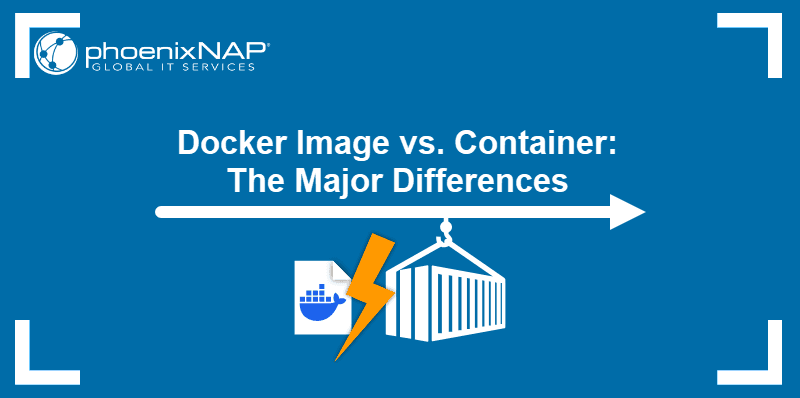
How do Docker images and containers differ and relate?
This tests your grasp of the immutable template versus mutable runtime boundary. A good answer: an image is a read-only layered template with code and dependencies; a container is a runnable instance with a writable layer on top.
ConfigMap decouples config from container images
A ConfigMap is a key-value store that injects configuration into pods without rebuilding the image. Use it for feature flags, database hostnames, or any non-secret settings. Editing one does not restart existing pods, so stale config is the common footgun.

Service Mesh Ingress: The Doorkeeper for Your Mesh
A Service Mesh Ingress Gateway is the dedicated entry point for external traffic into your mesh. It lets you apply advanced routing, security, and observability policies at the boundary, like TLS termination or traffic splitting.
We are hiring for this. Every open role lists the topics its interview covers, so you can prepare for the real thing rather than guessing.
See open roles