Interview questions in Flutter & Dart, page 2
Fetch user profiles concurrently and handle individual failures
Tests Future.wait concurrency and per-future error isolation. Answer: map IDs to fetchProfile, pass to Future.wait. For partial failures, attach catchError per future to return null, then filter. Red flag: try-catch around Future.wait or sequential awaits.
Explain StreamController, write a broadcast stream example, and why close it?
This tests Dart stream lifecycle and memory safety. A strong answer uses StreamController.broadcast(), adds data and errors, closes it, and explains unclosed controllers leak memory.
Explain StatelessWidget vs StatefulWidget and when to choose each
This tests immutable UI versus persistent state. StatelessWidget rebuilds when config changes; StatefulWidget owns State surviving rebuilds. Use StatelessWidget for static UI and StatefulWidget for interactive elements.
What is the build method's purpose and key constraints?
It returns a Widget tree, can run every frame, must avoid side effects, and uses BuildContext for inherited data.
Relationship between Widget, Element, and RenderObject trees and their benefits
Widget configures, Element owns state, RenderObject paints; Element.update reuses the RenderObject, so rebuilds stay cheap.
What is BuildContext? Give two tree-interaction examples.
Tests if you know BuildContext is an Element handle to a widget's tree location. Strong answers cite Theme.of and Scaffold.of as ancestor lookups, explain the own-context trap, and warn against caching across async gaps. Red flag: calling it the widget itself.
How can you prevent unnecessary child rebuilds in Flutter?
Tests your grasp of Flutter build-boundary isolation. Strong answers hit const constructors, extracting the child into its own widget, and granular state selectors. Red flag: saying Keys alone stop rebuilds or recommending RepaintBoundary to skip builds.
Explain lifting state up with a concrete scenario and benefits
Tests moving state to a common ancestor when siblings share data. Outline: pick two siblings, hoist state to the parent, pass values and callbacks down. Red flag: mutating a sibling via GlobalKey or choosing Provider before proving the parent cannot own it.
Explain the lifecycle of a State object
List initState through dispose, emphasizing didUpdateWidget reacts to parent config changes.
What are Keys in Flutter and why are they critical?
Tests widget identity during reconciliation. Keys let Flutter distinguish moved widgets from changed data; without ValueKeys, ReorderableListView leaves state at old positions, e.g., a checkbox swap. Red flag: calling them performance tools.
How does const on a widget constructor impact build and reconciliation?
Tests widget canonicalization and reconciliation. Strong answers: const creates identical widget instances; Element.updateChild skips subtree rebuild when oldWidget == newWidget, saving elements and GC.
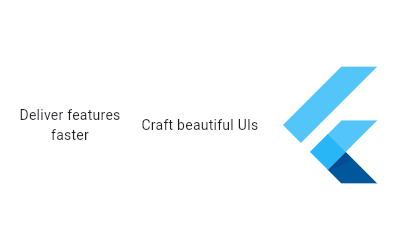
In a Row, how do you space children evenly across the width?
Set mainAxisAlignment to spaceEvenly; contrast with spaceBetween and spaceAround.
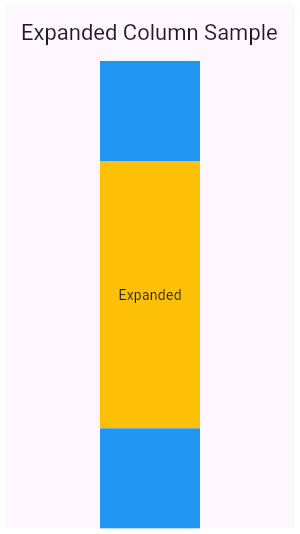
How do you split a Column 1/3 and 2/3 using Expanded?
Tests understanding of flex allocation in Flutter layouts. Strong answers wrap both containers in Expanded, assign flex values of 1 and 2, and note that Expanded forces children to fill the Column's main axis. Red flag: proposing fixed heights instead of flex.
mainAxisAlignment vs crossAxisAlignment in Column, and textDirection in Row
Tests Flutter flex axis awareness. In a Column, mainAxisAlignment is vertical and crossAxisAlignment is horizontal. In a Row, textDirection governs the main axis, not crossAxisAlignment; verticalDirection governs the cross axis.
How do Flexible and Expanded differ in a Row or Column?
Tests Flutter main-axis flex constraints. Key point: Flexible uses FlexFit.loose so the child may be smaller than its space share; Expanded uses FlexFit.tight so the child must fill its share.
Fix RenderFlex overflow in Row with long truncating text
Wrap Text in Expanded; set overflow to TextOverflow.ellipsis and maxLines: 1; leave siblings unwrapped.
Describe a strategy for ListView on phones and GridView on tablets
This tests Flutter adaptive layout skills. Use LayoutBuilder or MediaQuery to read screen width, pick a breakpoint near 600 dp, and return ListView or GridView conditionally.
Explain Flutter's 'constraints down, sizes up' rule and unbounded height error
Parents constrain down, children size up. ListView in Column throws unbounded height as Column gives infinite maxHeight; fix with Expanded or shrinkWrap.
LayoutBuilder versus MediaQuery for responsive widgets
MediaQuery reports the whole window; LayoutBuilder gives the parent's actual constraints.
What problem does IntrinsicWidth solve and what are its performance costs?
This tests Flutter constraints and intrinsic sizing. A great answer covers: capping width to the child's max intrinsic width, aligning Column children, and the speculative pass that costs O(N²) in tree depth. A red flag is omitting performance cost.
We are hiring for this. Every open role lists the topics its interview covers, so you can prepare for the real thing rather than guessing.
See open roles