Intermediate concepts in LLMs & Generative AI, page 2
Mode Collapse: When Your AI Gets Stuck in a Rut
Mode collapse is when a generative AI finds a “cheat” and produces the same few outputs over and over. This is a classic failure in GANs where the generator stops learning the full data distribution.
Fréchet Inception Distance (FID): Grading AI Art
FID grades AI-generated images by comparing their statistical "vibe" to real ones. It uses a pre-trained network (InceptionV3) to see if a batch of generated images has similar feature distributions to a real dataset. A lower score is better.
Joint Embedding Space: A Rosetta Stone for AI
A joint embedding space acts like a Rosetta Stone, mapping different data types—like images and text—to a shared coordinate system where similar concepts are close together. This powers text-to-image models and cross-modal search.
Multimodal Fusion: Combining Senses for AI
Multimodal fusion lets an AI combine data types like text, images, and audio into one understanding, much like a human brain. It's key for visual question answering or analyzing video sentiment.
Large Multimodal Models (LMMs): Beyond Text
An LMM is like a large language model that can also see and hear. It processes and connects information from multiple sources—like text, images, and audio—to perform tasks like describing a picture or answering questions about a video.
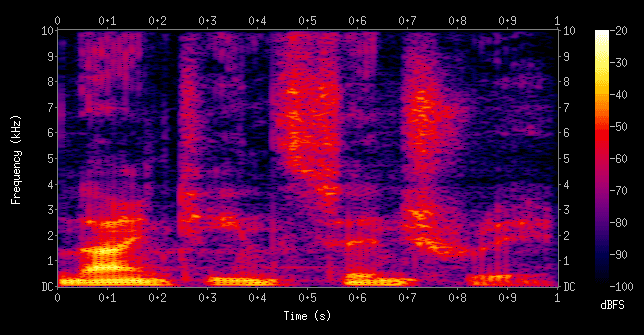
Audio Spectrograms: Turning Sound into Images for AI
A spectrogram turns sound into an image, plotting frequency against time, with color showing intensity. This lets vision-based AI models "see" audio for tasks like speech recognition or music generation. The footgun is mistaking it for a simple waveform.
Text-to-Speech (TTS): Turning Text into Spoken Audio
Text-to-Speech (TTS) systems are digital voice actors, converting written language into artificial human speech. They are the core of any system that needs to speak text aloud.
Inception Score: Judging AI Art for Quality and Variety
Inception Score judges an AI image generator on quality and variety, using a classifier to check if images are distinct and the overall set is diverse. Its main footgun is that it only measures what another AI can classify, not what a human finds appealing.
HellaSwag: A Benchmark Designed to Fool LLMs
HellaSwag is a commonsense benchmark designed to fool language models. It asks an AI to pick the most logical sentence ending, but the wrong answers are specifically generated to trick machines, not humans. It's used to test for true contextual understanding.

LLM Red Teaming: Adversarial Security Testing
LLM Red Teaming is a simulated attack where you proactively try to break your own AI to find security flaws. It's used to test for vulnerabilities like prompt injection or data leakage, which traditional security tools miss.

LLM Guardrails: Keeping Model Outputs on Track
LLM guardrails are safety policies that steer model outputs, acting like bumpers in a bowling alley to prevent responses from going off-topic, leaking data, or generating harmful content. They are crucial for topic control and preventing prompt injections.

Adversarial Attacks: Tricking LLMs into Misbehaving
Adversarial attacks are inputs designed to trick an LLM, bypassing its safety alignment. This is how "jailbreaks" coax models into generating harmful content. The footgun is assuming safety training makes a model foolproof; it just makes attacks more subtle.
ML Interpretability: Cracking Open the Black Box
ML interpretability cracks open the 'black box' to explain *why* a model made a specific decision. It's essential in high-stakes fields like finance or medicine to ensure automated decisions are fair. The footgun is trusting accuracy alone.
Value Learning
Value learning is the AI-safety approach of having a system infer what humans actually value, rather than optimizing a hand-coded proxy, so that capable agents pursue goals aligned with human intent even in novel situations.
Post-Training Quantization: Shrink Models Without Retraining
Post-Training Quantization (PTQ) shrinks a pre-trained model by converting its weights to lower precision, like turning a WAV file into an MP3. Use it to run large models on consumer GPUs without costly retraining.

ONNX Runtime: Run Any AI Model, Anywhere
ONNX Runtime is a universal engine for AI models, letting you run them efficiently on any hardware, from cloud GPUs to a user's browser. It's used to deploy models for fast inference on servers or mobile devices.
FlashAttention: Faster, Memory-Efficient Exact Attention
FlashAttention is an IO-aware algorithm that computes exact attention faster and with less memory. It avoids slow GPU memory transfers, making it a key optimization for training and serving large models on modern GPUs.

Fairness Metrics: Quantifying AI's Impact on People
Fairness metrics translate "fairness" into a measurable score, checking if a model treats groups equitably. They are crucial for models in hiring or lending.

The EU AI Act: Risk-Based AI Regulation
The EU AI Act isn't a blanket ban but a risk-based framework. It sorts AI into tiers—from unacceptable to minimal risk—and applies rules proportionally, affecting any company with AI users in the EU. The footgun is assuming it only applies to EU companies.

The Llama Model Family: Open-Source AI for Production
Think of Llama not as one model, but a family of open-source AIs you can run anywhere. Use it for cost-effective, fine-tuned applications like internal search or when you need full control. The biggest mistake is mis-sizing the model for your task.
We are hiring for this. Every open role lists the topics its interview covers, so you can prepare for the real thing rather than guessing.
See open roles