Intermediate concepts in LLMs & Generative AI, page 4
Tokenization and Input Embeddings in LLMs
Tokenization splits language into tokens, and embeddings map token IDs into vectors with meaning. Every transformer does this first. The footgun is assuming one token equals one word—token counts behave unpredictably when words merge or split.
Position-wise FFN: Each Token's Private Workshop
Think of the position-wise FFN as each token's private gym after attention: it bulks up features and stores facts, but never shares between seats. Cutting it to save parameters starves the model because attention cannot do this alone.
Transformer Encoder Block
A Transformer encoder block mixes full sequence context in parallel: every token attends to all others to refine its vector. It drives bidirectional models like BERT. The footgun is using it unmasked for generation, which leaks future information.
Masked Multi-Head Attention in Decoders
Masked multi-head attention runs parallel detectors over past tokens only, stopping a decoder from peeking ahead. It powers autoregressive models like GPT. The footgun is using the causal mask in bidirectional encoders, which silently destroys context.
Masked Language Modeling: Fill-in-the-Blank Pretraining
MLM hides random tokens and trains the model to reconstruct them from context. It powers BERT-style encoders for classification and search. The catch is that it never learns left-to-right generation, so it needs extra machinery for open-ended text.
Function Calling: LLMs Using Tools
Function calling turns an LLM into an API translator: it reads input and emits JSON telling your code which tool to run. Use it when the model needs live data it cannot store in weights. The model never executes the call and can hallucinate arguments.
Tool Definition Schema: Contracts for LLM Actions
A tool schema is JSON that tells an LLM what actions it can take. Use it when you want the model to call APIs instead of just chatting. The model only emits arguments; it never runs the tool, and vague descriptions cause silent failures.
ROUGE Score: Recall Overlap for Generation
ROUGE measures text generation recall by counting overlapping words and phrases against a reference. It is the default metric for summarization benchmarks. Perfect paraphrases score poorly while keyword-stuffed nonsense can score high.
Hallucination Detection in LLMs
Hallucination detection is the set of techniques for flagging when a language model states something fluent but false or unsupported, using signals like self-consistency, model uncertainty, and grounding against retrieved evidence to catch fabrications before…
HHH: The Three-Way Tug-of-War in LLMs
HHH frames LLM alignment as a three-way tug-of-war: helpful, harmless, honest. It governs RLHF reward models and safety filters, where maximizing one axis weakens the others. The footgun is optimizing helpfulness, producing sycophants or dangerous compliance.
Data Poisoning: Corrupting Models at the Source
Data poisoning is slipping lies into a textbook that a model memorizes forever. It shows up when you train on scraped web data or open fine-tuning sets. The footgun is assuming clean benchmarks mean clean weights; poison can hide until a trigger appears.
NIST AI RMF for LLM Deployment
The NIST AI RMF is a pre-flight checklist for organizational AI risk, not just code bugs. Teams use it to justify LLM deployment across legal, security, and fairness dimensions.
State-Space Models Replace Quadratic Attention
State-space models replace attention with recurrent linear dynamics, scaling linearly with sequence length. They excel at long DNA, audio, and video modeling. The footgun is naive discretization, which collapses stability on long sequences.
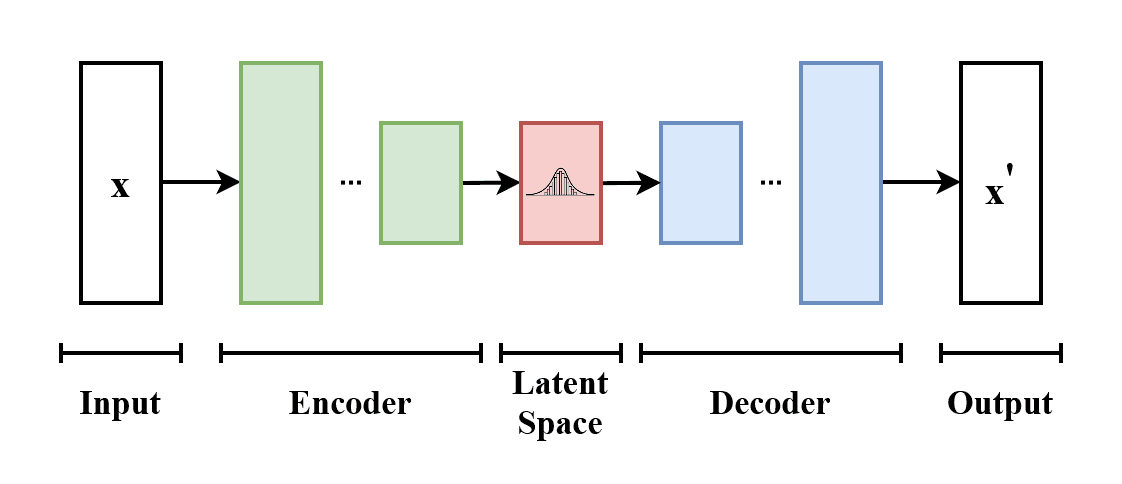
VAEs: Generating New Data by Learning Its Essence
A Variational Autoencoder (VAE) learns the *essence* of data, not just how to copy it. Instead of compressing an input to a single point, it maps it to a fuzzy region in a "concept space," allowing you to generate new, similar data by sampling from that region. This is key for creating novel images or music. The footgun is expecting sharp outputs; VAEs often produce blurrier results than models like GANs.
Tool Use: Giving LLMs Access to External Systems
Tool use lets an LLM call external functions, like a brain accessing a calculator or the internet. This is the core mechanism behind AI agents that can search the web, run code, or query a database to answer questions. The biggest footgun is assuming the model will always generate a valid function call; without enforcing a strict schema to match your function's expected input, your agent can fail unpredictably.
RAG: Giving Language Models an Open-Book Exam
Retrieval-Augmented Generation (RAG) gives a language model an open-book exam instead of forcing it to memorize everything. It combines a model's reasoning ability with a searchable external knowledge base. This grounds LLM responses in specific, up-to-date information, like a support bot using a product manual. The footgun is forgetting that the quality of the retrieved information directly limits the quality of the final answer.
Chain-of-Thought: Making LLMs 'Show Their Work'
Chain-of-thought prompting makes an LLM 'show its work' by generating intermediate reasoning steps before the final answer. This simple few-shot technique dramatically improves performance on complex tasks like math word problems or commonsense questions, especially for very large models. The common footgun is applying it to smaller models, where it can actually degrade performance instead of helping, as the reasoning ability hasn't yet emerged.

Generative Adversarial Networks (GANs): An AI Arms Race
Think of a GAN as an AI arms race between two networks: a forger and a detective. The forger network (Generator) creates fake data, like images or audio, while the detective network (Discriminator) tries to spot the fakes. This competition forces the forger to create increasingly realistic outputs. The main footgun is training instability—if one network overpowers the other too early, the whole system fails to learn and produces garbage.
Diffusion Models: Generating Data by Reversing Noise
Think of diffusion models as learning to reverse a "random walk." They take a clean data point, gradually add noise until it's unrecognizable, and then train a model to reverse that process step-by-step. This allows them to start with pure noise and guide it back into a coherent sample that resembles the original dataset. The footgun is that this multi-step reversal makes generation computationally intensive compared to single-pass models.
Perplexity: Measuring a Model's Uncertainty
Perplexity frames a model's uncertainty as the effective number of choices it's considering. For a fair die with six outcomes, the perplexity is 6, reflecting perfect confusion among six options. When evaluating language models, a lower perplexity score indicates a better ability to predict a sequence of text. The footgun is judging the score in a vacuum; a 'good' perplexity is always relative to the task's inherent randomness.
We are hiring for this. Every open role lists the topics its interview covers, so you can prepare for the real thing rather than guessing.
See open roles