Concepts in LLMs & Generative AI, page 6
Hugging Face Hub: The GitHub for Machine Learning
Think of the Hugging Face Hub as the GitHub for machine learning. It's a central platform to find, share, and collaborate on millions of models, datasets, and demo apps. Use it to download a pre-trained model or share your own.
The OpenAI API: Access to Foundational AI Models
The OpenAI API provides access to influential models like GPT and DALL-E. It enables developers to integrate generative AI into commercial applications and research, building on technology that catalyzed the current AI boom.

The Llama Model Family: Open-Source AI for Production
Think of Llama not as one model, but a family of open-source AIs you can run anywhere. Use it for cost-effective, fine-tuned applications like internal search or when you need full control. The biggest mistake is mis-sizing the model for your task.
MaaS: Renting AI Brains via API
Model-as-a-Service (MaaS) is like renting a pre-trained AI expert via an API. Instead of building and training your own models, you pay to use powerful, ready-made ones for tasks like text generation or image analysis.
Amazon Bedrock: One API for Many AI Models
Amazon Bedrock is an API gateway for foundation models, letting you switch AI providers without rewriting code. It's used to build generative AI apps while avoiding vendor lock-in.
Model Merging: Combine LLM Skills Without Retraining
Model merging blends specialized LLMs into one, like creating a custom alloy from different metals. It's used to combine a coding expert with a legal expert, for example, without costly retraining.
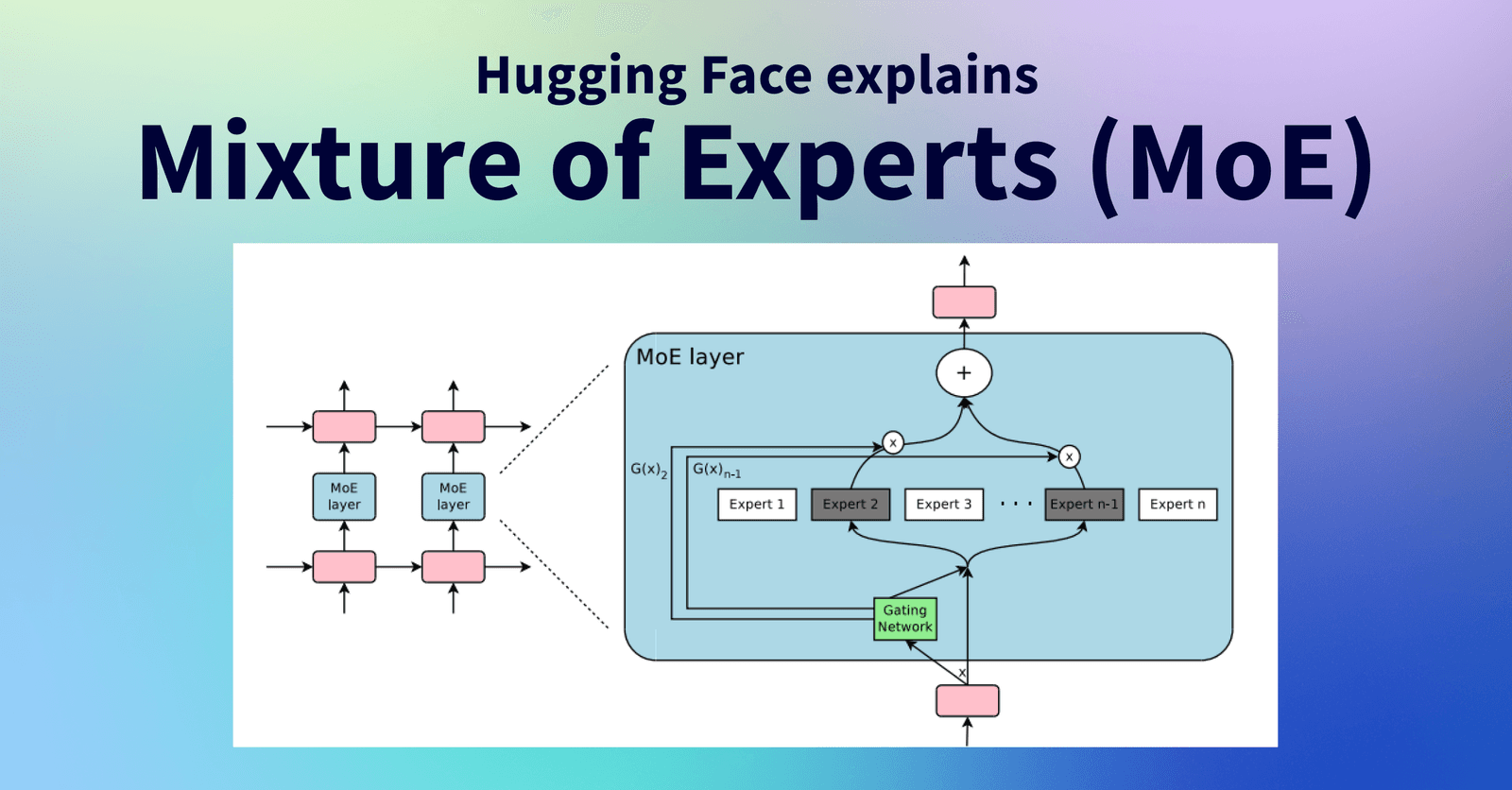
Mixture of Experts: Scaling Models by Activating Specialists
A Mixture of Experts (MoE) model acts like a team of specialists instead of one generalist. A router sends each token to a few expert sub-networks, enabling faster training and inference for massive models.
World Models: An AI's Internal Simulator for Planning
A world model is an AI's internal simulator, letting it 'dream' about how actions change its environment. This powers robots and autonomous cars, letting them plan complex tasks without real-world trial and error.
Document Chunking: Slicing Text for LLMs
Think of chunking as preparing text "bites" for an LLM. It breaks large documents into smaller, meaningful segments to fit a model's context window and improve search. It's essential for Retrieval-Augmented Generation (RAG) and semantic search.
Evaluating RAG Systems: Metrics for Retrieval and Generation
Evaluating a RAG system means grading its two parts: retrieval and generation. Metrics like relevance check if the right documents were found, while faithfulness and accuracy check if the final answer correctly uses those documents.
Cross-Encoder Re-ranking: Accuracy Over Speed
A cross-encoder re-ranks search results by reading the query and each document together, allowing it to spot subtle connections. It's the second, high-precision step in a search pipeline, re-ordering a small list of candidates.
Agentic Reasoning: LLMs that Plan, Act, and Learn
Agentic reasoning treats an LLM as an autonomous agent that interacts with its environment. It plans tasks, uses tools like APIs, and learns from feedback to solve complex problems. The footgun is assuming its plans are optimal or actions are always correct.
Agent Memory: Short-Term vs. Long-Term Recall
Agent memory gives an LLM a sense of history, separating fleeting conversation context from persistent knowledge. Short-term memory tracks the current chat, while long-term memory recalls user facts across sessions.
LangChain Agents: Giving LLMs a Toolkit
A LangChain Agent is an LLM given a toolkit and a goal. The agent's 'harness' prompts the model to pick tools, call them in a loop, and reason about the results until the task is complete. Use it to query databases or call external APIs.
Reflection: Teaching LLM Agents to Learn from Mistakes
Reflection gives an agent an "inner monologue" to learn from its mistakes. An Actor model attempts a task, an Evaluator scores it, and a Self-Reflection model generates linguistic feedback for the next try.
LLMs as Tool Makers: Write Once, Solve Many
LLMs can create their own tools, not just use them. A powerful model writes a reusable function once, and a cheaper model calls it many times. This gives top-tier results at a lower cost for repetitive tasks.

Full Fine-Tuning: Updating Every Model Parameter
Full fine-tuning updates all weights of a pre-trained model on your new data, unlike methods that only change a small fraction. Use it to deeply embed new knowledge, but beware: it's costly and risks making the model forget its original general skills.
Modality Gap: When Multimodal LLMs Don't Trust Their Senses
A multimodal LLM has a modality gap when it trusts one input type (like text) over another (like images), even with identical information. This bias causes performance drops, like ignoring visual data if conflicting text is present.

Model Pruning: Making LLMs Smaller, Not Dumber
Model pruning is surgical weight loss for an LLM, removing neurons or layers to reduce its size. It's used to create smaller, faster versions of models like LLaMA for efficient deployment. The footgun: naive pruning can cripple the model's core capabilities.

Dynamic Batching: Balancing LLM Throughput and Latency
Dynamic batching groups LLM requests like a bus that leaves on a schedule or when full, whichever comes first. This improves throughput in inference servers by avoiding long waits. The footgun: all requests in a batch are still held hostage by the slowest one.
We are hiring for this. Every open role lists the topics its interview covers, so you can prepare for the real thing rather than guessing.
See open roles