Easy everything in LLMs & Generative AI
Hugging Face Hub, transformers, and datasets
The Hub hosts models and data, transformers loads models and tokenizers and provides the Trainer, datasets streams and maps preprocessing.
Closed API vs open-weight models for production
APIs offer top quality and zero ops but recurring per-token cost and data-sharing concerns, open weights give control, privacy, and tuning at the price of hosting and MLOps burden.
Fine-tuning vs RAG for daily-updated docs
Choose RAG because docs change daily, embed and index chunks in a vector store, retrieve top matches and inject into the prompt.
Rule-based versus model-based LLM guardrails
A guardrail is a programmatic check constraining LLM I/O; rule-based uses regex or blocklists, model-based uses a classifier like a moderation model to detect harmful content.
Teacher-student knowledge distillation
A small student learns to mimic a large teacher's soft probability outputs, not just hard labels; goal is a compact model retaining most capability.
How the KV cache speeds transformer generation
Cache stores past keys and values so each new token only computes its own K, Q, V instead of recomputing all prior tokens, cutting per-step cost from quadratic to linear.
Model quantization benefits and risks
Quantization stores weights and activations in lower precision like INT8 or INT4; benefits are smaller memory and faster, cheaper inference; risk is accuracy loss.
Red teaming LLMs and harmful output categories
Red teaming deliberately probes a model to elicit harmful behavior; categories include toxic or hateful content and dangerous instructions like weapons or malware.
What RLHF is and the safety problem it solves
Collect human preference rankings, train a reward model, fine-tune the policy with PPO; it aligns outputs with human intent the loss function cannot specify.
Standard metric for image generation quality
Name FID, explain it compares feature distributions of real and generated images via a pretrained network.
Why human evaluation is the gold standard
Humans judge fluency, helpfulness, and correctness that n-gram or distribution metrics miss; automated scores correlate weakly with quality, are gameable, and penalize valid diverse outputs.
Perplexity versus BLEU for LMs
Perplexity measures intrinsic next-token prediction quality needing no references; BLEU measures n-gram overlap with reference outputs for tasks like translation.
Early versus late modality fusion
Early fusion merges raw or low-level features so the model learns cross-modal interactions, while late fusion processes each modality separately and combines outputs.
Classic image captioning architecture
A CNN encoder extracts image features, a recurrent or transformer decoder generates the caption word by word, and attention lets the decoder focus on image regions per word.
Pre-training versus fine-tuning an LLM
Pre-training is broad self-supervised next-token prediction on huge corpora at massive cost; fine-tuning adapts on small labeled data cheaply.
Causal versus Masked Language Modeling
Pre-training learns general language from unlabeled text; CLM predicts the next token left-to-right, MLM predicts masked tokens using both sides.
Self-Attention versus Recurrent Architectures
Each token attends to all others via query-key-value, enabling parallelism and direct long-range links.
Vanishing Gradients and Why ReLU Helps
Saturating activations shrink gradients across layers, ReLU's flat-one derivative preserves them.
Explain Denoising Diffusion models and forward/reverse processes.
This tests if you see diffusion as iterative latent generation, not GANs. Forward: add Gaussian noise over T steps until data is pure noise. Reverse: a network iteratively denoises random noise into data.
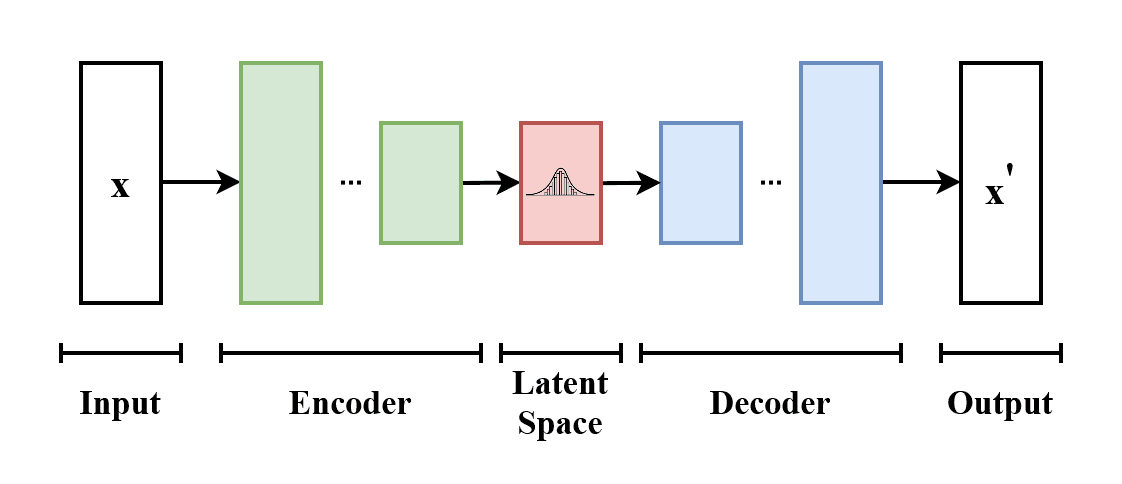
Key latent space difference between Autoencoder and VAE, and generative use
This tests deterministic versus probabilistic latent representations. Standard autoencoders encode fixed points; VAEs encode distributions. Sampling the regularized latent distribution generates new data. Red flag: calling VAEs mere noise adders.
We are hiring for this. Every open role lists the topics its interview covers, so you can prepare for the real thing rather than guessing.
See open roles