Advanced concepts in MLOps & Infrastructure
Continuous Training: CI/CD for ML Models
Continuous Training (CT) is a CI/CD pipeline for models, not code. It automatically retrains and redeploys models to fight performance decay from changing data, a problem known as 'data drift'. The footgun is deploying a new model without validating it first.
Data Drift vs. Concept Drift: When Models Go Stale
Your ML model's accuracy decays when the real world no longer matches its training data. This is drift. It happens when user behavior changes (concept drift) or input data distributions shift (data drift).
ML Metadata: The Logging Layer for ML Pipelines
ML Metadata is the logging layer for your ML pipeline, tracking every dataset, hyperparameter, and model version. It's crucial for debugging failed runs by tracing a model back to its exact data.
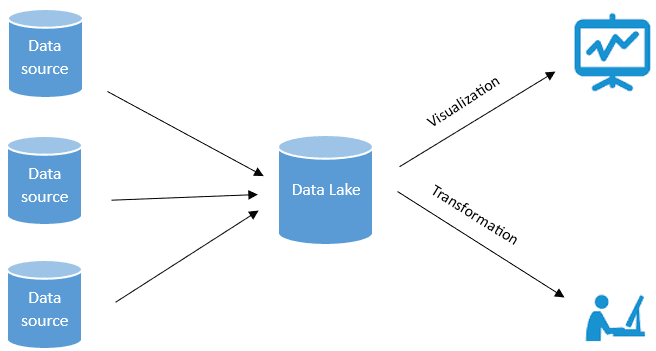
Data Lake: A Single Repository for Raw Data
A data lake is a central repository that stores vast amounts of raw data in its native format. It acts as a single source for analytics and machine learning, but without proper management it can become a useless "data swamp".
Point-in-Time Correctness: Avoiding Data Leakage in ML
A point-in-time correct join is a time-traveling lookup for ML features, grabbing the most recent values known *at the time of an event*. It's vital when building training data from feature tables that update at different rates to prevent data leakage.

Feature Governance: Taming Your ML Inputs
Feature governance treats ML inputs like code, enforcing consistency from training to production. It's a central system of record for what data your models see. This prevents training-serving skew.
Entity Embeddings: Smart Maps for Categorical Data
Entity embeddings turn categorical data like user IDs into dense vectors, creating a "map" where similar items are neighbors. This is used in neural networks to handle high-cardinality features efficiently, avoiding the memory bloat of one-hot encoding.
Model Lineage: The Git History for Your AI
Think of model lineage as the git log for your AI, tracking every input from data to code that created it. It's essential for reproducing models, debugging failures, and satisfying regulatory audits.
PMML: The 'Save File' for Machine Learning Models
PMML is like a universal "save file" for ML models, using XML to describe everything needed for prediction: features, preprocessing, and model structure. It enables training in Python and deploying in Java. The footgun: verbose files and partial tool support.
Multi-stage Docker Builds: Lean Images, Fast Deploys
Build your app in one container stage and run it in another, separate one. This keeps your final Docker image lean by shipping only the compiled artifact, not the entire build environment, compilers, and source code.
Secrets Management: Beyond Environment Variables
Treat secrets like cattle, not pets: they should be temporary and replaceable. Use a central vault to dynamically inject credentials into apps at runtime, especially in CI/CD and containerized environments.
Nix: Reproducible Builds Through Functional Package Management
Nix treats system configuration like pure functional programming, ensuring reproducible builds by isolating every package into a unique, immutable path. It's used for reliable CI/CD and consistent dev environments. The footgun is its steep learning curve.
All-Reduce: Synchronizing Parallel Workers
All-Reduce lets parallel workers agree on a global result. Each worker contributes data, an operation (like sum) runs on all data, and every worker gets the final answer. It's the core of distributed ML training, used to average gradients across GPUs.

Microsoft DeepSpeed: Training Massive Models Across GPUs
DeepSpeed trains models too big for one GPU by partitioning model states across many devices. It's essential for training foundation models like BLOOM, but its complexity is overkill for smaller models and misconfiguration can harm performance.
GitOps for MLOps: Your ML System as Code
GitOps for MLOps treats your entire machine learning pipeline—data, code, and models—as declarative configuration in Git. It automates ML workflows, ensuring reproducibility by making every change a reviewable commit.
Multi-Armed Bandits for Model Selection
Treat your candidate models like slot machines. A Multi-Armed Bandit (MAB) algorithm automatically allocates traffic to find the best one, balancing exploration of new options with exploiting the current winner.
NVIDIA Triton: A Universal AI Model Server
Triton Inference Server is like a universal remote for AI models, providing a standard API to serve models from any framework. Use it to deploy diverse models (PyTorch, ONNX) without custom serving stacks.
Model Pruning: Making ML Models Smaller and Faster
Model pruning is like trimming a bonsai tree; you remove the least important weights to create a smaller, faster model. It's essential for running large models on devices like smartphones, but over-pruning can irreversibly damage accuracy.
Model Compilation: Bridging Models and Hardware
An ML compiler translates a model's abstract math into optimized instructions for specific hardware. This lets you run the same model efficiently on cloud GPUs, mobile CPUs, or edge devices.
Multi-Model Serving: Packing More Models into Less RAM
Multi-model serving is a carpool for your ML models. Instead of one server per model, you pack many into a single process to share resources and cut costs. It's ideal for serving many models with intermittent traffic.
We are hiring for this. Every open role lists the topics its interview covers, so you can prepare for the real thing rather than guessing.
See open roles