Advanced everything in MLOps & Infrastructure
Automated rollback for a failed model deploy
Detect failure via health and metric checks, automatically route traffic back to the last known-good version (blue-green or canary), keep the registry entry but unpromote, and alert.
CI/CD for microservice-based ML systems
Independent per-service pipelines, contract testing to protect interfaces and schemas, and incremental deploys (canary, blue-green); manage data and model contracts, not just code.
Fairness and robustness gates in CI/CD
Sliced fairness metrics across subgroups, robustness checks via perturbation and adversarial sets, all compared to thresholds that fail the build.
Managing model-as-a-feature pipelines
An upstream embedding model becomes a versioned dependency, creating cascading retraining, version skew, latency stacking, and lineage complexity.
Scalable multi-modal data quality pipeline
Staged distributed pipeline doing schema and integrity checks, modality-specific filtering, dedup, PII and toxicity removal, and metric-gated quarantine.
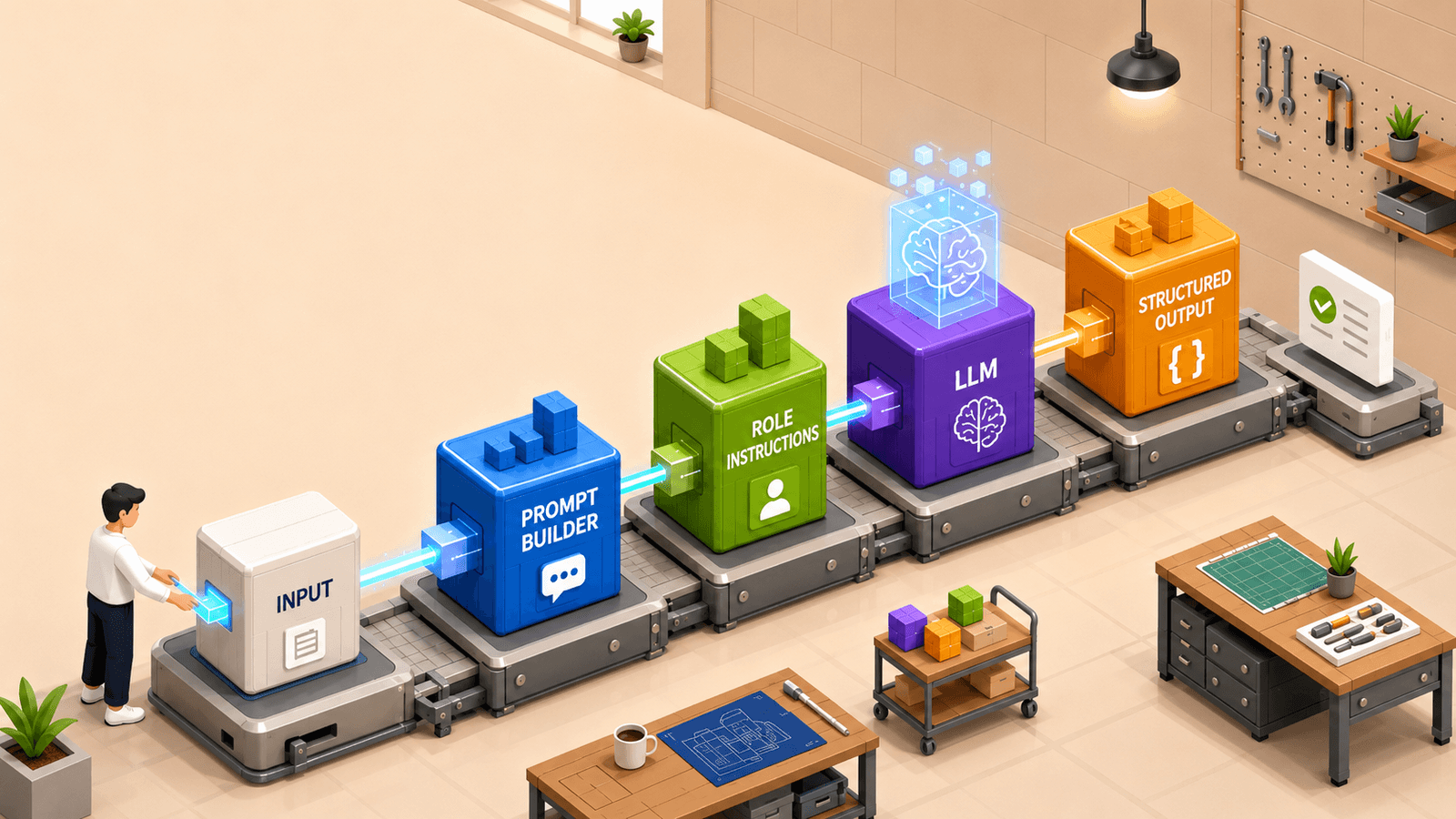
Most LLM Apps Need Workflows Not Agent Frameworks
Most LLM apps ship faster and more reliably as deterministic workflows than autonomous agents. Plain Python with structured outputs and local functions beats CrewAI and LangGraph for debugging. Map control flow in code before importing any agent framework.
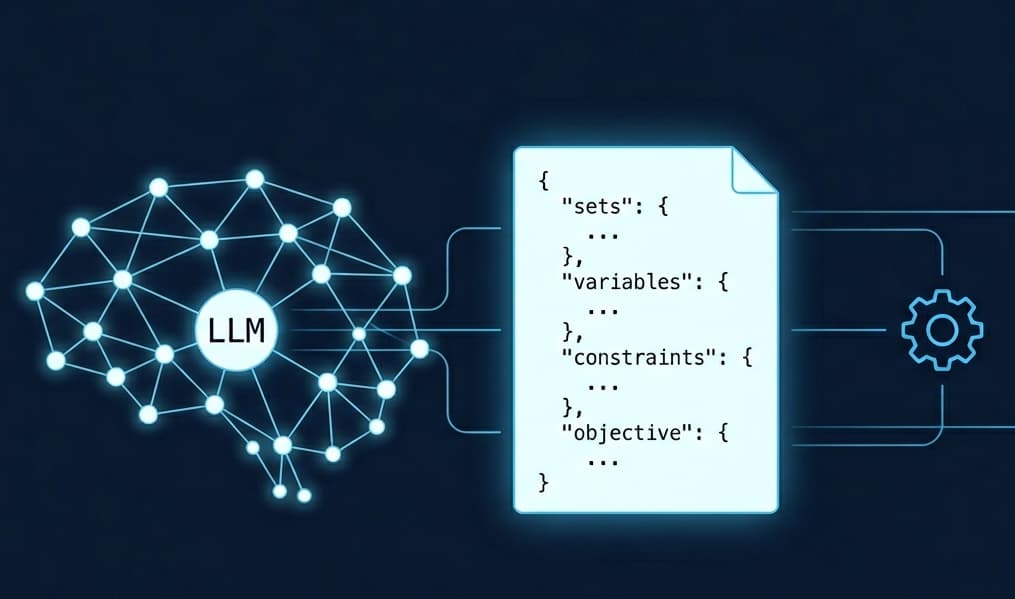
ORPilot JSON IR Ends Solver Lock-In
ORPilot's open-source IR captures optimization models as solver-agnostic JSON, letting teams swap solvers or update data without calling the LLM again. It separates model structure from solver syntax, making LLM-generated OR models reproducible in production.

Default Churn Thresholds Waste $86 per Customer
90% of 36 IBM Telco churn analyses use F1 and a 0.5 threshold, assuming equal costs for false positives and negatives. That is wrong by 13x, burning $86 per customer, or $8.6M at 100k subscribers. Swap accuracy for profit curves tied to LTV and CAC.

Describe an ML workflow with massive egress fees and re-architecture to mitigate
Tests whether you recognize egress spikes when storage and compute cross cloud or region boundaries. Great answers sketch a multi-cloud training pipeline, cite per-GB rates, and propose caching or compute placement. Red flag: suggesting compression alone.
Design a showback or chargeback system for ML infrastructure costs
Tag workloads to cost centers; define shared-resource formulas; automate reconciliation; use showback.
Design a defense-in-depth strategy against adversarial evasion on a deployed image classifier
Proactive: adversarial training, preprocessing, ensembles.

Design a cryptographically verifiable ML audit trail from dataset to deployment
Tests cryptographic provenance and tamper-evident ML pipelines. Strong answers cover content-addressed datasets, signed training logs linking code and hyperparameters to model hashes, and deployment signature checks.

Propose an architectural solution for contended GPU training resources
Tests multi-tenant GPU scheduling design at scale. Great answers tier jobs by checkpointability, apply quota-based preemption, mix spot and on-demand instances, and use MIG or time-slicing to bin-pack. Red flag: buying GPUs without scheduling logic.

Design a multi-tenant ML platform with isolation, security, and cost attribution
Tests mapping tenancy to compute, network, and identity primitives. Strong answers compare hard vs soft isolation, use namespaces or node pools with network policies and IAM, and enforce chargeback via resource quotas and labels.
How would you architect dynamic training resource provisioning?
Routes jobs to right-sized instances, provisions managed jobs using spot, and auto-tears down on completion.

Design concept drift detection with automated retraining safeguards
Baseline monitors raise CloudWatch alarms; EventBridge triggers retraining with cooldowns; model registry gates promotion.

How do you monitor thousands of per-customer models as a fleet?
Tests fleet-level statistical aggregation versus per-instance alerting. Strong answers propose tiered telemetry, cohort baselining for drift, and hierarchical alerting to prevent fatigue.
Design an automated system to diagnose model performance drop root causes
Tests causal attribution between pipeline bugs and drift. Strong answers sequence schema/null audits, feature drift via PSI/KS, then concept drift via holdout decay. Red flag: skipping pipeline checks to retrain immediately.
Design a multi-model serving architecture for infrequently used models
Tests sparse-traffic cost efficiency via shared compute and dynamic loading. Strong answers: LRU cache on fast storage, scale-to-zero with async preload, pinned hot models, per-model quotas.

Design cost-effective inference for spiky traffic without idle GPUs
Tests designing inference that cuts idle GPU cost during troughs yet handles spiky peaks with low latency via SageMaker blue/green fleets, production variants, and CloudWatch baking periods. Red flag: always-on GPU pools with naive auto-scaling.
We are hiring for this. Every open role lists the topics its interview covers, so you can prepare for the real thing rather than guessing.
See open roles