Easy everything in MLOps & Infrastructure
Stages of an end-to-end ML pipeline
Ingest, validate, preprocess and feature engineer, train, evaluate against a baseline, then register and package for deployment, with gates between stages.
Detecting data drift on a continuous feature
Data drift is when serving feature distributions shift from training; detect with a Kolmogorov-Smirnov test comparing distributions; a small p-value signals drift to alert on.
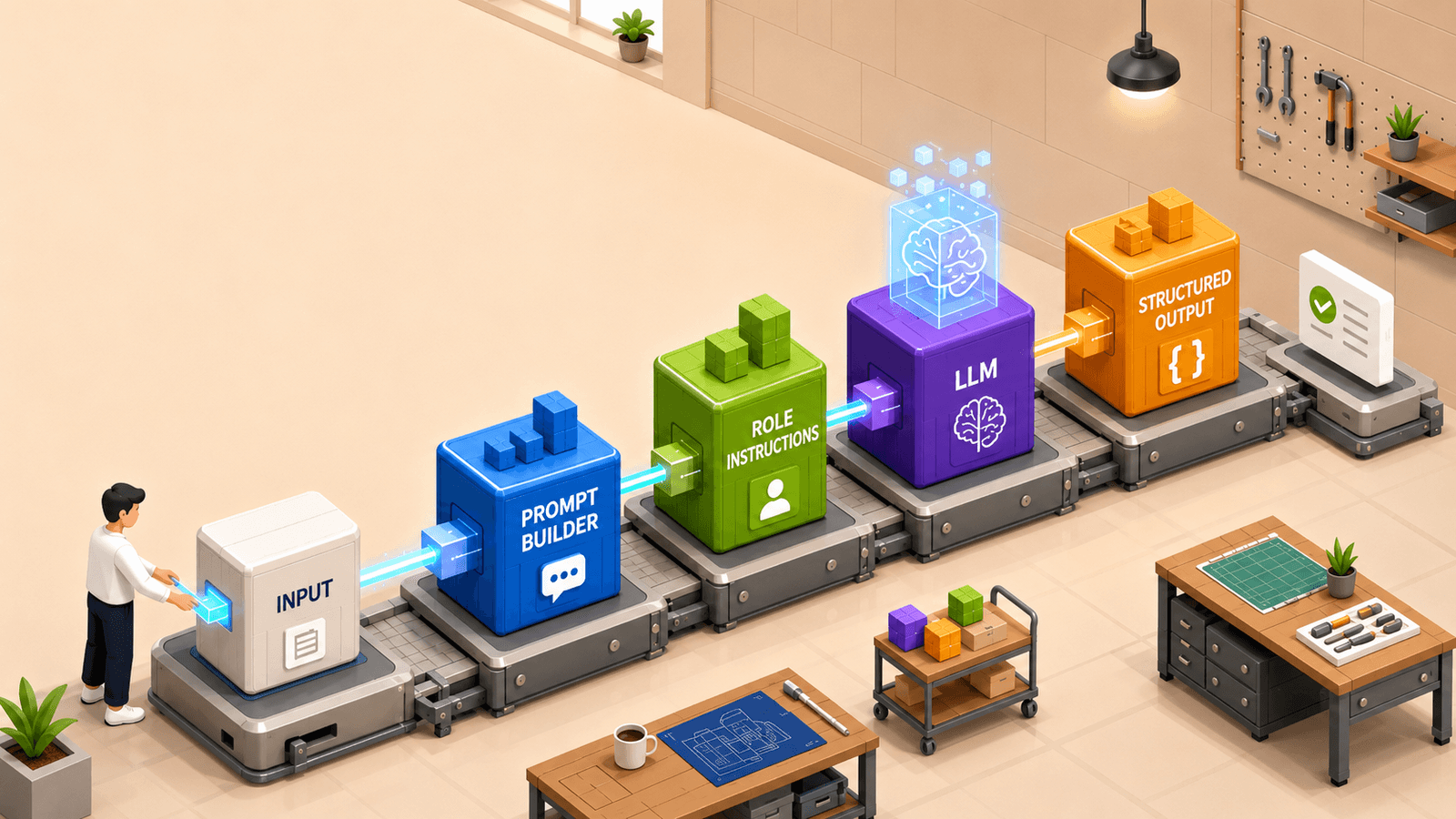
Most LLM Apps Need Workflows Not Agent Frameworks
Most LLM apps ship faster and more reliably as deterministic workflows than autonomous agents. Plain Python with structured outputs and local functions beats CrewAI and LangGraph for debugging. Map control flow in code before importing any agent framework.
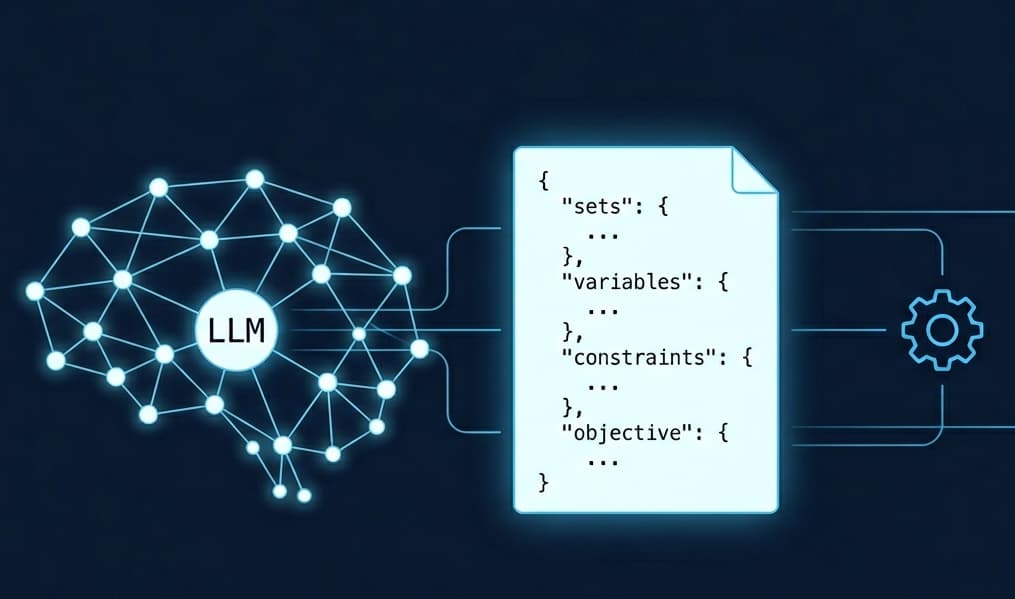
ORPilot JSON IR Ends Solver Lock-In
ORPilot's open-source IR captures optimization models as solver-agnostic JSON, letting teams swap solvers or update data without calling the LLM again. It separates model structure from solver syntax, making LLM-generated OR models reproducible in production.

Default Churn Thresholds Waste $86 per Customer
90% of 36 IBM Telco churn analyses use F1 and a 0.5 threshold, assuming equal costs for false positives and negatives. That is wrong by 13x, burning $86 per customer, or $8.6M at 100k subscribers. Swap accuracy for profit curves tied to LTV and CAC.

Describe a basic lifecycle policy to manage cloud storage costs
This tests cost optimization via tiered storage and automated expiration. Strong answers list transitions from Standard to IA to Glacier, then deletion after set days, plus retrieval costs. A red flag is using manual scripts instead of native lifecycle rules.
Differences between on-demand, reserved, and spot EC2 instances?
Tests cost-reliability-commitment tradeoffs for ML infrastructure. Good answers map on-demand to experiments, reserved for production training, and spot to fault-tolerant batch jobs. Red flag: spot for real-time serving or skipping reserved capacity analysis.
How do you attribute cloud costs to ML projects and implement tagging?
Tests knowledge of resource tagging for cost attribution. A strong answer names provider-specific tags or labels, embeds them in infrastructure-as-code, and activates cost allocation reports.
Why was this customer denied: global or local explanation?
This tests matching questions to explanation scope. Global methods show overall behavior; local methods explain one prediction. Specific denials need local methods like SHAP. A red flag is using global summaries like permutation importance or PDPs for a case.
How do you give read-only access to a shared cloud storage bucket?
Bind an IAM role with read permissions to the team at the bucket level, avoid object-level ACLs, and mount read-only on training VMs.
What is a feature store and how does it prevent training-serving skew?
This tests training-serving consistency via centralized feature management. Covers offline batch storage, online serving, shared transformations, and alternatives like ad-hoc ETL. A red flag is calling it just a database and ignoring point-in-time correctness.
What are the essential components of an end-to-end ML platform?
Tests mapping the ML lifecycle to infrastructure. A strong answer walks through six stages: data ingestion, feature store, training pipeline, model registry, deployment/serving, and monitoring with feedback loops.
What triggers automatic full retraining in an ML pipeline?
A strong answer lists four triggers: fresh data, code changes, model drift, and scheduled cadence.

Differences between monitoring a traditional REST API and a production ML model
Contrast latency/errors with ML signals like data drift and training-serving skew against baselines, noting ground truth delays.
Deploy a trained model as a containerized REST API
This tests practical MLOps fluency. A strong answer covers loading the artifact, wrapping it in a web server, building a Dockerfile, and exposing health and predict endpoints. Red flag: conflating training with serving or omitting resource limits.

Describe the difference between online and batch inference.
Online uses autoscaling APIs for millisecond-to-second latency; batch uses scheduled compute for minute-to-hour latency.
Describe the difference between online and batch inference.
Online serves single requests in ms on live endpoints; batch processes data offline with elastic compute.
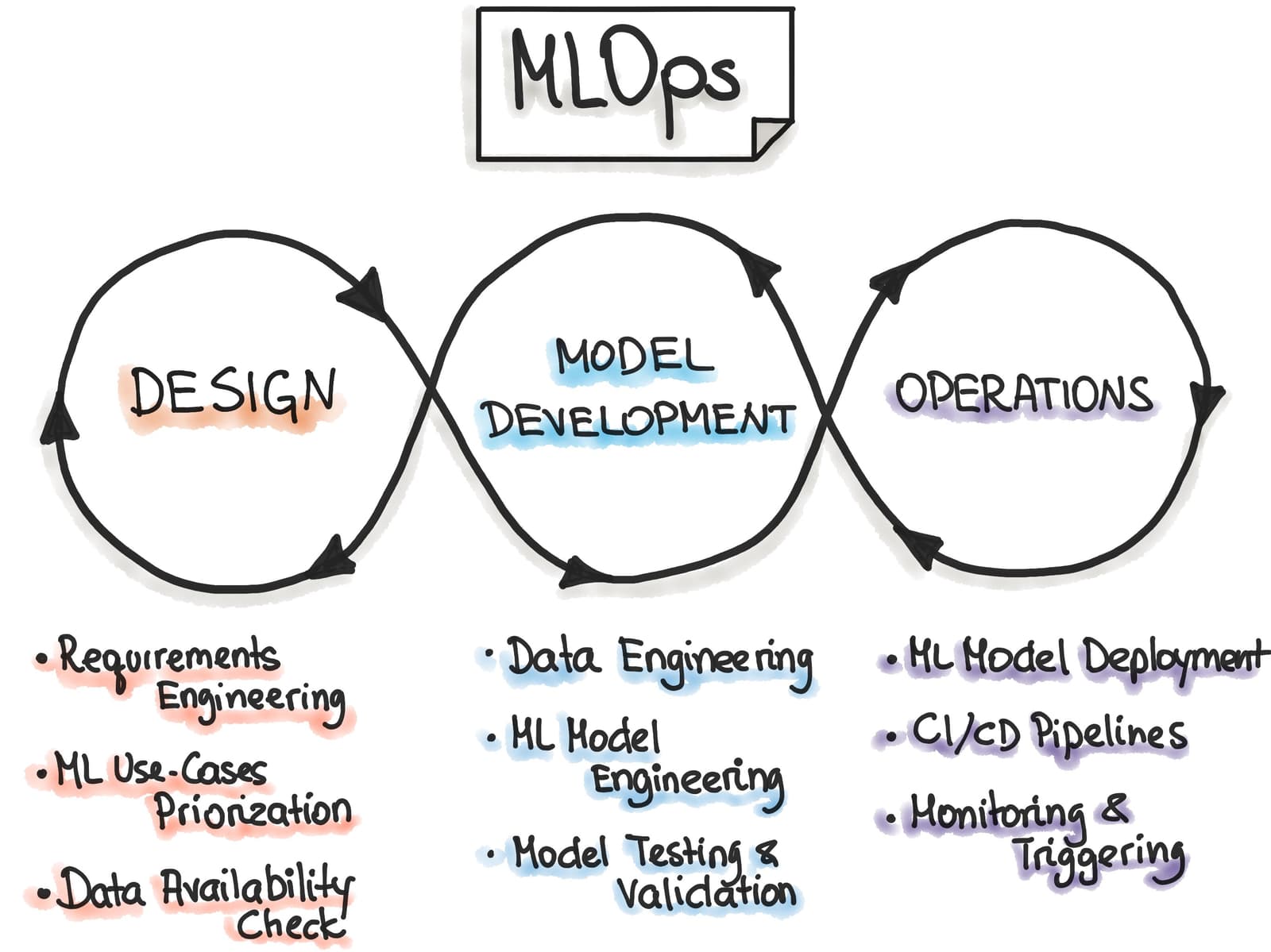
What is a model registry's purpose in CI/CD4ML and its CI/CD interaction?
Tests if you see the model registry as the bridge between experiments and production, not just storage. A strong answer explains how CI publishes validated artifacts and CD consumes versioned models. Red flag: calling it a passive file dump without versioning.
What automated tests belong in CI before deploying a classification model?
Name data schema checks, performance regression vs baseline, bias audits, and artifact integrity.
Key differences between traditional and ML CI/CD pipelines?
Contrast code deploys with data versioning, model registries, and retraining; note holdout eval.
We are hiring for this. Every open role lists the topics its interview covers, so you can prepare for the real thing rather than guessing.
See open roles