Advanced concepts in MLOps & Infrastructure, page 2
Logging Model Explanations, Not Just Predictions
Log *why* your model makes a prediction, not just the output. This captures the model's reasoning, creating a debuggable audit trail. It's essential for diagnosing model drift and ensuring fairness.
DDM: Detecting Drift with Error Rate Statistics
DDM acts as a statistical alarm on your model's error rate, watching for spikes that signal the underlying data has changed. Use it for online binary classification with immediate feedback, like spam filtering.
Compute Abstraction Layer: Run Code Anywhere
A Compute Abstraction Layer is a universal adapter for your code, letting you run it on a laptop, cloud GPU, or cluster without changes. It's used in MLOps to scale a script from local debug to production training. The footgun is a leaky abstraction.
Hybrid Cloud MLOps: Train Anywhere, Deploy Everywhere
Treat your ML infrastructure like your applications—a consistent platform that runs anywhere, avoiding siloed stacks for data science and app dev. Use it to train on cloud GPUs but deploy on-prem for low latency, ensuring dev/prod parity across environments.
Adversarial Attacks: Fooling Smart Models with Tiny Changes
Adversarial attacks trick ML models with tiny, imperceptible input changes, causing misclassification. It's like a visual illusion for an AI, turning a 'stop sign' into a 'speed limit' sign by altering a few pixels.
Counterfactual Explanations: How to Change a Model's Mind
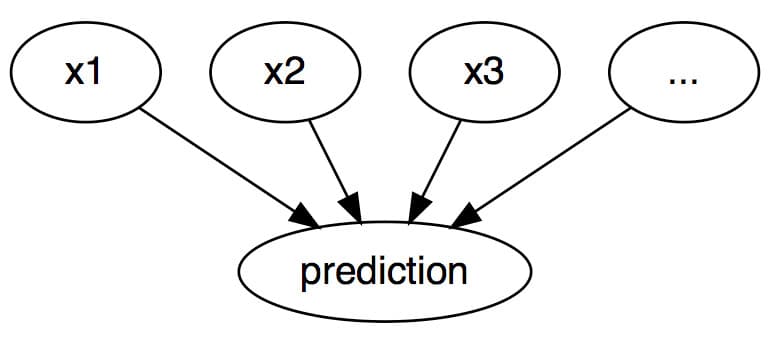
A counterfactual explanation finds the smallest input change that flips a model's prediction. It's used to give actionable feedback, like telling a user what to change to get a loan approved.
Reserved Instances vs. Savings Plans: Pre-pay for Cloud Discounts
Think of Reserved Instances and Savings Plans as buying cloud compute in bulk for a discount. You commit to a certain usage level for 1-3 years to save money on steady-state workloads like production databases.

Cloud Cost Anomaly Detection: Finding Waste
Think of it as a smoke detector for your cloud bill, distinguishing 'good' growth-related costs from 'bad' waste. It automatically flags unexpected spending spikes from misconfigurations or bugs.

Slash Your Cloud Bill by Taming Data Egress Costs
Data egress is the tax for moving data out of a cloud provider's network, a common cost in MLOps when moving models or datasets. To save money, keep compute and data in the same region. The footgun is forgetting that traffic between regions also counts.
We are hiring for this. Every open role lists the topics its interview covers, so you can prepare for the real thing rather than guessing.
See open roles