Easy interview questions in Mobile Dev, page 4

How do you save UI state during screen rotation?
Tests your grasp of the Activity lifecycle and state restoration. A great answer explains the destroy/recreate cycle, notes that EditText handles its own state via its ID, and contrasts the modern ViewModel + SavedStateHandle with the older…
What is the difference between a started service and a bound service?
Started services run until stopped via startService with no caller interface; bound services expose an IBinder and destroy when all clients unbind.
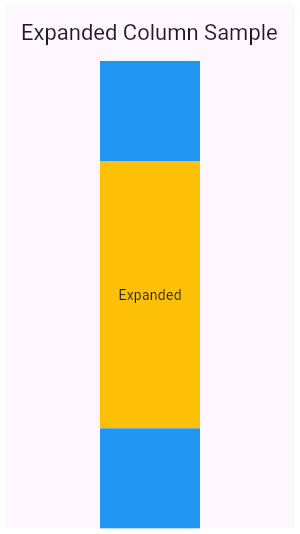
How do you split a Column 1/3 and 2/3 using Expanded?
Tests understanding of flex allocation in Flutter layouts. Strong answers wrap both containers in Expanded, assign flex values of 1 and 2, and note that Expanded forces children to fill the Column's main axis. Red flag: proposing fixed heights instead of flex.
Started vs. Bound Services: Differences and Use Cases
Tests Android component lifecycle and IPC knowledge. A good answer defines lifecycle control (start vs. bind), communication (one-way vs. two-way IBinder), and gives clear use cases. A red flag is assuming services run on a background thread by default.
Started vs. Bound Services: Differences and Use Cases
Tests your grasp of Android component lifecycles. A strong answer defines each by its lifecycle control (who starts/stops it) and communication pattern (fire-and-forget vs. client-server), then gives distinct use cases.
mainAxisAlignment vs crossAxisAlignment in Column, and textDirection in Row
Tests Flutter flex axis awareness. In a Column, mainAxisAlignment is vertical and crossAxisAlignment is horizontal. In a Row, textDirection governs the main axis, not crossAxisAlignment; verticalDirection governs the cross axis.
SectionList versus FlatList for grouped data
FlatList takes a flat data array; SectionList takes a sections array of objects each with a data array and optional title, and supports renderSectionHeader and sticky headers.
Prop drilling and the Context API
Prop drilling is threading props through many intermediate components that do not use them; Context provides a value to a subtree so consumers read it directly.
Local state versus global state management
Keep state local with useState/useReducer when it is used by one component or its subtree; reach for Redux or Zustand when many distant components share and mutate the same state.

Implement SwiftUI navigation between list and detail with product ID
Tests modern SwiftUI navigation and clean data flow. Great answer: NavigationStack with NavigationLink(value:) and navigationDestination(for:), plus a bound path for programmatic control.
Handle taps on a non-button Container: GestureDetector vs InkWell
This tests gesture propagation and Material feedback. Use GestureDetector for raw taps, drags, or scales; InkWell for Material ripples, which needs a Material ancestor. Red flag: InkWell without Material or ignoring GestureDetector drag support.
Explain the difference between LinearLayout, RelativeLayout, and FrameLayout
Understanding of ViewGroup measurement and simplicity versus flexibility tradeoffs. LinearLayout for 1D lists, RelativeLayout for complex sibling rules, FrameLayout for single-child or overlap.
LinearLayout vs. RelativeLayout vs. FrameLayout
This tests your knowledge of fundamental View layouts and performance trade-offs. Define LinearLayout (single axis), RelativeLayout (relative positioning), and FrameLayout (stacking), giving a clear use case for each.
LinearLayout vs. RelativeLayout vs. FrameLayout: Explain and give use cases
Tests your grasp of classic Android layouts and performance trade-offs. A good answer defines each, gives a clear use case, and mentions layout_weight. A red flag is proposing nested LinearLayouts for complex UIs, ignoring performance.
How do you retrieve and listen to TextField changes in Flutter?
Use TextEditingController, attach to TextField, listen with addListener, read controller.text, dispose in State.dispose.
Explain the validator property in TextFormField and what triggers error display
Tests Form validation lifecycle knowledge. Strong answer: validator returns String? error or null; formKey.currentState.validate() triggers all fields; returned string renders as inline error.
What is remember in Compose and how do you use mutableStateOf?
This tests state survival across recompositions. Good answers say remember caches values across recompositions, pairs with mutableStateOf for observable state, and shows a counter. A red flag is mutableStateOf without remember, state resets per recomposition.
What is the purpose of `remember` in Jetpack Compose?
This tests your grasp of Compose's recomposition lifecycle. A good answer explains remember caches an object across recompositions, preventing state loss. It's used with mutableStateOf to hold the same state instance.
What is the purpose of the `remember` function in Compose?
This tests your grasp of recomposition. Explain that remember stores an object in the composition tree, preventing it from being re-initialized on every render. A red flag is confusing it with rememberSaveable, which survives configuration changes.
Arrange UI elements vertically or horizontally in Jetpack Compose
Tests declarative layout fundamentals. Good answers name Column and Row, explain Modifier as an ordered chain of decoration and layout behavior, and note order changes semantics. Red flag: calling Modifier "just styling" or confusing it with LinearLayout.
We are hiring for this. Every open role lists the topics its interview covers, so you can prepare for the real thing rather than guessing.
See open roles