Concepts in Monitoring & SRE, page 5
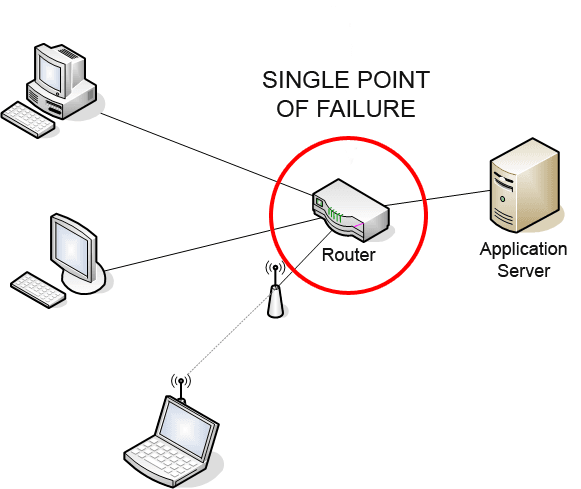
Single Point of Failure: Your System's Achilles' Heel
A single point of failure (SPOF) is your system's Achilles' heel—one component whose failure causes a total outage. This is critical in high-availability design, like ensuring a website survives a server crash. The footgun is missing implicit SPOFs.
Horizontal Scaling: Add More Machines, Not Bigger Ones
Horizontal scaling (scaling out) means handling more load by adding more machines to your resource pool, not upgrading a single one. It’s used for web servers behind a load balancer. The footgun is that your app must be stateless to avoid losing user data.
Graceful Degradation: Failing Better, Not All at Once
Instead of total failure, graceful degradation lets a system shed non-essential features to stay partially available. It's a fault tolerance strategy for when a component fails, ensuring core functions survive. The footgun is not defining what's 'core.'
Rate Limiting: Your API's Bouncer
Rate limiting acts as a bouncer for your API, controlling traffic to protect your service. It's used on public APIs to prevent abuse, ensure fair usage, and defend against denial-of-service attacks.
Failover: Automatic Recovery When Things Go Wrong
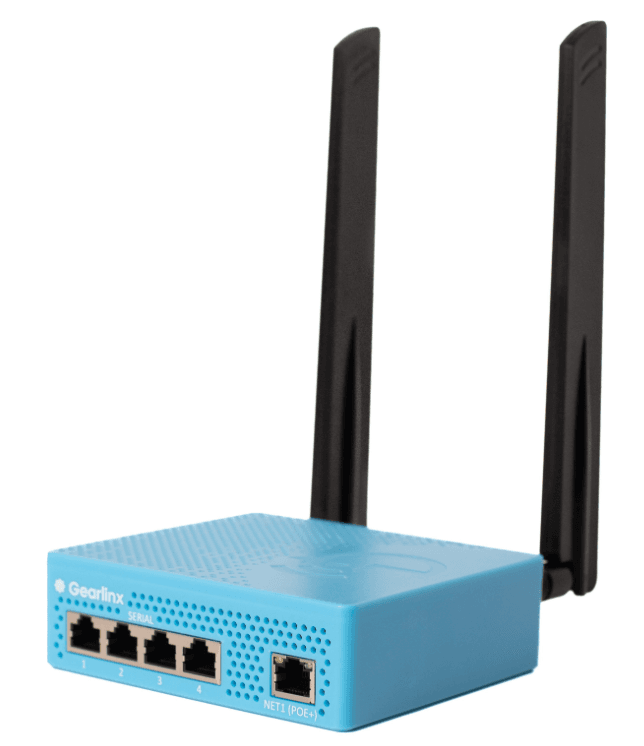
Failover is your system's automatic plan B. When a primary component fails, a standby takes over instantly without human intervention. It's essential for high-availability systems. The footgun is assuming the standby is perfectly in sync; it might not be.
Service Discovery: How Services Find Each Other
Instead of hardcoding IP addresses, services ask a central registry for the live address of other services they need to call. This is crucial in dynamic microservice environments where IPs change constantly.
N+1 Redundancy: One Spare for the Whole System
N+1 redundancy is like having one spare tire for your whole car. You have N active components and one shared, passive backup. It's used in server racks or power supplies for high availability without doubling costs.

Bulkhead Pattern: Isolate Failures, Protect Your System
The Bulkhead pattern partitions a system like a ship's hull, containing failures to prevent a total outage. By isolating resource pools for each service or consumer, a fault in one component won't cascade and take down the entire application.
Data Sharding: Splitting a Database for Scale
Sharding splits a huge database into smaller, independent databases (shards), each on its own server. It's like giving different volumes of a phone book to different librarians. This is critical for massive datasets, but a bad shard key creates 'hot spots'.
Threat Modeling for Reliability: Find Failures Before They Happen
Threat modeling for reliability is like pre-gaming an outage: you systematically ask "how will this break?" before shipping code. Instead of attackers, you model failures like a database failing or a cloud region going down, then design mitigations.
Chaos Engineering: Finding Weaknesses Before They Find You
Chaos Engineering intentionally breaks parts of your system to find weaknesses before they cause real outages. It's used to test resilience against events like server crashes or network failures.
Steady State Hypothesis: The Core of Chaos Engineering
The steady state hypothesis is the core of chaos engineering: you bet your system's key metrics won't change when you break something. It's used to test resilience by defining "normal" (e.g., latency <200ms) and then trying to disrupt it with faults.
Latency Injection: Testing How Your System Handles Slowdown
Latency injection intentionally slows down parts of your system to test its resilience. Use it to validate timeout configurations and circuit breakers before a real network lag causes a cascading failure. The footgun is injecting unrealistic delays.
Resource Exhaustion: Starving a System to Death
A resource exhaustion attack is a denial-of-service tactic that starves a system by consuming all of a finite resource like CPU or database connections. It exploits missing rate limits or quotas.
Chaos Mesh: Orchestrated Failure for Resilient Systems
Chaos Mesh is a disaster-as-a-service for Kubernetes. It lets you inject failures like network latency or pod kills to test system resilience. Use it to find weaknesses before they impact users, but be warned: its job is to break things, so scope experiments…
AWS Fault Injection Simulator
AWS Fault Injection Simulator is a controlled chaos button: it breaks resources on purpose to prove your failover works before real disasters. Run it before peak traffic to validate auto-healing.
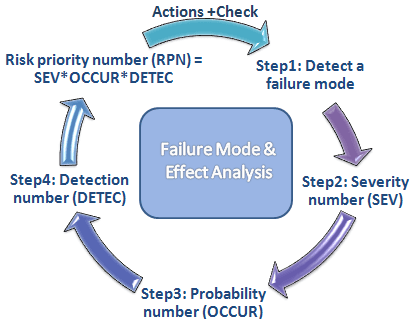
FMEA: Systematically Mapping What Could Go Wrong
FMEA is a structured pre-mortem for system components, cataloging potential failures, their causes, and their effects. It's used in system design to proactively identify risks before they become outages. The footgun is treating it as a one-time task.
Resilience Engineering: Studying Success, Not Just Failure
Resilience Engineering studies how systems succeed despite surprises, not just why they fail. It applies to incident analysis and chaos engineering, focusing on building adaptive capacity for unknown events rather than just preventing known failure modes.
Shift-Left Resilience: Chaos in Your CI/CD Pipeline
Think of it as an automated stress test in your build pipeline that breaks things on purpose. It runs alongside integration tests, injecting faults like pod failures to find weaknesses before a merge.
The SRE Mandate: Breaking the Dev vs. Ops Cycle
SRE breaks the classic conflict between developers who want to ship fast and operations teams who want stability. It treats operations as a software problem, not a human one. The footgun is creating a rebranded sysadmin team that still does manual work.
We are hiring for this. Every open role lists the topics its interview covers, so you can prepare for the real thing rather than guessing.
See open roles