Intermediate interview questions in Product Management, page 12
How do you ensure consistent A/B test variants across sessions and devices?
Tests stable identity and delayed attribution. Fix: one stable user ID for SDK bucketing, persisted across devices via login or first-party cookies, attached to every conversion event. Never use per-device randomization or third-party cookies.
What is the 'novelty effect' in experimentation?
Tests whether you separate temporary curiosity from durable value. A strong answer defines novelty effect as short-term behavior change triggered by new elements, notes it inflates early experiment lift, and proposes longer runtimes or lagged cohort analysis.
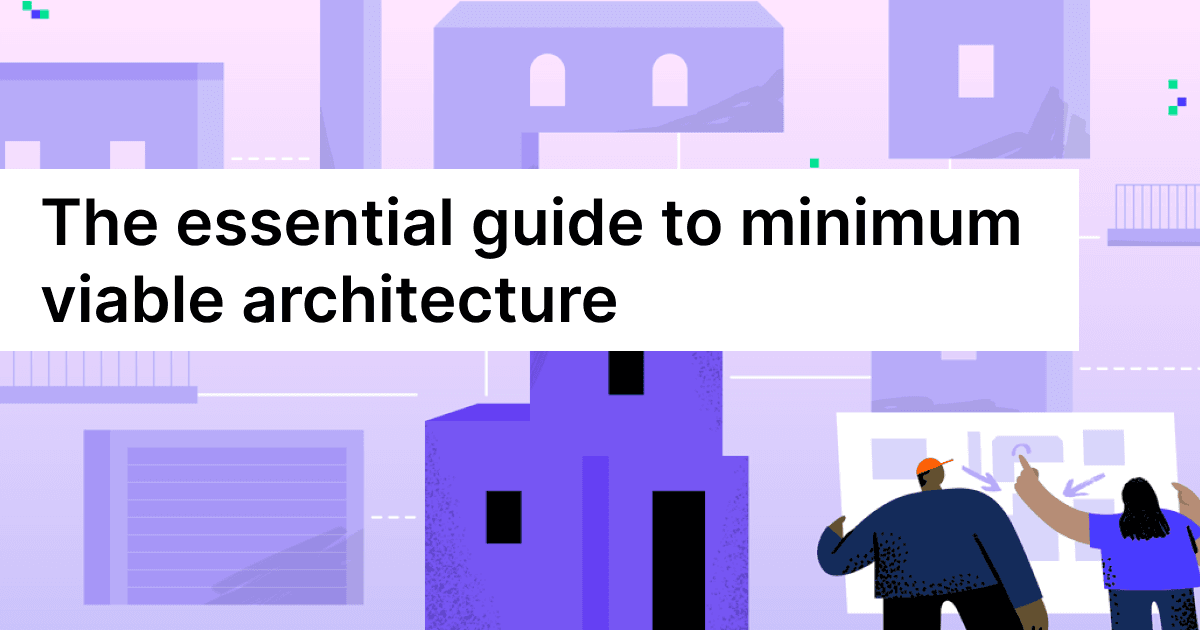
How do you differentiate an MVP from a throwaway prototype architecturally?
Distinguish by user commitment; define bounded contexts with stable interfaces; favor reversible decisions and day-one observability.
What is the novelty effect in experimentation?
This tests your grasp of temporary user behavior changes that can invalidate A/B tests. A strong answer defines the effect, explains how it inflates metrics, and suggests running tests longer or segmenting by user tenure. A red flag is ignoring mitigation.
MVP vs. Throwaway Prototype: Technical Differences
This tests your understanding of Minimum Viable Architecture (MVA). Differentiate by intent: a prototype is a throwaway concept test, while an MVP is a sustainable first version built on an MVA. A red flag is describing a sacrificial architecture for an MVP.
Handling the novelty effect in experimentation
This tests your grasp of second-order effects in A/B testing. A great answer defines the novelty effect, explains how it inflates initial metrics, and suggests mitigating it by running tests longer or segmenting by user tenure. A red flag is ignoring it.
Differentiating an MVP from a throwaway prototype
Tests your grasp of strategic technical investment. Differentiate by intent: an MVP is the first version, a prototype is disposable. A great answer introduces Minimum Viable Architecture (MVA) to support future needs.
How do you adapt in-progress work when feedback invalidates a key assumption?
Alert the PO, renegotiate Backlog if the Goal is at risk, use feature flags to isolate invalidated logic.
Design a system to handle subscription renewals
States include active, past_due, and cancelled; transitions are payment success, dunning exhaustion, and grace expiry; use idempotent webhooks.
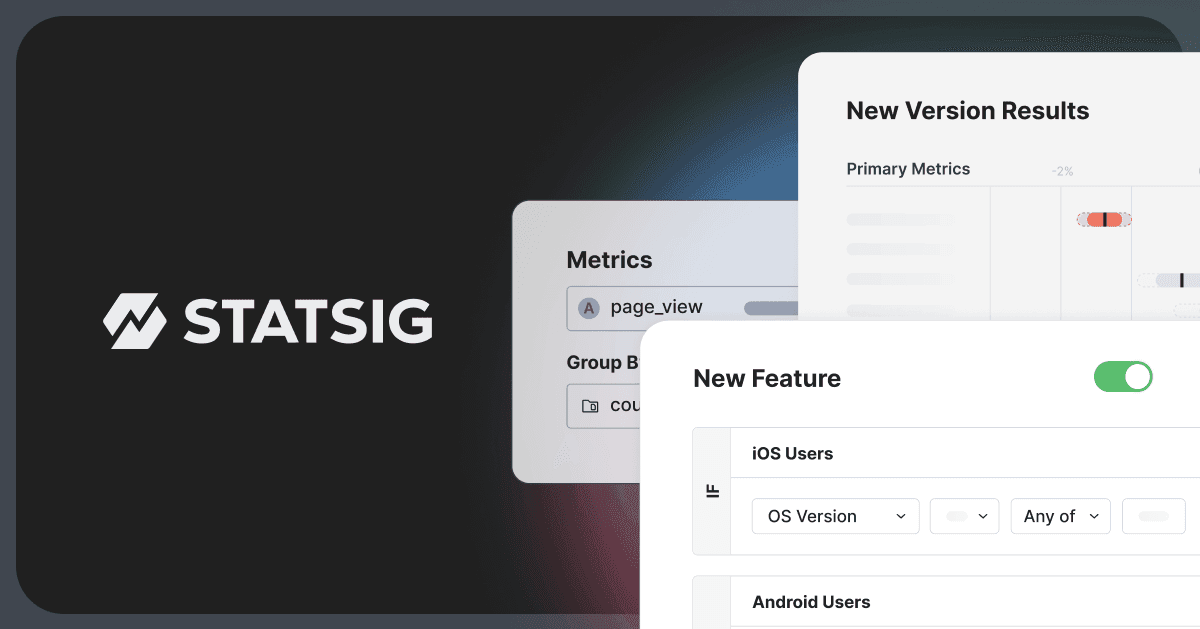
What is the difference between a primary metric and a guardrail metric?
Tests whether you distinguish success criteria from safety checks in experiments. A strong answer defines primary metrics as the target outcome, guardrails as protective thresholds, and gives a concrete scenario where a primary lift does not justify shipping…
Primary vs. Guardrail Metrics in Experiments
Tests your grasp of risk management in A/B testing. A great answer defines a primary metric as the goal and a guardrail as a 'do no harm' check. A feature ships only if the primary improves without hurting guardrails.
How do you adapt when user feedback invalidates your current sprint?
This tests your ability to connect process to technical strategy under pressure. A great answer involves immediately notifying the Product Owner, quantifying the impact, and proposing technical pivots like feature flagging.
Primary vs. Guardrail Metrics in Experiments
This tests if you can balance improving a key metric with not harming the user experience. Define primary (the goal) and guardrail (don't harm) metrics. Give an example where a guardrail regression (e.g., latency) blocks a feature ship.
How to handle user feedback that invalidates your current sprint's work?
Tests your grasp of Scrum's adaptation principle. A great answer involves immediately notifying the Product Owner, assessing Sprint Goal impact, and proposing technical pivots like feature flagging. A red flag is continuing to build the invalidated feature.
How would you instrument an application to calculate Customer Lifetime Value?
Tests whether you tie revenue and cost events to persistent identity and model cohort retention. Outline: track purchases, CAC, and churn with persistent IDs; project value via retention curves.
How would you measure a launched feature's success and impact?
This tests if you link code to business outcomes via agile metrics. A strong answer covers value, quality, satisfaction; names metrics like velocity or cycle time; and uses reports to track progress. Red flag: defining success purely by uptime or bug counts.
How would you measure the success and impact of a new feature?
This tests your ability to connect engineering work to business value. A strong answer defines success metrics upfront, instruments code for quantitative data like adoption rates, and gathers qualitative feedback.
How do you measure a new feature's success beyond bugs and uptime?
Tests if you connect engineering to business value. A great answer links success to the feature's original goals, proposes user behavior and business impact metrics, and names specific tools.

What are the key architectural differences between freemium and free trial models?
Contrast tiered entitlements against trial timers and revocation; discuss free-user overhead and conversion tracking.

How would you apply RICE scoring to prioritize these three initiatives?
This tests translating technical tradeoffs into quantified RICE scores. A strong answer maps Reach to users, Impact to latency or revenue, Confidence to data quality, and Effort to person-weeks. Red flag: uniform confidence or vague t-shirt sizing.
We are hiring for this. Every open role lists the topics its interview covers, so you can prepare for the real thing rather than guessing.
See open roles