Intermediate interview questions in Product Management, page 17
How do you re-evaluate roadmap and communicate an enterprise-to-SMB pivot?
Tests strategic alignment during a business model shift. A strong answer contrasts enterprise versus SMB needs, triages in-flight work by impact, and explains trade-offs with data. Red flag: cutting everything without weighing sunk cost against pivot value.

Propose a technical architecture for a centralized Metrics Layer or Metrics Store
This tests your ability to decouple metric semantics from storage and query tools. A strong answer outlines a semantic layer with versioned definitions, a query API, and enforced downstream consumption.
What is the primary difference between Sprint Review and Sprint Retrospective?
Tests separation of product feedback from process improvement. Review: stakeholders inspect the Increment and adapt the backlog. Retrospective: Scrum Team only inspects its process and plans improvements. Red flag: calling either a status report or demo.
Propose a technical architecture for a centralized Metrics Layer.
This tests your grasp of data governance and semantic layers. A great answer outlines a system with a central definition store (e.g., YAML in Git), a query engine, and an API, ensuring all teams get consistent metric results.
Sprint Review vs. Retrospective: Purpose and Participants
This tests your understanding of Scrum's dual feedback loops for product versus process. A great answer defines Review as inspecting the Increment with stakeholders, and Retrospective as inspecting the team's process without them.
Design a Centralized Metrics Layer
This tests your grasp of data governance and creating a single source of truth. A good answer defines a semantic layer between the data warehouse and BI tools, centralizing metric definitions in code.
Sprint Review vs. Sprint Retrospective: Purpose and Participants
Tests if you distinguish inspecting the product (Review) from the process (Retro). A good answer defines purpose (what vs. how), participants (stakeholders vs. team-only), and outcomes (backlog vs. process improvements).
How would you design an automated data quality monitoring system?
Tests turning data quality into tiered checks for exec dashboards. Strong answers combine freshness, volume, schema, and distribution validation with severity-based paging. Red flag: static thresholds without noise reduction or business-impact triage.

How do you spike a story to de-risk it and define deliverables?
Whether you see spikes as time-boxed research, not feature work. Propose a fixed duration, define the specific question, deliver a decision record or prototype, and revise the story estimate. Never treat a spike as production code or skip the time box.
How would you design a data quality monitoring system?
This tests your systematic approach to data reliability. A strong answer defines quality dimensions (freshness, volume, schema), proposes specific checks, and outlines an alerting strategy. A red flag is listing checks without tying them to business impact.
How would you use a spike to de-risk a story?
Tests your use of Agile spikes for de-risking, not for building features. A good answer defines the goal, sets a strict time-box, and clarifies the deliverable is knowledge (e.g., a POC), not production code. A red flag is merging spike code into main.
Design a Data Quality Monitoring & Alerting System
This tests translating business needs into a concrete data validation strategy. A good answer defines checks based on business impact (freshness, volume, schema), then outlines a tiered alerting system. A red flag is naming tools before defining the problem.
How do you use a spike to de-risk a story?
This tests your ability to use agile spikes for targeted de-risking, not just vague research. A strong answer defines the specific question the spike will answer, proposes a strict time-box, and lists concrete deliverables like a decision or a better estimate.
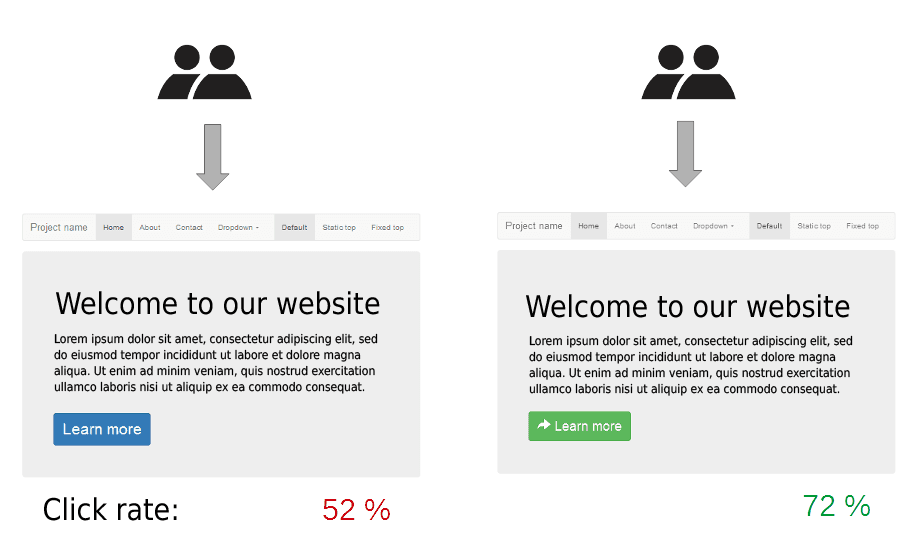
Describe the architecture of a generic A/B testing framework
Hash-based user bucketing, config service, pre-registered metrics, and confidence intervals on dashboards.
What is the primary purpose of a WIP limit in Kanban?
Tests whether you see Kanban as a flow system, not just a board. A great answer says WIP limits constrain multitasking to reduce cycle time and improve throughput by prioritizing finishing over starting. Red flag: saying limits are for tracking progress.
Design an A/B Testing Framework
This tests your ability to design a scalable system with statistical rigor for non-experts. A great answer outlines config management, deterministic user hashing, a data pipeline for metrics, and a results UI that simplifies stats.
What is the purpose of a WIP limit in Kanban?
Tests understanding of Kanban flow optimization. A good answer explains that WIP limits force task completion, which improves flow, reduces context switching, and exposes bottlenecks. A red flag is describing it only as a way to prevent team burnout.
Describe the architecture of an A/B testing framework
This tests your system design skills for experimentation, from user bucketing to statistical analysis. A good answer covers user assignment, a config service, a data pipeline, and a results layer with statistical significance.
Purpose and Consequences of Kanban WIP Limits
Tests your grasp of flow efficiency. A good answer defines WIP limits as a tool to manage system flow, expose bottlenecks, and create a pull system, then links ignoring them to cascading delays. A red flag is seeing them as a tool to micromanage individuals.

What experiment artifacts and metrics do you present to decide shipping?
This tests structured experiment discipline. A strong answer covers the pre-approved design doc, scorecard results for primary goal and guardrail metrics plus secondary breakdowns versus the hypothesis, and duration context.
We are hiring for this. Every open role lists the topics its interview covers, so you can prepare for the real thing rather than guessing.
See open roles