Intermediate interview questions in Product Management, page 3
Technically analyzing a competitor's product
Probe their stack, performance, APIs, and architecture via public signals and ethical inspection, identify gaps and parity needs, feed differentiation and risk into the…

Describe the SQL and data model for weekly cohort retention
Join users and activity, compute week offset per user, group by cohort and offset for retention.

Propose a strategy to enforce a consistent analytics event schema
Schema registry with CI validation, typed SDK wrappers blocking bad builds, plus ingestion-time rejection.
How do items flow between the Product Backlog, Sprint Backlog, and Increment?
Tests whether you understand Scrum's three artifacts as commitments to value, not just task lists. A strong answer describes ordering, selection, and the Definition of Done. Red flag: calling the Sprint Backlog a task list owned by the Product Owner.
Relationship Between Product Backlog, Sprint Backlog, and Increment
This tests your understanding of Scrum artifacts as commitments to goals, not just to-do lists. Define the Product Backlog (Product Goal), Sprint Backlog (Sprint Goal), and Increment (Definition of Done), then trace an item's flow.
Explain the Product Backlog, Sprint Backlog, and Increment
Tests your understanding of Scrum's three artifacts and their commitments (Product Goal, Sprint Goal, Definition of Done). Define each, explain the flow from Product to Sprint Backlog, and how completed items form a usable Increment.

How do you instrument client and server to debug payment drop-offs?
Tests designing telemetry that distinguishes intent from errors across the stack. Strong answers use visibility pings for abandonment, validation events for client errors, and gateway status codes for backend failures.
How is work selected and forecasted for the Sprint Backlog?
Tests empirical forecasting. Outline: the team selects from the ordered Product Backlog using observed experience and expertise to create one valuable Increment. Red flag: treating the forecast as a hard commitment or citing velocity as a required input.
How does a team forecast work for a Sprint?
This tests if you know the Developers own the forecast, not the PO or SM. A good answer cites past performance, current capacity, and the Product Backlog as inputs. A red flag is saying the Product Owner dictates the work.
How does a team forecast work for a Sprint?
Tests your grasp of Scrum's empirical forecasting. A great answer cites three inputs: the Product Backlog, past performance, and team capacity. The Developers pull the work; they don't have it pushed on them. A red flag is saying a manager dictates the scope.
Stakeholder approaches mid-sprint with a feature request. What is the Scrum process?
Tests whether you know the Product Owner orders the backlog and the Sprint selection is fixed. Strong answer: send the stakeholder to the PO, who decides placement. Red flag: adding the work to the Sprint Backlog yourself.
How do you handle an urgent mid-sprint feature request?
This tests your understanding of Scrum roles and protecting the Sprint Goal. A great answer redirects the stakeholder to the Product Owner, who then assesses the request's impact and negotiates with the team if it can be swapped in without harming the Sprint…
How do you handle an urgent mid-sprint feature request?
This tests your understanding of Scrum roles and protecting the Sprint Goal. Acknowledge the request, redirect the stakeholder to the Product Owner who manages the backlog, and explain the trade-offs.
How would you instrument front-end and back-end to quantify reported slowness?
This tests translating vague complaints into end-to-end telemetry. A strong answer covers front-end Web Vitals, back-end traces, and segments by user or page to isolate pain points. A red flag is focusing only on server CPU or logs without real user timings.
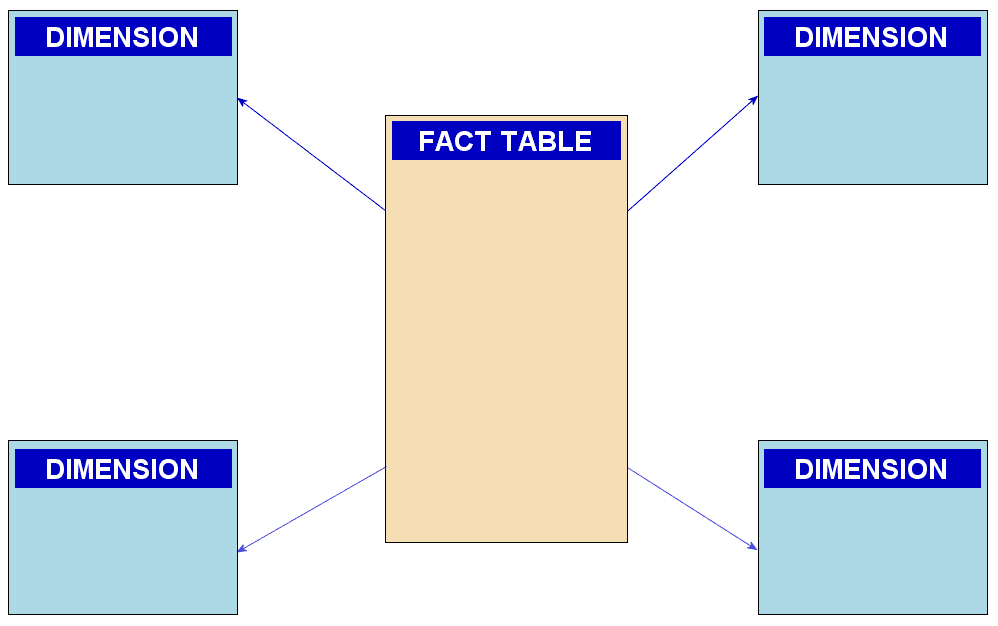
Describe star and snowflake schemas and their trade-offs
Star schemas flatten dimensions for fast joins; snowflake schemas normalize hierarchies to reduce redundancy but add joins.
Star vs. Snowflake Schemas: Trade-offs
Tests your grasp of data warehouse design trade-offs. Define star (denormalized, fast queries) and snowflake (normalized, storage efficient) schemas. Explain the core trade-off: star's query speed vs. snowflake's storage/integrity.
Describe star and snowflake schemas and their trade-offs.
Tests your grasp of data warehouse design trade-offs. Define star (denormalized dimensions) and snowflake (normalized dimensions) schemas. Contrast them: star is faster for queries but uses more space; snowflake is space-efficient but requires more joins.

Describe a technical MVP approach to validate user engagement quantitatively
Pick a KPI and cheapest viable prototype, like a fake door; instrument events with a control group; set kill criteria upfront.
How would you handle late-arriving data in a streaming analytics pipeline?
Tests understanding of event-time processing, watermarks, and windowing for correctness. A strong answer covers watermarks with allowed lateness, event-time triggers, and idempotent updates to sinks.
Handling Late-Arriving Data in a Streaming Pipeline
Tests your grasp of event time vs. processing time. A great answer defines watermarks to track completeness, uses event-time windowing to group data, and sets triggers with allowed lateness to correctly incorporate out-of-order events.
We are hiring for this. Every open role lists the topics its interview covers, so you can prepare for the real thing rather than guessing.
See open roles