Advanced everything in Product Management, page 10

Design a near real-time analytics pipeline for a critical metric
This tests your grasp of stream processing trade-offs (latency, cost, correctness). Outline a 4-stage pipeline (ingest, process, store, visualize) with specific tech choices, contrasting its low-latency, high-cost nature with batch.
How would you optimize a slow, expensive data warehouse?
Tests your diagnostic approach to performance issues. A good answer first analyzes query patterns, then applies partitioning by date, clustering by high-cardinality keys, and materialized views for aggregations.

Prove API Latency Affects User Engagement
This tests your ability to design a controlled experiment for a backend attribute. A great answer outlines an A/B test that artificially adds latency for a treatment group, details the necessary logging with shared IDs, and explains how to join and analyze…
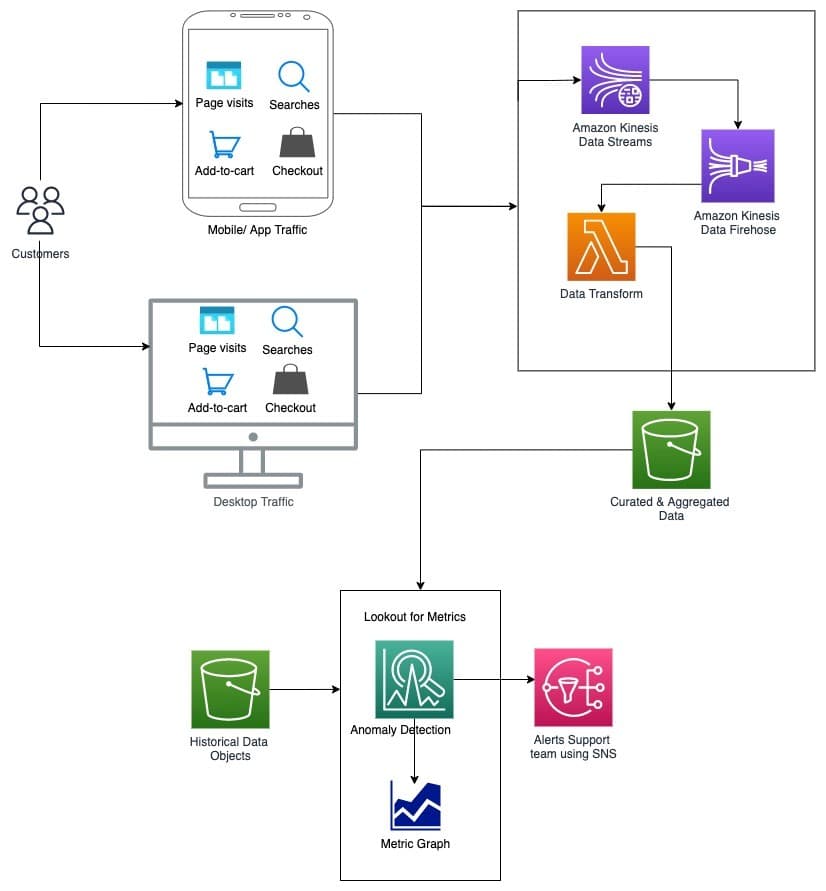
Design a real-time anomaly detection system for 'add to cart' events
Tests real-time data pipeline design and nuanced anomaly detection. A good answer outlines ingestion (Kinesis), processing (Lambda/Flink), seasonal modeling for 'a drop', and alerting (SNS).

Describe two methods for generating prediction intervals
This tests your understanding of forecast uncertainty. Describe two methods: 1) assuming normally distributed errors and using a standard deviation multiplier, and 2) bootstrapping residuals to simulate future paths.
How do you handle model performance degradation over time?
This tests MLOps lifecycle awareness. Name concept drift, outline a systematic diagnosis of data and error patterns, discuss retraining strategies, and propose a monitoring plan. A red flag is just saying 'retrain the model' without any diagnosis.

How does CUPED increase the statistical power of an experiment?
Tests your grasp of variance reduction. Explain CUPED as ANCOVA, using pre-experiment data (X) to remove predictable noise from the outcome (Y). Effectiveness depends on correlation (rho), reducing variance by (1-rho^2).
Handling spillover effects in social network A/B tests
This tests your grasp of SUTVA violations in networked experiments. A great answer explains how user-level randomization causes spillover, then proposes graph cluster randomization to assign entire communities to treatment or control, minimizing…
Why not t-test p99 latency? Describe a valid alternative.
This tests your grasp of statistical test assumptions. A good answer explains why p99 violates t-test normality, then outlines a resampling method like bootstrapping to build a confidence interval on the *difference* of p99s.

How would you architect a fast, multi-dimensional analytics dashboard?
This tests your grasp of analytics architectures and trade-offs between pre-computation and real-time querying. A great answer clarifies needs, then proposes a hybrid model using an OLAP cube for core metrics and a columnar store for ad-hoc queries.
How would you validate a PM's claim about feature success?
This tests your grasp of causal inference vs. correlation. A great answer acknowledges self-selection bias, proposes a quasi-experimental method like Propensity Score Matching to create a synthetic control group, and then compares outcomes for the matched…

How do you visually represent statistical uncertainty in a chart?
This tests your ability to communicate statistical nuance beyond simple averages. A great answer discusses error bars (specifying CI vs. SD), then moves to richer visualizations like graded error bars or violin plots.
Visualize Millions of Time-Series Data Points
Tests your ability to handle large datasets by combining backend downsampling (like LTTB) with frontend multi-resolution fetching and canvas rendering. A red flag is suggesting naive sampling (every Nth point) or focusing only on frontend libraries.

How do you manage an event schema change?
This tests your understanding of data contracts and backward compatibility. A great answer details a phased, backward-compatible rollout (add nullable field), starting with consumers (warehouse) then producers, and mentions using a schema registry for…

Challenges of Grouping by a High-Cardinality Dimension
This tests your grasp of how data shape impacts system resources. A great answer explains that high cardinality explodes memory usage for aggregation state, increases CPU load, and hurts storage compression.
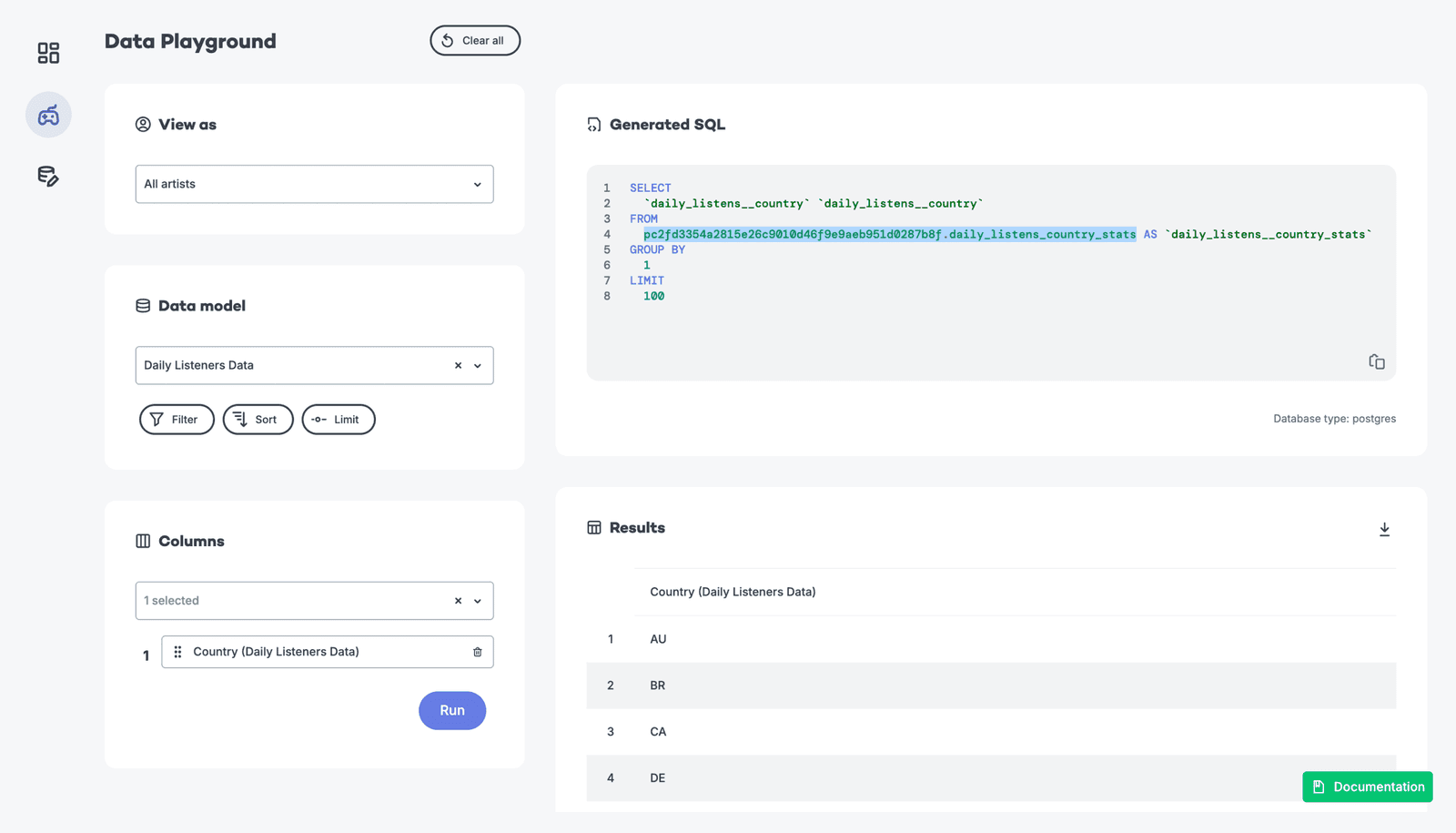
Trade-offs: Pre-aggregation vs. querying raw event data
This tests your grasp of data engineering trade-offs for analytics dashboards. A great answer contrasts pre-aggregation (fast, cheap, stale) with on-the-fly queries (slow, costly, fresh) and mentions hybrid solutions.
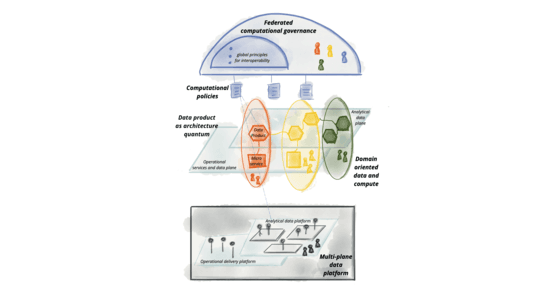
Design a Scalable Data Governance Framework
This tests your grasp of decentralized data governance (Data Mesh). A great answer outlines four principles: domain ownership, data as a product, a self-serve platform, and federated computational governance.
How would you debug a critical data quality issue in a pipeline?
Tests your systematic debugging of a distributed system under pressure. A great answer contains the impact, traces data lineage backward from the report to the source, and then proposes preventative tooling.

Design a data quality framework for a modern data platform.
Tests your ability to design a systematic data quality strategy. A great answer outlines a framework starting with governance (roles), then profiling/assessment, defining standards, and finally implementing pipeline controls.
How do you debug out-of-memory errors in a Spark job?
Tests your systematic debugging of distributed systems. A great answer diagnoses via the Spark UI, investigates data skew and inefficient code (e.g., shuffles), and only then tunes memory or partition configs. Red flag: immediately increasing executor memory.
We are hiring for this. Every open role lists the topics its interview covers, so you can prepare for the real thing rather than guessing.
See open roles