Easy everything in Product Management, page 2
How does a fixed marketing launch date change your development approach?
Acknowledge the business case, fix time and flex scope via Iron Triangle, front-load risk.

How do you prioritize a P1 bug versus a sales-driven feature request?
Use impact-effort or weighted scoring; check if the 1% crash hits paid tiers; verify deal size, probability, and stage; weigh maturity.
How would you propose an MVP for a social sharing feature?
Tests whether you can isolate the smallest releasable slice that validates user value. Propose one sprint covering auth, share creation, and a minimal feed. Avoid cutting every requirement by 30 percent or skipping observability.
What questions assess strategic alignment before estimating effort?
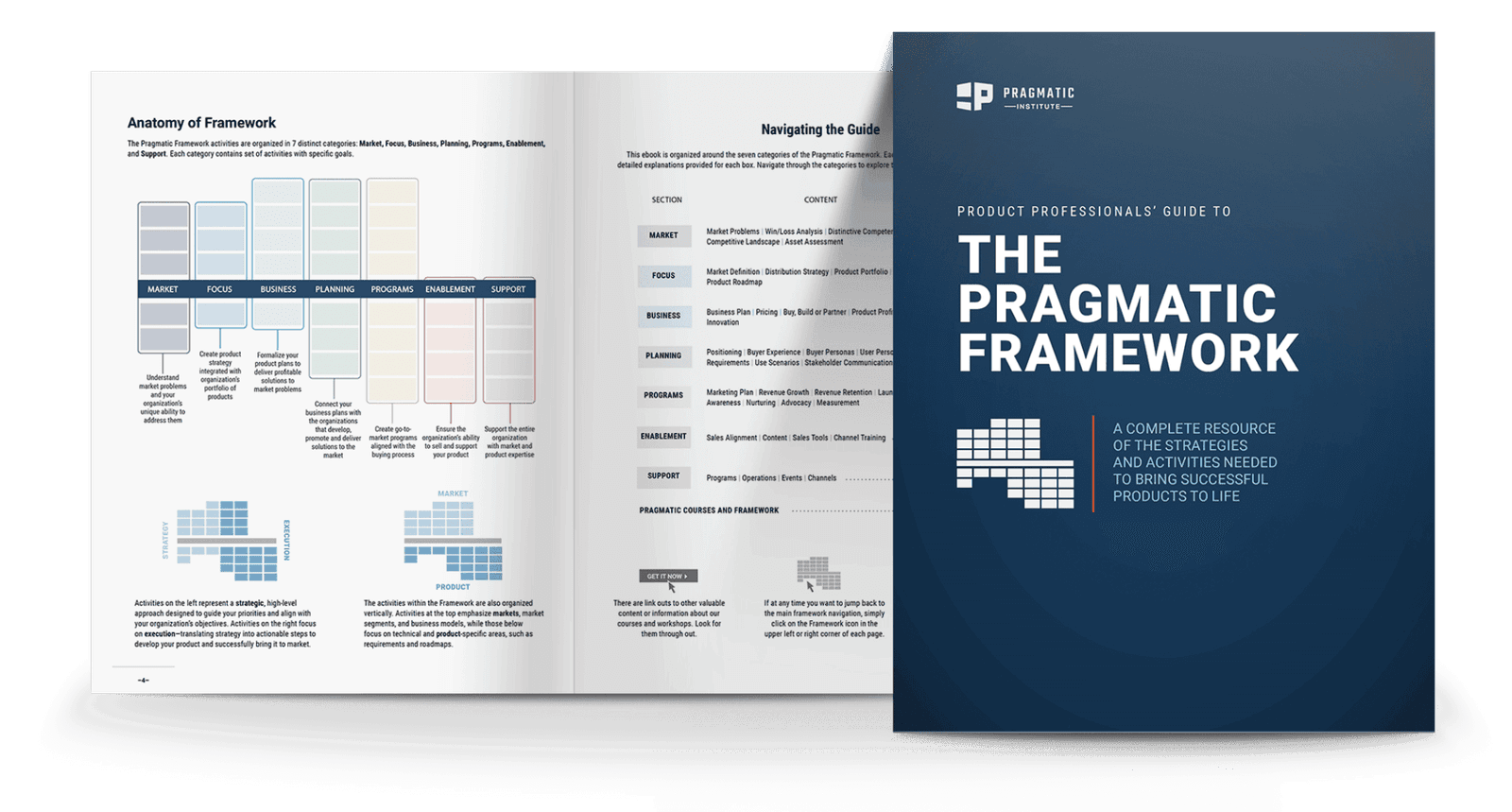
This tests whether you validate business context before scoping. Ask: what market problem is solved, which company competency or asset is leveraged, and what metric proves success. Red flag: estimating before confirming strategic fit.

How do outcome-oriented goals change implementation and testing?
Tests whether you engineer for measurable behavioral change, not just shipping. Strong answers cover baselining, telemetry, small experiments, and user-data validation. Red flag: treating the goal as a PM issue and focusing only on on-time delivery.

KPIs for a new registration form and technical instrumentation
Tests pairing outcomes with instrumentation. Pick a conversion KPI and a field-level friction KPI, then explain client-side events correlated with server logs while scrubbing PII. Red flag: relying solely on frontend analytics or vanity metrics.
How would you design the backend check for a report quota?
Tests reliable quota enforcement without race conditions. A strong answer uses atomic counts or DB constraints, validates at the service layer, and surfaces a clear 4xx. A red flag is a non-atomic SELECT-then-INSERT pattern.

How would you technically deconstruct a competitor's magical photo filters?
Tests systematic deconstruction of competitor effects via observation. Strong answers cover black-box testing, signal artifacts, pipeline clues, and latency constraints. Red flag: proposing "just use ML" before defining what makes output magical.
What specific metrics define a 'fast' report export?
Propose user-facing latency percentiles and throughput; split SLI from SLO target; pick realistic targets.
What NFRs would you identify for a globally scalable, accessible service?
Tests decomposing vision into architecturally significant requirements. A strong answer pairs global with latency, residency, and failover; accessible with compliance and i18n; then prioritizes by impact.
What technical steps estimate effort to build a competitor's missing feature?
Tests whether you decompose unknown scope before guessing timelines. A strong answer covers: reverse-engineering the user flow, mapping integration points, sizing unknowns, and validating with a spike.
What technical attributes or metrics would you analyze comparing authentication or search?
Concrete p99 latency, SLA, throughput QPS, security; contrast features versus resilience.
Differentiate functional and non-functional requirements with user research examples.
This tests separating specific behaviors from measurable quality criteria. A strong answer defines functional requirements as behaviors and non-functional requirements as quality attributes with examples. A red flag is vague NFRs like fast.
What technical steps would you take to investigate a user's workflow frustration?
Tests if you can turn qualitative user pain into structured technical investigation. Strong answer: reproduce the exact workflow, then inspect logs and traces for errors or latency spikes, and segment by the user's environment.

How do user personas and stories inform technical design and edge cases?
Tests if you translate product requirements into technical constraints and failure modes. Strong answers map persona pain points to architecture, derive unhappy paths from preconditions, and validate edge cases through vertical slices.

How would you estimate user base for a new feature before coding?
Sizing an opportunity with proxy data before coding. A strong answer defines the behavioral profile, then triangulates internal segments, competitor analogs, and market data to bound the estimate with stated assumptions.
What are the risks of a roadmap without product strategy?
Risks include building wrong things fast, orphaned features, and tradeoff paralysis.

Lifecycle of a feature flag experiment from creation to cleanup
Tests operational rigor across the full flag lifecycle. A strong answer covers six stages: SDK instrumentation with event tracking, phased rollout, monitored experiment, ship/kill decision, and code cleanup.

How would you implement a simple feature flag system?
Tests runtime config separation and distributed hygiene. Outline: control service, datastore, API, SDK, and update mechanism; local evaluation with cached state; short-lived flags. Red flag: static config files requiring redeployment are not feature flags.

What differentiates leading and lagging indicators for subscriptions?
Leading indicators forecast; lagging indicators confirm. Subscriptions: activation rate leads, MRR lags.
We are hiring for this. Every open role lists the topics its interview covers, so you can prepare for the real thing rather than guessing.
See open roles