Intermediate everything in Product Management, page 47
Relative Sizing: Estimate Effort, Not Hours
Relative sizing compares work items to each other instead of assigning absolute hours. A team agrees on a baseline task and estimates others as 'larger' or 'smaller' relative to it, often using story points. The footgun is mapping points back to hours.
Personas: Build for a Specific 'Who', Not a Vague 'Everyone'
Personas give your team a shared user understanding by creating a fictional, yet realistic, character profile. They guide feature prioritization and design decisions by focusing on a specific "who."

Job Stories: Focus on Motivation, Not Persona
A Job Story shifts focus from *who* is doing something to *why*. It frames work around a situation, a motivation, and an outcome. Use it when a user's context is more important than their persona. The footgun is simply rephrasing a user story.
What is a DEEP Product Backlog?
A DEEP backlog prevents the 'quicksand' of endless refinement with no progress. It helps teams align on customer value and create reliable plans. The footgun is that without a structured approach, backlogs become chaotic, eroding trust in agile forecasts.

Agile Themes: Connecting Work to Strategy
An agile theme is a strategic focus that groups related epics to achieve a larger business goal. Use themes to show stakeholders how specific features contribute to quarterly objectives like 'Improve Mobile Performance.'

Pair Programming: Two Heads, One Keyboard
Think of pair programming as a continuous code review. One developer (the Driver) writes code while the other (the Navigator) reviews it in real-time. This is often used for complex tasks or onboarding. The footgun is letting one person dominate the keyboard.
Collective Code Ownership: The Team Owns the Code
Collective code ownership treats the entire codebase as team property; anyone can change anything. This prevents bottlenecks in agile teams, especially during refactoring.
T-Shaped Skills: Deep Expertise, Broad Collaboration
T-shaped skills describe a professional with deep expertise in one area (the T's vertical bar) and the ability to collaborate across others (the horizontal bar). This is vital in agile teams where cross-functional work is constant.
Powerful Questions: Sparking Discovery, Not Just Answers
Powerful questions spark discovery rather than demand a specific answer. Use them in retrospectives or when a team is stuck to unlock new solutions. The footgun is asking a leading question disguised as an open one, which shuts down creativity.
Agile Coaching: Teacher, Mentor, Facilitator, Coach
An Agile Coach isn't just a senior Scrum Master, but a guide helping teams find their own path to high performance. They support teams by teaching, mentoring, facilitating, and coaching to improve outcomes.
Tuckman's Stages: Why Teams Must Storm Before They Perform
Teams evolve through predictable phases, not starting out fully effective. A team must pass through forming, storming (conflict), and norming (resolution) to reach high performance.
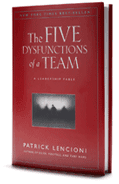
The Five Dysfunctions of a Team: A Model for Diagnosing Failure
This model uses a business fable to explore the root causes of team failure and organizational politics. It applies when a team struggles to grow together, offering a framework to diagnose underlying issues.
Definition of Ready (DoR): The Bouncer for Your Sprint
The Definition of Ready (DoR) is the bouncer for your sprint, a checklist ensuring a user story is clear and actionable before the team commits to it. It prevents starting work on half-baked ideas. The footgun is making it too rigid, creating a bottleneck.
Stakeholder Mapping: Prioritizing Voices by Power and Interest
Stakeholder mapping visualizes who to engage by plotting their power and interest in your project. Use it to decide who needs daily updates versus a quarterly summary. The footgun is treating it as static; a stakeholder's influence can change overnight.
User Story Mapping: From Backlog to Value Map
User Story Mapping reframes your backlog from a feature list into a map of the user's journey, focusing on delivering outcomes customers value. It helps teams prioritize work by visualizing the whole experience.
The MoSCoW Method: Prioritizing for Fixed Deadlines
The MoSCoW method protects deadlines by sorting work into four buckets: Must Have, Should Have, Could Have, and Won't Have this time. It's used in agile projects with fixed timelines to ensure critical features ship.
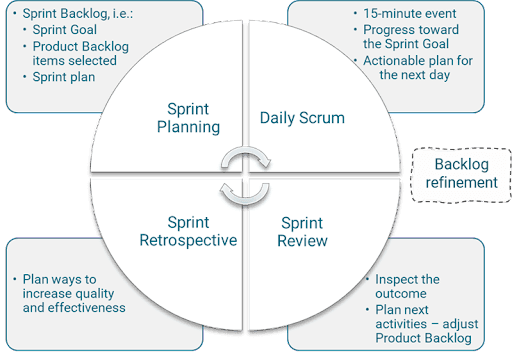
The Scrum Master: A Coach, Not a Manager
A Scrum Master is a servant-leader who coaches a team on Scrum practices, not a project manager who assigns tasks. They facilitate events and remove impediments. The footgun is treating them as a team admin, which undermines the team's self-organization.
Cycle Time vs. Lead Time: Team Speed vs. Customer Wait
Lead Time is the total time a customer waits for a feature, from request to delivery. Cycle Time is the portion of that time your team is actively working. The footgun is optimizing only for Cycle Time, which can hide major customer-facing delays in the.
The Seven Wastes of Software Development (Muda)
Think of "Muda" as anything consuming resources without adding customer value. This Lean concept helps agile teams spot inefficiencies like partially done work and context switching.
Lean Software Development: Focus on Value, Not Waste
Lean Software Development applies manufacturing principles to code, focusing on maximizing value by systematically eliminating waste. It's the philosophy behind Kanban-style pull systems and delaying decisions.
We are hiring for this. Every open role lists the topics its interview covers, so you can prepare for the real thing rather than guessing.
See open roles