Interview questions in UX Research, page 6

How can an engineer contribute to UX research with limited user access?
Treating UX research as a team sport using engineering assets when participants are scarce. Answers cover: mining logs for proxies; prototyping with internal experts; leveraging sales for intros.
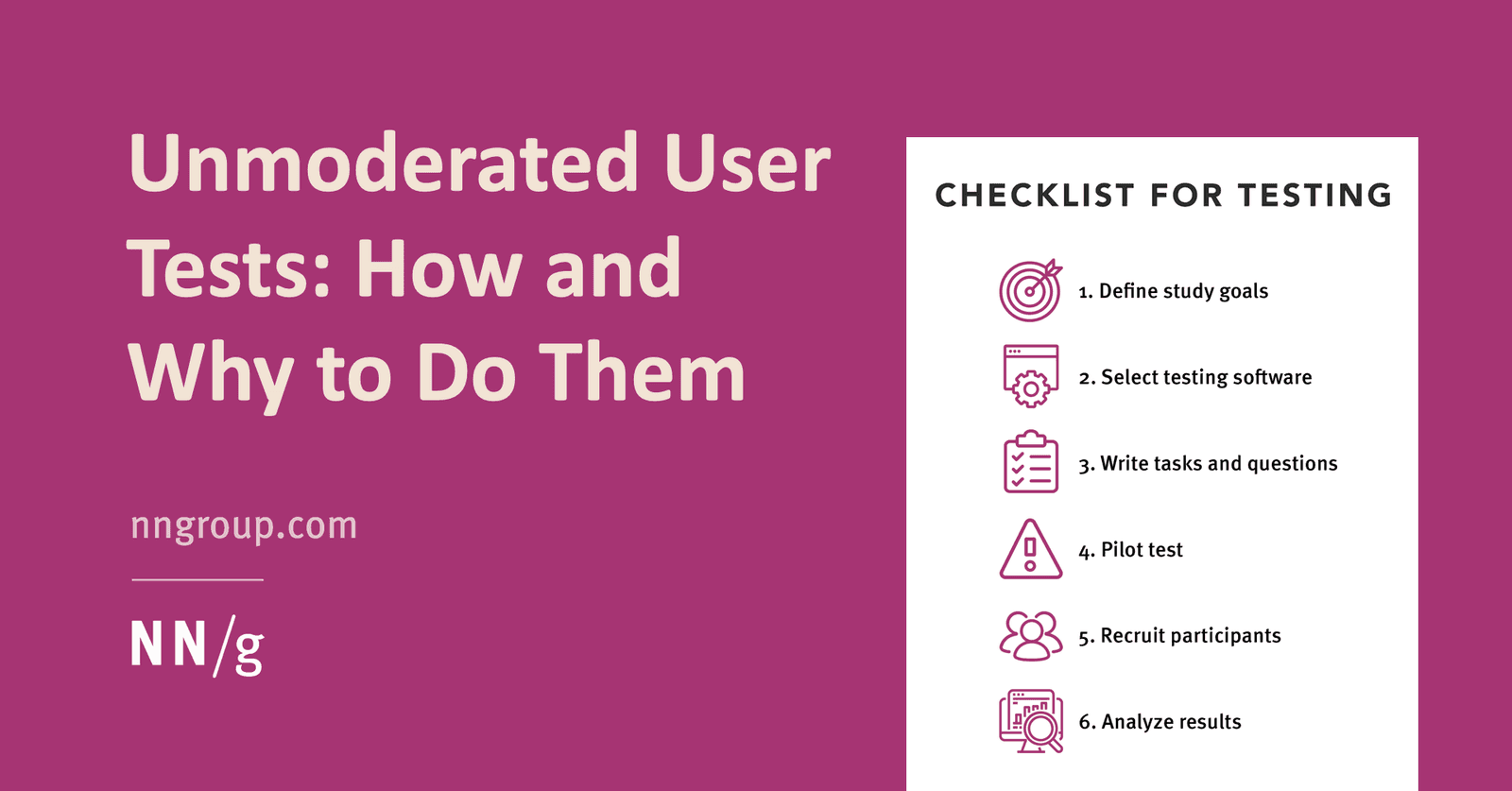
Describe the technical setup and trade-offs of large-scale unmoderated checkout usability testing
Clickstream logging, success rates, surveys; contrast speed with moderator engagement.

How do you break down an abstract UX solution into shippable stories?
This tests translating vague UX research into incremental delivery. A strong answer uses story mapping with UX and Product to find thin vertical slices that reduce confusion, validating each increment.
How do you proactively collaborate with a researcher before a complex study?
This tests cross-functional partnership. A strong answer hits four things: share system boundaries, align on research goals via mutual education, scope the study for tangible user impact, and reframe methods into accessible language.
Design metadata and data structure for a searchable research repository
Tests structuring qualitative data for search and reuse. A strong answer uses linked tables for studies, participants, insights, and clips, with fields for date, method, theme tags, and severity.
UX researcher finds usability issues in your feature. Your process?
It tests triaging qualitative UX feedback with telemetry and cross-functional collaboration. Reproduce the issue, correlate with logs, isolate UI or backend causes, then co-design a fix via prototype or A/B test.
How would you secure a moderated screen-sharing session end to end?
Cover encrypted WebRTC transport, KMS-backed storage, access controls, PII redaction, and retention policies.
Turning a vague onboarding goal into research questions
Define success metrics, decompose the funnel, pair quantitative drop-off with qualitative why.
Outline a research plan to diagnose low adoption despite positive usability tests
Tests distinguishing usability from adoption drivers. Strong answers hypothesize discoverability, motivation, and timing gaps; use behavioral triangulation, contextual inquiry, and surveys. Red flag: blaming users or redesigning before diagnosing the funnel.
Recruiting channels for a B2C usability study
Compare panels for speed versus in-product intercepts for authenticity, weigh cost, screening rigor, and bias.
How would you track clicks on a new 'Export Data' button?
Tests prod analytics design beyond console.log. Outline: typed event schema, client validation, beacon or queue with batching, and queryable storage. Red flag: fire-and-forget tracking without retry, sampling, or privacy checks.
Client-side versus server-side A/B testing
Client-side flickers and is bypassable; server-side assigns before response, hides logic, suits backend changes.
Consistent A/B bucketing across sessions and devices
Hash a stable user ID with experiment salt, not random or cookie-only; beware caches keyed without variant.
Sampling 5% of users for a one-time survey
Hash user ID for the 5% gate, persist a 'shown' flag, race-safe single display.
Designing an in-house A/B testing platform
Config service, deterministic bucketing SDK, metrics pipeline, analysis engine; fix peeking with fixed samples or sequential tests.
Checking if a 5% A/B lift is significant
State hypotheses, check predetermined sample and power, run the right test for the metric, read p-value and confidence interval.
Comparing skewed task-time data without a t-test
T-test assumes normality and is mean-sensitive to outliers; use Mann-Whitney U on ranks; trade-off is it tests distribution shift, not means.
Using personas to drive technical decisions
Derive constraints like device, network, accessibility from personas; let them shape framework, payload shape, performance budgets.
Extracting actionable insights from a long report
Start with executive summary and recommendations, trace findings to evidence, filter for engineering-actionable items, confirm with the researcher.
Instrumenting a feature to validate a qualitative insight
Restate the pain as a hypothesis, define a primary behavioral metric plus guardrails, instrument events, compare against baseline.
We are hiring for this. Every open role lists the topics its interview covers, so you can prepare for the real thing rather than guessing.
See open roles