All bites
The whole library, newest first. Filter by what you are here for, or pick a topic if you already know.
4330 bites
Page 51
Diagnose and validate a failing usability task
Pinpoint the failure step from session and telemetry data, form a root-cause hypothesis, ship a targeted fix, and re-test to validate.
How could you adapt usability testing principles to evaluate two API designs?
Tests holistic API UX beyond static syntax. Strong answers propose observing developers in realistic IDE and doc contexts, noting errors and confusion across both designs.
What usability metrics would you instrument, and how do regressions drive priorities?
Tests operationalizing UX into engineering signals. Strong answers list success rate, time on task, and error rate; triage regressions by criticality; and pair quant drops with qual diagnosis. Red flag: calling every regression P0 or using vanity metrics.
How would you triage 50+ UX issues against new features in agile?
Matrix the 50 issues by severity and effort; reserve 15-20% sprint capacity for debt; socialize compound cost.

How do you architect an automated performance and accessibility testing pipeline?
This tests operationalizing quality gates via automation, not manual checks. A strong answer covers Lighthouse CI in CI/CD, fail thresholds for CWV and WCAG, and a triage workflow assigning regressions to owners.

How would you model user events to analyze cancellation paths?
Timestamped events with user and session IDs, separate entity snapshots, and time-range partitioning.
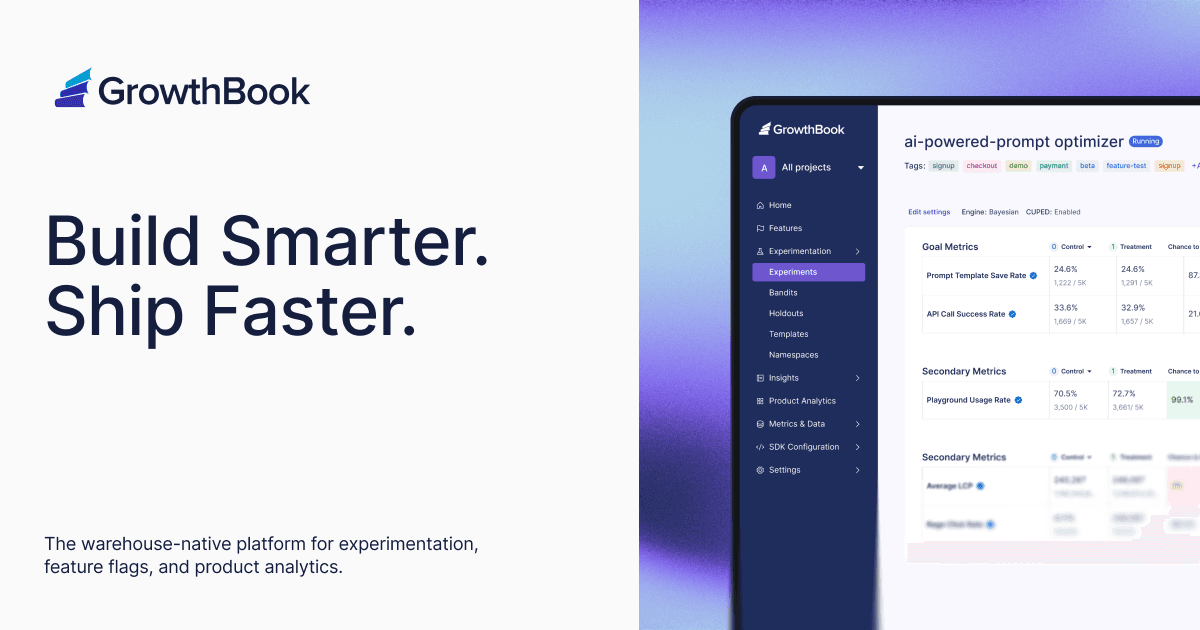
How would you design an experiment measuring API latency impact on retention?
Randomize users into control and delay groups; track D7 retention and P99 latency; analyze with quantile metrics.
Detect a three-action user sequence in real-time at scale
Tests stream processing and stateful pattern matching on unbounded data. A strong design uses a CEP engine with keyed event-time windows, pushes alerts via WebSocket, and trades state-memory for latency.
Walk me through your next steps after five user interviews
Extract observations onto sticky notes, cluster into themes as a team, then prioritize for next steps.
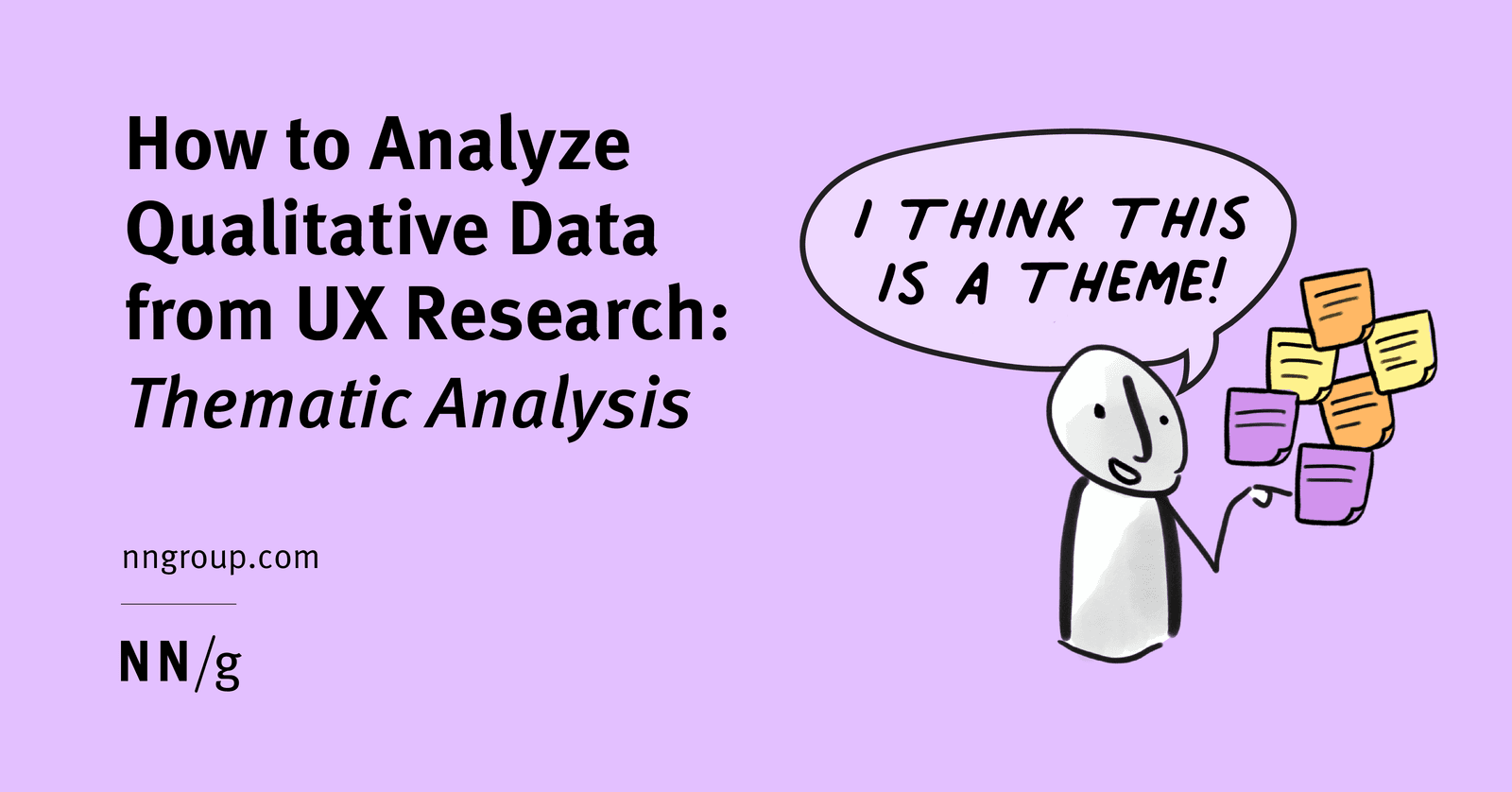
Explain coding in qualitative analysis and your codebook process
Tests systematic tagging of observations/quotations to discover themes, not ad-hoc skimming. Strong answers mention uploading transcripts to software or affinity diagramming, and stress that themes emerge across multiple participants.
How do you synthesize low-level codes into high-level themes?
Tests systematic thematic analysis. Strong answers cover tagging observations with codes, grouping related findings into themes that emerge across participants, and choosing methods like affinity diagramming based on context.

What is your process for reconciling significant coding differences?
This tests intercoder reliability and systematic reconciliation. Quantify divergence via agreement metrics; convene to refine codebook definitions and edge-case rules; re-code a sample to verify alignment. Red flag: treating coding as pure subjective opinion.
How do you determine when you've reached thematic saturation?
This tests operationalizing saturation beyond gut feel. A strong answer cites Guest et al.'s Base Size, Run Length, and New Information Threshold, and flags consecutive interviews adding no new high-level themes.
How do you handle a powerful emergent theme outside original research questions?
Validate recurrence and density, weigh timeline and goals, then document separately, expand formally, or park.

How do you trace data points to journey map stages?
Tests auditable evidence chains for technical buy-in. Answer covers a traceability matrix linking quotes to stages and pain points, plus validation sessions where engineers inspect source data. Red flag: presenting the map as intuition without source docs.

How do you challenge assumptions and mitigate confirmation bias during synthesis?
Tests structural defenses against confirmation bias, not vague mindfulness. Strong answers name concrete protocols like hypothesis reversal, separate raw evidence from interpretation, and triangulate with logs.
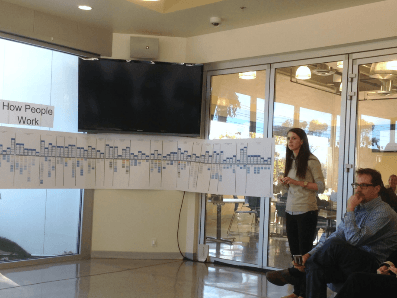
What analytical frameworks structure synthesis beyond thematic analysis?
Tests if you model problems structurally, not just code themes. Strong answers pair mental models to map user goals with JTBD to prioritize unmet needs by importance and satisfaction. Red flag: naming frameworks without explaining how they reshape synthesis.
Mean, median, and mode: which measure for task completion times?
This tests whether you know task times are skewed and sample size drives the mean-versus-median choice. A strong answer cites the under-25 rule, contrasts mean outlier sensitivity with median robustness, and dismisses mode. Red flag: defaulting to the mean.
Explain what a p-value represents in an A/B test and interpret 0.03
This tests frequentist hypothesis testing literacy. It is the chance of seeing a result this extreme if the null of no effect were true; 0.03 means 3% chance of such data under the null, not 97% chance the variant wins. Red flag: saying 97% likely.
Are 1-5 satisfaction ratings continuous or discrete?
Tests knowledge of measurement scales. A strong answer calls 1-5 ratings discrete and ordinal, notes intervals may be unequal, and prefers medians or non-parametric tests over means unless equal spacing is defensible.