All bites
The whole library, newest first. Filter by what you are here for, or pick a topic if you already know.
8664 bites
Page 48

Design a pricing-page A/B test for $10 vs $15 plans
This tests sticky bucketing and revenue attribution. Hash user IDs to lock variants, persist assignments server-side, and join experiment logs to subscriptions via shared IDs. Red flag: client-side randomization that flickers or breaks billing context.

Points of Parity: First Be 'Good Enough,' Then Be Different
Points of Parity are the 'good enough' features a product needs to even compete. Before you can win with your unique Points of Difference, you must first meet these basic expectations. The footgun is ignoring parity and being disqualified by default.

How would you detect and mitigate free trial abuse?
Device fingerprinting, rate limits, progressive verification, and behavioral scoring; weigh precision vs false positives and effort.
Product Differentiation: Standing Out in a Crowded Market
Product differentiation is making your product uniquely distinct for a specific audience, not just objectively 'better'. It's how a new phone brand might focus on privacy to avoid competing on price alone.

Propose a scalable entitlement architecture for complex rules
Tests separation of hot-path reads from async policy work. Great answers: edge-cache plan tokens; stream quota usage async; isolate rules in a microservice. Red flag: doing a DB lookup or sync quota check per request.

Crossing the Chasm: From Early Hype to Mainstream Success
“Crossing the Chasm” is the dangerous gap between a tech product's first enthusiastic users and the pragmatic majority needed for real scale. It explains why products with initial hype fail.

Design real-time usage-based billing data architecture
Tests whether you can guarantee exactly-once billing at scale without data loss. Strong answers cover idempotent Kafka ingestion, ClickHouse aggregation, reconciliation, and audit trails. Red flag: claiming exactly-once instead of at-least-once dedup.
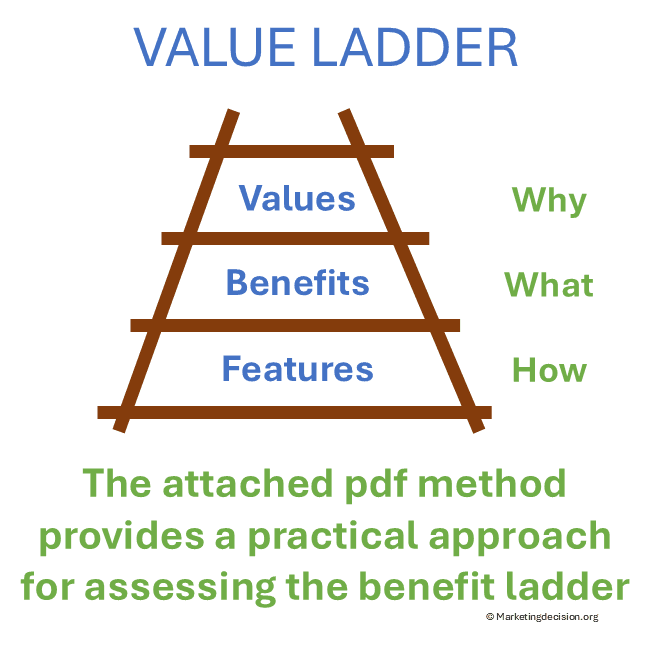
The Feature-Benefit-Value Ladder: Selling Outcomes, Not Specs
The Feature-Benefit-Value Ladder connects product specs to the outcomes customers truly want. It's used to prioritize features and craft messaging that links to core values.

Architect dynamic region-specific pricing for a global SaaS product
One SKU with currency-specific rate charges; jurisdiction tax engine; immutable checkout snapshot; amendment for moves.
Niche Market Strategy: Big Wins in Small Ponds
A niche strategy means dominating a small, well-defined market instead of fighting for a slice of a large one. It's used by startups to gain a foothold or by large firms launching specialized products. The footgun is picking a niche too small to be profitable.

KPIs for a new registration form and technical instrumentation
Tests pairing outcomes with instrumentation. Pick a conversion KPI and a field-level friction KPI, then explain client-side events correlated with server logs while scrubbing PII. Red flag: relying solely on frontend analytics or vanity metrics.

Business Model Canvas: Your Business on a Single Page
The Business Model Canvas puts your entire business strategy onto a single page, showing how value, customers, and money connect. It's used by startups to map out a plan or by established companies to launch new products.

Describe leading vs lagging indicators with technical performance examples.
Tests your ability to distinguish predictors from outcomes. A strong answer defines causality, offers a leading metric like cache hit rate, and a lagging metric like P99 latency. Red flag: offering only business metrics or confusing activity with outcomes.
Cost-Plus Pricing: Set Price Based on Cost, Not Value
Cost-plus pricing sets a product's price by adding a fixed percentage markup to its unit cost. It's common in government contracts where costs are clear. The footgun is that it ignores what customers are willing to pay, leaving money on the table.
User session length dropped 15%: what technical issues and data to check?
Tests structured incident response. Outline: check exposure traffic, deployments, platform splits, and instrumentation bugs like dupes or bots. Red flag: blaming users before ruling out data quality or deployment changes.
Customer Lifetime Value (LTV): Predicting Future Customer Profit
LTV predicts the total net profit a customer will generate over their entire relationship with you. It guides how much to spend on acquiring customers (CAC) and helps identify your most valuable segments. The footgun: LTV is profit, not revenue.

Monitor p99 improvement from 500ms to 200ms and side effects
Tests systems-thinking on tail-latency instrumentation and metric tradeoffs. Strong answers cover histogram metrics, distributed tracing for fan-out bottlenecks, and guarding error rates, cost.

Unit Economics: Is Each Customer Profitable?
Unit economics asks if you make or lose money on a single customer or sale. It's used in SaaS to compare customer lifetime value (LTV) to acquisition cost (CAC). The footgun is defining the 'unit' poorly, hiding that each new customer costs you money.
Design quantifiable proxy metrics for a microservices velocity claim
Use DORA velocity and stability metrics plus leading indicators like build and PR cycle time.
LTV to CAC Ratio: Is Your Growth Profitable?
The LTV to CAC ratio measures if you make more money from a customer than you spent to get them. It's the core health metric for a subscription business, used to judge marketing efficiency. A ratio above 3:1 is often healthy.