All bites
The whole library, newest first. Filter by what you are here for, or pick a topic if you already know.
8664 bites
Page 51
Buy vs. Build: A Strategic Choice, Not a Cost Problem
The Buy vs. Build decision is a strategic choice, not just a cost problem. Buy commodity functions to gain speed and stability; build core features to create a unique competitive advantage. The footgun is ignoring total cost of ownership and strategic control.

What technical areas would you investigate in acquisition due diligence?
Tests strategic integration risk beyond code quality. Cover: architecture compatibility and tech debt; data model overlap and migration cost; security and compliance gaps; team retention; roadmap conflicts.
Opportunity Cost: The Value of the Road Not Taken
Opportunity cost is the value of the best alternative you forgo when making a choice. It's used to prioritize projects when resources are scarce, like choosing a new feature over a refactor. The footgun is ignoring non-monetary costs like lost time or utility.

Design a cross-product user journey data architecture
This tests portfolio-scale data platform design. A strong answer outlines streaming event ingestion, a unified identity graph, consent-aware PII vaults, and schema registries with data contracts.
Theory of Constraints: Your Bottleneck Defines Your System
A system's output is limited by its single biggest bottleneck, just as a chain is only as strong as its weakest link. Use it to increase throughput in manufacturing or software delivery by focusing all improvement efforts on that one constraint.

Describe the chicken-and-egg problem for a two-sided platform and a seeding strategy.
Tests grasp of interdependent platform value and why seeding empty rooms matters. Answer: each side needs the other; propose a one-sided technology core to attract first users and pull the second side.
Minimum Marketable Feature (MMF): Ship Value, Not Parts
An MMF is the smallest piece of functionality that provides real value to a customer. Use it to break down large projects into valuable, incremental releases. The footgun is confusing it with an MVP (for learning) or slicing it too thin to be useful alone.

What technical metrics monitor third-party developer ecosystem health?
Tests your ability to define product-level platform metrics beyond infrastructure health. Great answers include time-to-first-call, API funnel conversion, SDK error rates by version, and community contribution velocity.

Ideal Customer Profile (ICP): Stop Selling to Everyone
An Ideal Customer Profile (ICP) is a data-driven portrait of the perfect customer for your business. It helps focus marketing and sales on high-value leads, reducing acquisition costs.
Roll out a breaking change to a core public API
This tests risk management while evolving a public API contract. A strong answer covers versioning, phased deprecation with SLAs, migration tooling, and proactive communication. Red flag: proposing a hard cutover without sunset or migration support.

Launch Readiness Checklist: Your Launch's Single Source of Truth
A launch checklist is a flight plan, not just a to-do list, coordinating every team from engineering to sales. It ensures marketing, sales, and support are aligned for a release.

Compare webhooks to sandboxed plugins for monolith extensibility
Tests distributed vs in-process extensibility. Webhooks are async, loosely coupled, and isolated but add network latency. Sandboxed plugins run in-process for low-latency UI depth yet need strict host API permissions and lifecycle gating.

Sales Enablement: Mission Control for Your Sales Team
Sales Enablement is a central nervous system for your sales team, connecting them with the right content, training, and coaching. It's crucial for complex sales cycles, ensuring consistent messaging. The footgun is treating it as just a content library.

How would you detect, mitigate, and penalize a noisy neighbor?
This tests multi-tenant fairness and governance. A strong answer covers tenant telemetry, graduated throttling, autoscaling with cost caps, and penalty tiers that curb abuse yet allow spikes. Red flag: hard limits before detection or graduated response.

Beta Programs: Testing with Real Users Before Launch
A beta program is your final dress rehearsal with a real audience. It's for validating user experience and catching deal-breakers before a public launch, not just finding bugs.
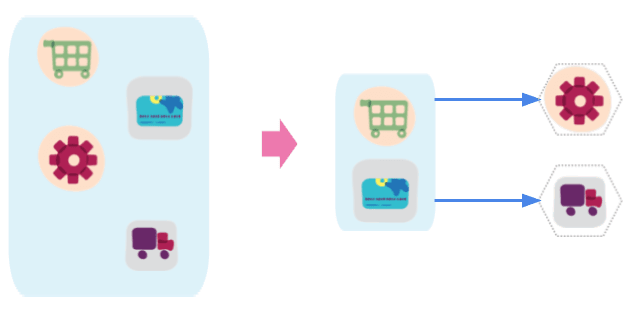
Propose a long-term strategy to decompose a monolith while maintaining API stability
This tests strategic prioritization and incremental migration without ecosystem breakage. Start with simple decoupled capability, go macro first then micro, split vertically by domain owning data, and use atomic steps with facades to preserve APIs.
Walk me through your technical design document process and sections
Tests turning ambiguity into a structured engineering plan. A strong answer sequences discovery, then covers goals, architecture, data model, APIs, rollout, and metrics. Red flag: jumping to implementation before clarifying requirements with stakeholders.

Customer Success Playbooks: Standardize Your Team's Responses
A Customer Success playbook is a recipe for handling key customer moments. It defines a standard workflow for events like onboarding or a drop in usage, ensuring every CSM follows the same proven process. Without them, customer experience is inconsistent.

How do you communicate technical complexity and propose alternatives to a PM?
Tests translation of technical complexity into product tradeoffs. Strong answers lead with the business goal, quantify timeline and risk, then offer 2-3 simpler options with clear tradeoffs. Red flag: jargon-heavy pushback or a hard no without alternatives.

Rules of Engagement: API Contracts for Teams
Rules of Engagement (RoE) are an API contract for human teams, defining how they interact to prevent chaos. They clarify who owns a customer conversation or how feature requests are handled.