All bites
The whole library, newest first. Filter by what you are here for, or pick a topic if you already know.
8664 bites
Page 52
Quantify tech debt and pitch it to a PM
Quantify probability times impact, tie debt to velocity or incident cost, and propose scoped phased work.
Demand Generation: Creating Your Sales Pipeline
Demand generation creates the market for your product. It's the marriage of marketing programs and a structured sales process, driving awareness for complex B2B or B2G sales.
Describe artifacts and forums to align teams on API contracts and timelines
Tests API governance across teams. Propose: versioned OpenAPI specs in a shared catalog, weekly syncs, contract tests and mocks in CI, plus a joint staging environment. Red flag: Slack and meetings alone without versioned artifacts or automated validation.

Product-Led Growth (PLG): When the Product Sells Itself
Product-Led Growth (PLG) makes the product its own salesperson. Instead of a sales team, the product's features and user experience drive acquisition and expansion.
How do you re-evaluate roadmap and communicate an enterprise-to-SMB pivot?
Tests strategic alignment during a business model shift. A strong answer contrasts enterprise versus SMB needs, triages in-flight work by impact, and explains trade-offs with data. Red flag: cutting everything without weighing sunk cost against pivot value.

Partner Enablement: Getting External Partners to Sell Your Product
Partner enablement removes friction for your external sales channels. It equips resellers and distributors with the training, tools, and content they need to sell your product effectively, especially when they also represent competitors.
Describe a time you influenced the roadmap via a technical opportunity
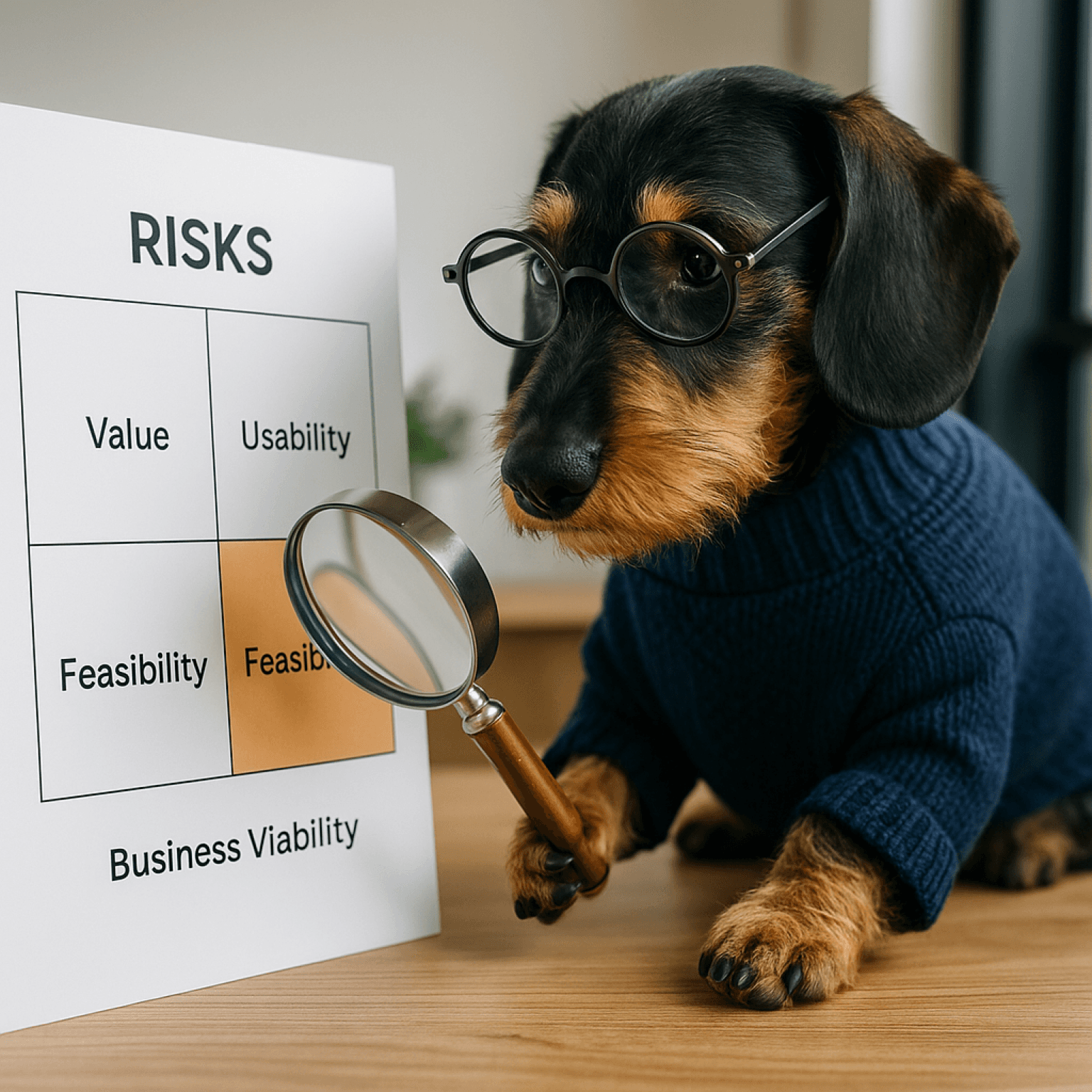
This tests converting technical insights into business cases that shift roadmaps. A strong answer names the SVPG risk, quantifies value for leadership, identifies who was persuaded, and cites discovery artifacts.
BCG Growth-Share Matrix: A Map for Your Product Portfolio
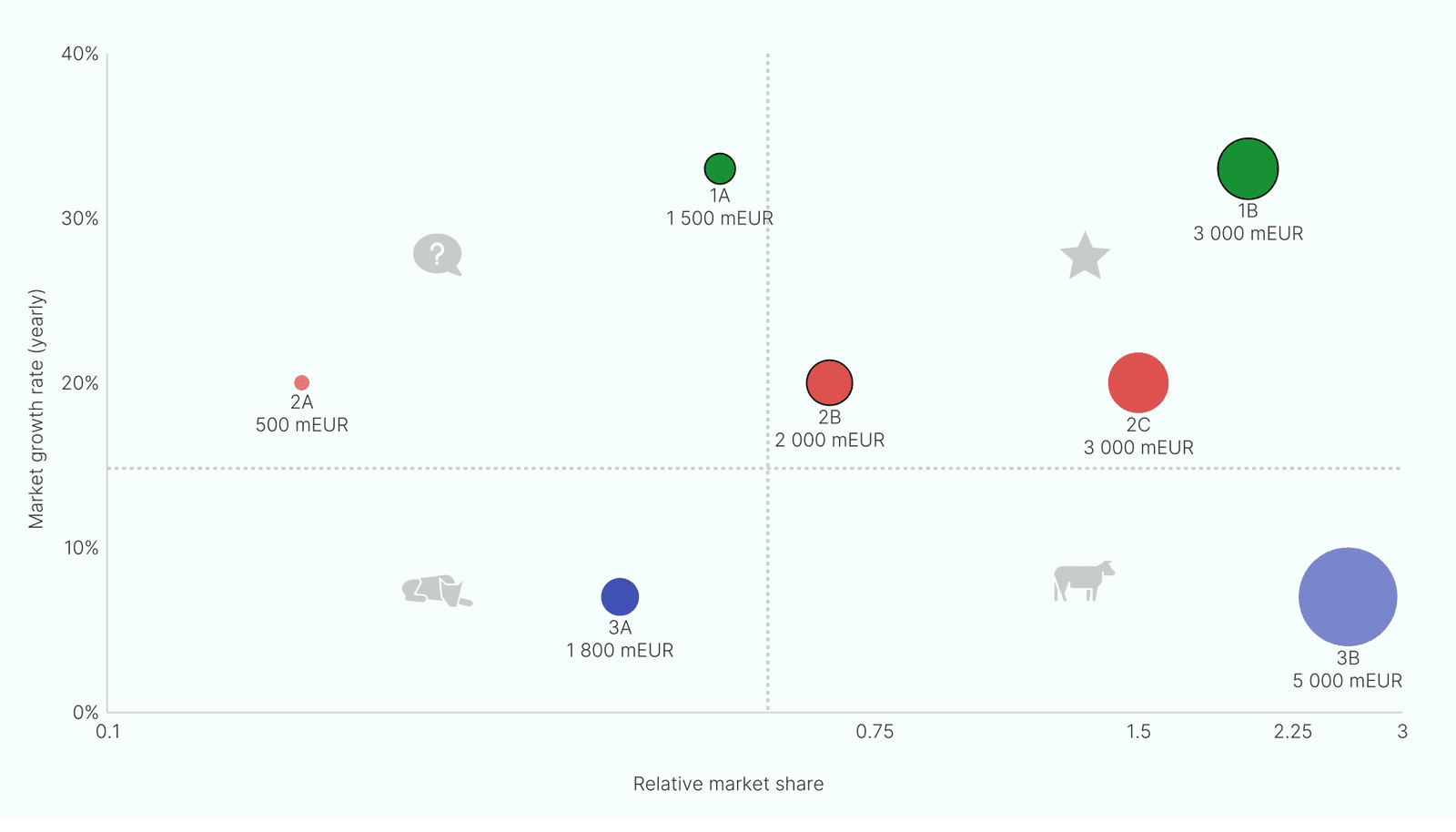
The BCG Matrix plots products on a 2x2 grid of market growth vs. market share to decide where to invest. It's used to categorize products as Stars, Cash Cows, Question Marks, or Dogs. The footgun is treating it as a static, predictive tool.
Resolve a low-code versus custom-build conflict
Build a spike testing real constraints, surface lock-in and exit cost, propose a hybrid scoped by differentiation.

Product Sunsetting: Retiring Products Gracefully
Product sunsetting is the managed process of retiring a product to free up resources. It's used when a product is no longer profitable or strategically relevant. The biggest footgun is a sudden shutdown without a clear migration path, which alienates users.

How do you build a 3-year vision supporting roadmap and future options?
This tests strategic planning and executive communication. Map the 1-year roadmap to gaps, invest in extensible primitives, and frame enabling work as optionality with metrics. Red flag: an engineering wishlist disconnected from business outcomes.
Product Line Strategy: Selling a Family of Products
A product line strategy sells a family of related products individually, not as a bundle. It's used to capture different market segments, like offering 'good, better, best' software tiers or car trims.
How would you evaluate investing in a complex, high-engagement feature?
This tests prioritization over gut feel. A strong answer maps the feature on a Value versus Complexity matrix, weighing business and user value against effort and risk versus alternatives. A red flag is deciding purely on feasibility or user excitement.

Portfolio Roadmap: The Strategy Across Your Products
A portfolio roadmap is the top-line strategy for a group of related products, ensuring they all pull in the same direction. Use it to align multiple product lines with business objectives.

How does product strategy influence architectural decisions? Provide a specific example.
This tests if you tie architecture to product outcomes like iteration speed. A strong answer picks patterns by company stage, cites a concrete tradeoff, and treats reliability as a product feature.
GE-McKinsey Nine-Box Matrix: Portfolio Strategy Beyond the 2x2
The GE-McKinsey matrix plots business units on a 3x3 grid to guide 'invest, hold, or divest' decisions. It's used to prioritize investments by weighing multiple factors for market attractiveness and business strength, not just market share and growth.
Product strategy versus go-to-market strategy
Product strategy defines the product and roadmap; GTM defines launch, pricing, channels, and audience; they overlap at positioning.
Brand Architecture: Your Company's Brand Family Tree
Brand architecture is a family tree for a company's products, organizing how the main corporate brand relates to its sub-brands. It dictates whether a new product gets the parent's name or a standalone identity, maximizing value across the portfolio.
Architect today for a loosely defined future
Isolate volatility behind stable interfaces, use ports and adapters, keep changes reversible and deferred.

How would you technically evaluate a major product pivot?
Structured feasibility under uncertainty. Strong answers: define requirements and SLOs, timebox spikes to de-risk unknowns, audit architecture, data, infra, security, and team skills against thresholds.