All bites
The whole library, newest first. Filter by what you are here for, or pick a topic if you already know.
8668 bites
Page 145

Design a system for batch scoring millions of customer records daily
Shard jobs via scheduler; partition storage; right-size CPU/GPU on spot; retry.

Where to place feature transformations: client, serving API, or upstream service?
Tests separation of concerns in ML systems. Client causes duplication and skew; serving API couples compute to requests; dedicated service adds a network hop but centralizes logic. Red flag: ignoring training-serving skew.
Describe the difference between online and batch inference.
Online serves single requests in ms on live endpoints; batch processes data offline with elastic compute.

How would you design safe, automatic schema evolution in CI?
Tests whether you separate schema evolution from semantic validation. Strong answer: versioned data contracts allowing additive enums, unknown-category model buckets, and automated contract negotiation. Red flag: manual allow-lists or disabling validation.
What infrastructure is needed for a Continuous Training pipeline?
Tests event-driven ML system design beyond CI/CD. Strong answers name orchestrators, feature stores, model registries, and validation gates, mapping triggers to retraining and promotion. Red flag: conflating CT with CI/CD or skipping model validation.

How would you implement shadow deployment and which metrics justify promotion?
Tests zero-impact validation when feedback loops are broken. Mirror traffic to a shadow variant, log predictions, and compare latency, errors, and drift against SLAs. Red flag: calling it A/B testing or claiming live business metrics from unserved responses.
What events trigger automatic model retraining beyond code changes?
This tests whether you treat ML pipelines as event-driven systems, not just software CI/CD. A strong answer lists data drift, scheduled cron jobs, production metric degradation, schema changes, and upstream data pipeline completion.
What is a model registry's purpose in CI/CD4ML and its CI/CD interaction?
Tests if you see the model registry as the bridge between experiments and production, not just storage. A strong answer explains how CI publishes validated artifacts and CD consumes versioned models. Red flag: calling it a passive file dump without versioning.
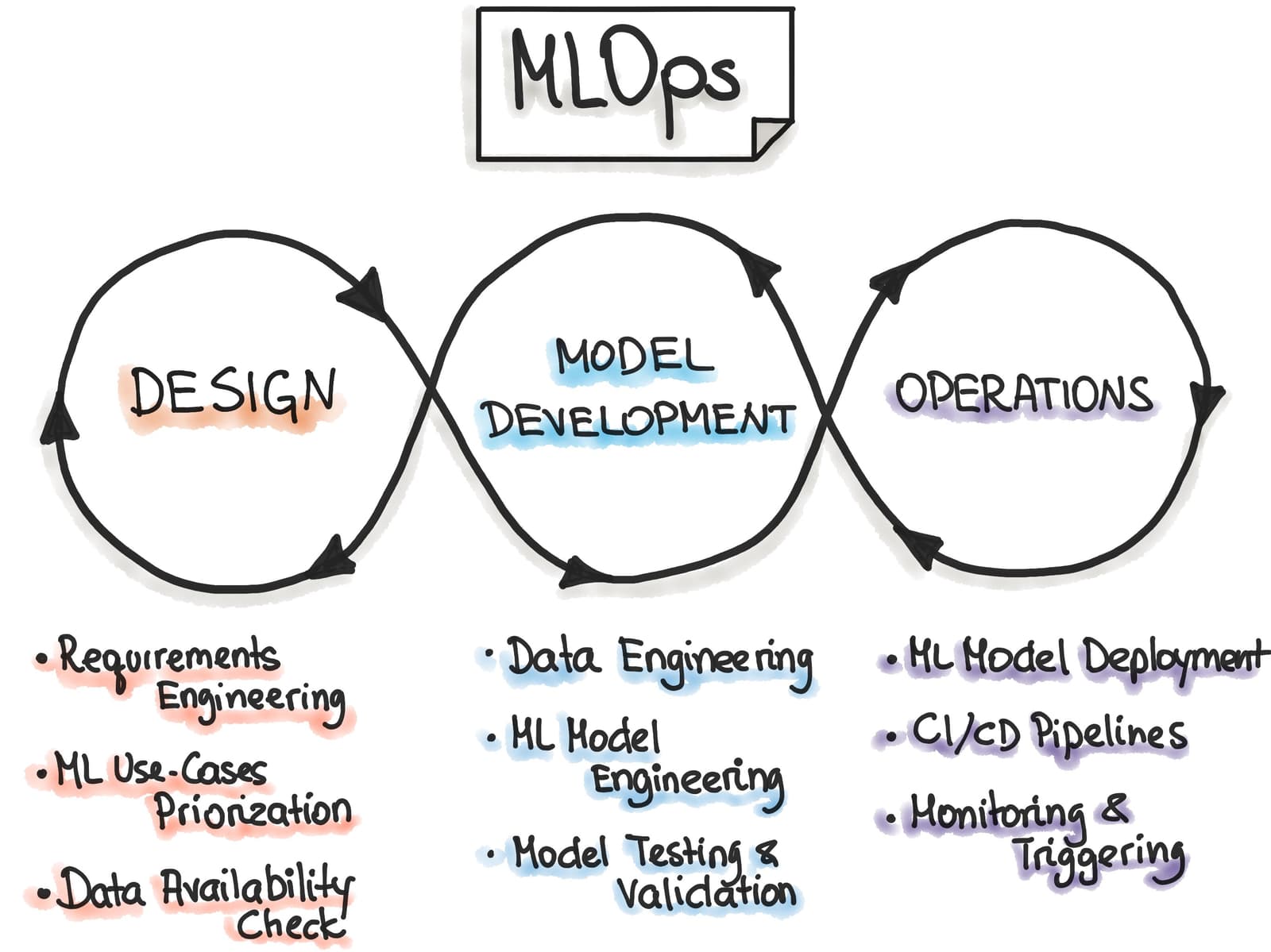
What automated tests belong in CI before deploying a classification model?
Name data schema checks, performance regression vs baseline, bias audits, and artifact integrity.
Key differences between traditional and ML CI/CD pipelines?
Contrast code deploys with data versioning, model registries, and retraining; note holdout eval.
Design multi-tenant GPU cluster scheduling and preemption policies
Tests ability to design fair GPU scheduling preventing starvation and noisy-neighbor issues. Answer: Kueue for fair-share, namespace quotas with MIG, priority classes with backoff.
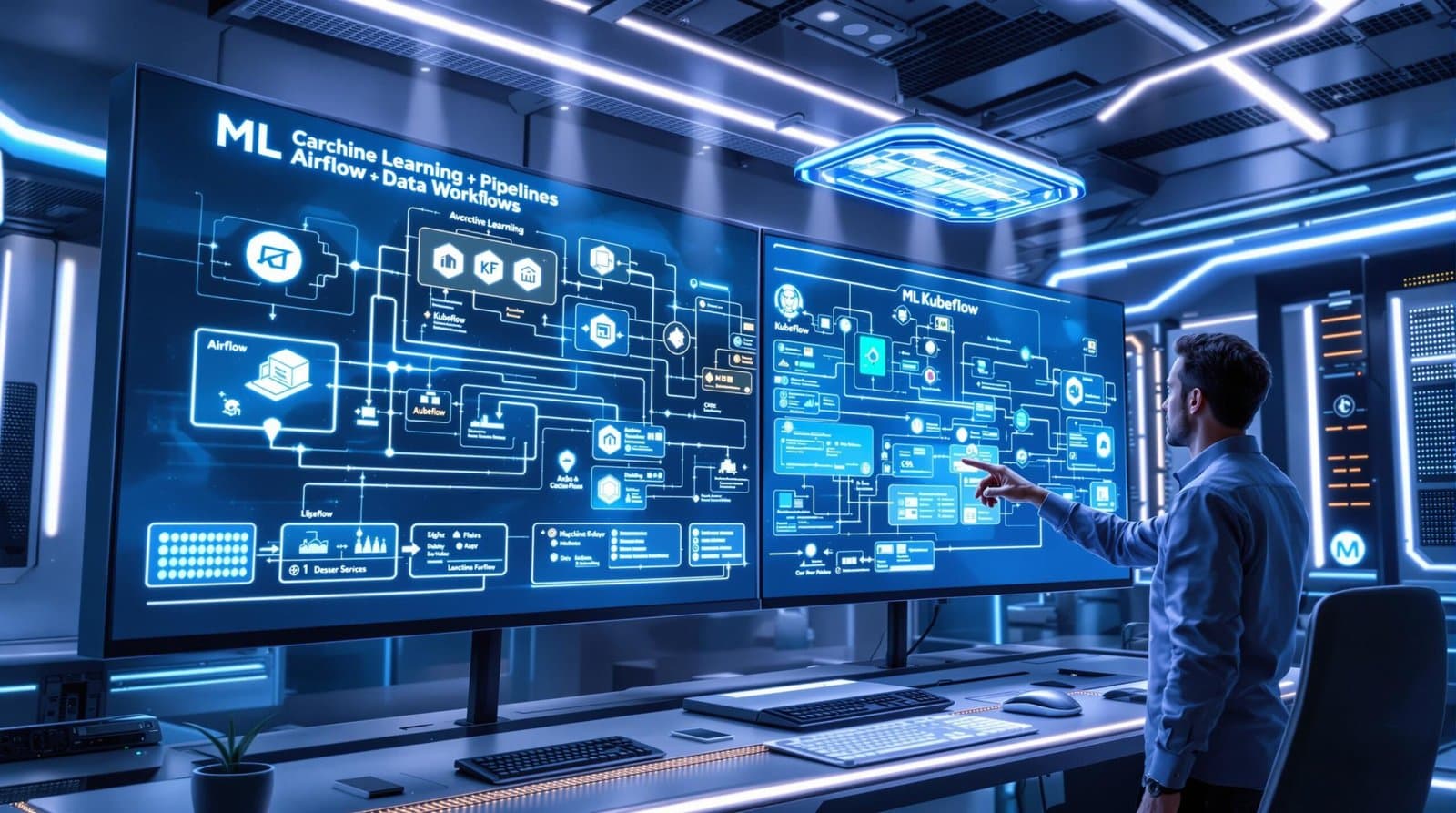
Compare Airflow and Kubeflow for ML training pipelines
Tests orchestrator-to-workload fit. Strong answers contrast Airflow's data integration and Python DAGs with Kubeflow's K8s scaling, container reproducibility, and experiment tracking. Red flag: claiming one is always better without stage-specific reasoning.

Design training job submission to a shared Kubernetes cluster
Gateway with artifact caching; namespace quotas; GPU schedulers like Volcano; Prometheus metrics and cost attribution.
Robust checkpointing strategy for multi-day training jobs and seamless resumption
Tests production-grade distributed training reliability. Cover async atomic checkpoints, MTBF-based cadence, tiered storage, and recovery drills. Red flag: blocking synchronous writes that ignore silent corruption or straggler finalization.

Difference between data and model parallelism, and when to prefer each
Tests split axis: data parallelism replicates model and shards data; model parallelism shards model across devices. Use data parallelism for throughput; model parallelism when layers exceed GPU memory.
How do you containerize a Python training script for GPU cloud VMs?
This tests reproducible GPU containerization. A strong answer uses an NVIDIA CUDA base image, installs Python dependencies at build time, copies the training script, and runs with --gpus.

Design on-demand containerized dev environments for data scientists
Tests multi-tenant notebook infrastructure design. Cover a Notebook Controller, curated Jupyter and VS Code images, namespace isolation with RBAC, resource quotas, and persistent storage. Red flag: a single shared VM without tenancy or idle shutdown.
Strategies to reduce a 5GB ML Docker image size
Tests multi-stage build hygiene and ML bloat reduction. Strong answers use multi-stage builds, strip CUDA dev libs, use slim bases, and collapse cache cleanup into one RUN. Red flag: rm -rf in a separate RUN step, which still bloats the layer.
Describe two secure methods for providing secrets to a running container
Mention runtime mounts like Docker secrets, orchestrator secret injection, and cloud IAM patterns.
How do you version and distribute Docker dev environments consistently?
Tests immutable dev environment distribution. Strong answers cover: versioned Dockerfiles in Git, immutable image tags pushed to a registry, and enforcing identical pulls for CI and developers. Red flag: using the "latest" tag or local Dockerfile rebuilds.