All bites
The whole library, newest first. Filter by what you are here for, or pick a topic if you already know.
8668 bites
Page 148
Experiment Run: The Immutable Training Receipt
An experiment run is an auto-generated log for one training job: it captures hyperparameters, metrics, code, and artifacts. Teams use runs to debug regressions and audit settings. The footgun is logging many metrics without versioning data so comparison fails.
Log Transformation: Compress the Long Tail
Log transformation compresses the long tail of skewed data so outliers cannot dominate loss. Use it for features like income or latency that span orders of magnitude. The footgun is blindly applying it to zeros or negatives, which destroys data.
Model Registry: Source of Truth for Deployed Models
A model registry is the source of truth for which trained model runs where, turning anonymous artifact files into versioned, staged assets. It matters when you deploy multiple models or need instant rollbacks.
Model Server: The MLOps Deployment Bridge
A model server bridges ML training and production, operationalizing models within your release cycle. Use it when models must become first-class CI/CD citizens. The footgun is treating deployment as a one-time handoff rather than repeatable infrastructure.

Shadow Deployment: Test Models on Real Traffic
Shadow deployment runs a new model on real traffic without serving its predictions, letting you catch data drift before users are affected. It is the safest production validation method, but teams often forget to monitor its latency and resource costs.

ETL: Extract, Transform, Load
ETL moves data through three phases from sources to containers. It handles one or more inputs and outputs via software that automates the process on recurring schedules or in batches. The footgun is defaulting to manual runs when automation is typical.

How does text guide Stable Diffusion via U-Net cross-attention?
Tests whether you know text embeddings condition the U-Net through cross-attention. Good answers explain that image features query text keys and values at every layer. Red flag: claiming the prompt is concatenated to the image latent.
What is GAN mode collapse, its causes, and two mitigations?
Define mode collapse as diversity loss to few modes; cite discriminator imbalance and lenient JS loss; give two fixes: WGAN and mini-batch discrimination.
Explain Denoising Diffusion models and forward/reverse processes.
This tests if you see diffusion as iterative latent generation, not GANs. Forward: add Gaussian noise over T steps until data is pure noise. Reverse: a network iteratively denoises random noise into data.
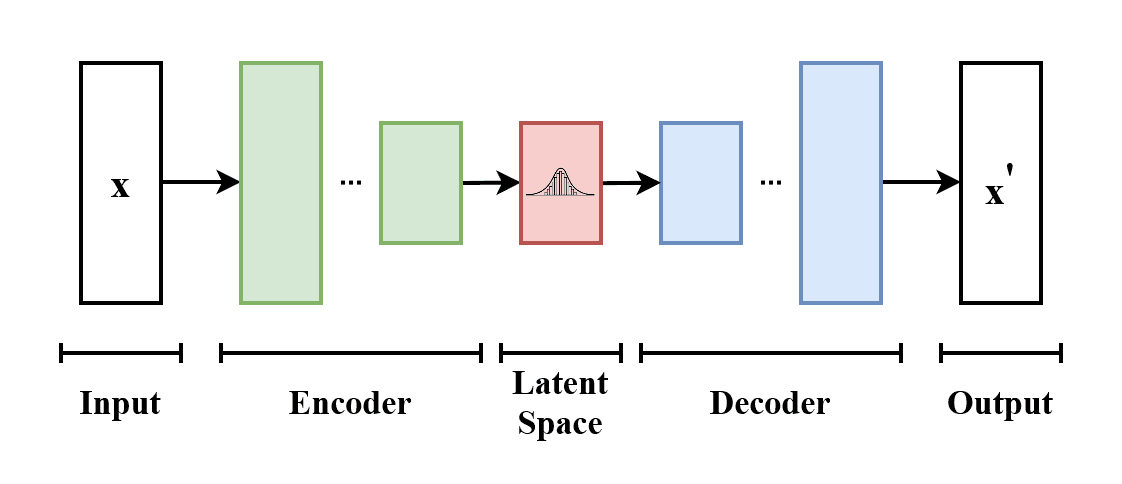
Key latent space difference between Autoencoder and VAE, and generative use
This tests deterministic versus probabilistic latent representations. Standard autoencoders encode fixed points; VAEs encode distributions. Sampling the regularized latent distribution generates new data. Red flag: calling VAEs mere noise adders.
Explain GAN architecture, generator and discriminator roles, and objective function
Tests adversarial training as a minimax game. Strong answers: generator maps noise z to fakes; discriminator classifies real versus fake; both optimize V(D,G)=E[log D(x)]+E[log(1-D(G(z)))].
What fixes an LLM agent's incorrect JSON arguments for a complex tool?
Tests mixing prompting with system guardrails for valid tool JSON. Outline: few-shot demos plus CoT prompting; schema validation, constrained decoding, and retries. Red flag: weak prompts without validation or structured output.

Describe a ReAct agent architecture for multi-step dependent tool calls
Sketch ReAct's thought-action-observation cycle; keep state in an append-only trajectory; re-plan after each observation.
Walk me through building a weather agent with get_weather
Register get_weather, let the model emit parameters, execute it yourself, feed the result back, then synthesize the answer.
How does function calling work in modern LLMs?
Schemas in the prompt; model emits JSON name and arguments; client executes and returns results.

How would you architect a multi-turn conversational RAG system?
This tests memory and query reformulation design beyond single-turn RAG. A strong answer covers 5-10 turn windows, LLM-based rewriting with coreference resolution, hybrid fallbacks, and summarized memory.
Identify RAG latency bottlenecks and propose optimizations
This tests systems thinking across the RAG pipeline. A strong answer names four bottlenecks—embedding, search, chunking, and generation—and pairs each with caching, index tuning, and distillation. Red flag: GPU scaling without indexing fixes.

How would you modify retrieval architecture for hybrid text and SQL RAG?
It tests unified retrieval across unstructured text and structured SQL. Outline a query planner that routes to vector search or text-to-SQL, joins the results, and synthesizes a final answer. Never suggest embedding the whole database as text chunks.

Why does your RAG ignore or contradict retrieved context?
Tests separation of retrieval failures from generation grounding in RAG. Strong answers trace symptoms to root causes like bad chunks, prompt ordering, or parametric knowledge override, then outline systematic debugging. Do not just say hallucination.
Describe a basic RAG architecture and its two main components
This tests retrieval-generation separation. Good answers name the retriever, which fetches relevant documents, and the generator, which synthesizes an answer using those documents plus the query.