All bites
The whole library, newest first. Filter by what you are here for, or pick a topic if you already know.
8668 bites
Page 223
How would you introduce TDD to a team?
Tests your ability to drive change pragmatically. A great answer outlines a gradual adoption: start with a pilot, gather data on bug rates and velocity, and scale based on demonstrated value. A red flag is demanding immediate, universal adoption.

Describe a CI/CD pipeline for a containerized web app
This tests your grasp of automated quality control in software delivery. A strong answer details the CI, build, staging, and production stages, emphasizing quality gates like security scans and E2E tests.
Balancing Emergent Design with Long-Term Architectural Vision
This tests your ability to balance agile practice with large-scale system needs. Explain how an "Architectural Runway," built with "Enablers," reconciles emergent design with intentional architecture for near-term features.
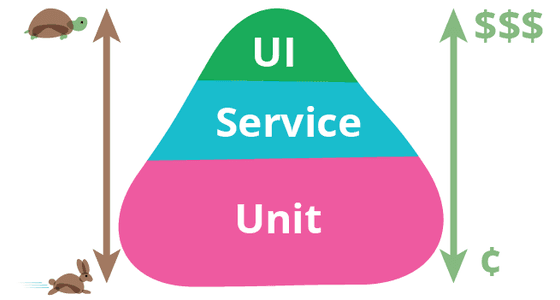
Explain the Test Pyramid and how it guides your strategy.
Tests your grasp of balanced automated testing. Define the pyramid's layers (Unit, Service, UI), explain trade-offs like speed and cost, then apply it to a new service. A red flag is describing the layers without explaining the 'why' behind the shape.
Describe the Red-Green-Refactor cycle in Test-Driven Development
This tests your grasp of TDD's core loop and its design benefits. Outline the cycle: Red (failing test), Green (minimal code to pass), and Refactor (clean up). Mention creating a test list first. A red flag is ignoring the critical Refactor step.
How to Handle Poor Quality in a 'Successful' Sprint?
This tests your commitment to transparency and the Definition of Done. A great answer involves being honest about technical debt in the Sprint Review, then strengthening the DoD in the Retrospective. A red flag is hiding the problem from stakeholders.
How do you make a Sprint Review more than a demo?
Tests your understanding of Scrum's purpose beyond ceremony. A great answer outlines how an engineer can partner with the PO, structure the meeting for feedback, and ensure that feedback directly influences the backlog.
How do you ensure retro action items are implemented?
Tests your ability to make process improvements concrete within Scrum. A great answer suggests adding the top improvement item from the retro directly into the next Sprint Backlog.
How do you handle negative stakeholder feedback in a Sprint Review?
This tests if you see feedback as successful adaptation, not failure. A good answer has the PO capture feedback as new backlog items for prioritization, without immediate commitment, and the team discusses process improvements in the retro.
Sprint Retrospective: What's the output and what happens next?
This tests if you see Scrum as an action-oriented framework. A good answer identifies concrete improvement items as the output and explains that the most impactful one is added to the next Sprint Backlog as a formal work item.
Team Delivers 'Done' Work, But No Stakeholder Value
This tests your ability to diagnose why an efficient Scrum team isn't effective, focusing on the feedback loops that ensure value delivery. A great answer pinpoints failures in the Sprint Review, the Sprint Goal, and backlog refinement, not just the Product…
Handling a Mandated DoD on a Legacy System
This tests your ability to balance organizational standards with team reality and drive incremental improvement. Acknowledge the org DoD, create a realistic team DoD, and make the gap transparent with a concrete plan to close it.
How to address a teammate working on low-priority tasks?
This tests your understanding of peer accountability and Scrum roles. A good answer starts with a private conversation, focuses on the Sprint Goal, and uses Scrum events for transparency before escalating.
How do you help establish a Sprint Goal?
This tests your agency beyond coding and your ability to facilitate collaboration. A good answer involves asking probing questions to find a theme, suggesting a value-oriented goal, and getting team buy-in. A red flag is passively accepting the task list.
A mid-sprint task jeopardizes the Sprint Goal. What now?
This tests your grasp of Scrum's core principles: adaptation and prioritizing the Sprint Goal. A great answer involves immediate transparency, collaborating with the Product Owner to renegotiate scope, and adapting the plan. A red flag is suggesting overtime.
Code Complete vs. Done: What's the Difference?
Tests your understanding of value delivery vs. task completion. A great answer defines 'code complete' as a developer milestone and 'Done' as a team-agreed state of shippable value, governed by the Definition of Done.
What is the primary purpose of the Daily Scrum?
This tests your understanding of Scrum events as tools for inspection and adaptation, not status reports. A great answer states the purpose is to inspect progress toward the Sprint Goal and plan the next 24 hours.
What is a Sprint Goal and how does it influence planning?
Tests if you grasp that a Sprint Goal defines a valuable outcome, not just a list of tasks. A good answer explains it's a filter for selecting work, provides flexibility, and creates team coherence. Red flag: equating the goal with 'finishing all the tickets'.
How would you fix a long, unmanageable product backlog?
Tests your ability to fix a core process failure, not just list grooming tactics. Propose a dedicated workshop to define a clear Product Goal, ruthlessly prune the backlog against it, and establish a sustainable refinement process. Red flag: blaming the PO.

How do you fix a team that consistently overcommits in sprints?
This tests diagnosing process failures, not just bad estimates. A good answer investigates root causes like external pressure or poor refinement, then proposes using historical velocity and tracking actual capacity.