All bites
The whole library, newest first. Filter by what you are here for, or pick a topic if you already know.
8667 bites
Page 304
GitOps for MLOps: Your ML System as Code
GitOps for MLOps treats your entire machine learning pipeline—data, code, and models—as declarative configuration in Git. It automates ML workflows, ensuring reproducibility by making every change a reviewable commit.
Automating MLOps with GitHub Actions
Treat your ML workflow like any other CI/CD pipeline. GitHub Actions automates MLOps tasks—like training, testing, and deployment—triggered by events in your repo. Use it to run validation on PRs or deploy models on merge.
Unit Testing ML: Beyond Standard Code Checks
Unit testing for ML isn't just about code logic; it's about checking data, models, and infrastructure in isolation. Use it to validate data transformers, check model prediction shapes, or confirm a function handles nulls.
Git-Based CI Triggers: Automating on Events
Think of Git events like push or pull_request as the "play" button for your automation. This is how CI systems automatically run tests on new code. The footgun is using broad triggers, like push on all branches, which causes costly and redundant runs.

Microsoft DeepSpeed: Training Massive Models Across GPUs
DeepSpeed trains models too big for one GPU by partitioning model states across many devices. It's essential for training foundation models like BLOOM, but its complexity is overkill for smaller models and misconfiguration can harm performance.
All-Reduce: Synchronizing Parallel Workers
All-Reduce lets parallel workers agree on a global result. Each worker contributes data, an operation (like sum) runs on all data, and every worker gets the final answer. It's the core of distributed ML training, used to average gradients across GPUs.
Elastic Training: Training Models on Unreliable Hardware
Elastic Training lets ML training jobs survive worker nodes being added or removed mid-run. It's like a construction crew that adapts to a changing number of workers, making it ideal for training large models on cheap but unreliable cloud spot instances.
Slurm: The Job Scheduler for Supercomputers
Slurm is the reservation system for a shared supercomputer, queuing up jobs and assigning them to available nodes. It's the backbone of high-performance computing clusters in science and ML.
Kubeflow: MLOps on Kubernetes
Kubeflow brings the declarative, container-based world of Kubernetes to the entire ML lifecycle. It provides tools for building portable and scalable ML workflows, from development to production serving.
Ray AI Runtime (AIR): A Unified ML Toolkit
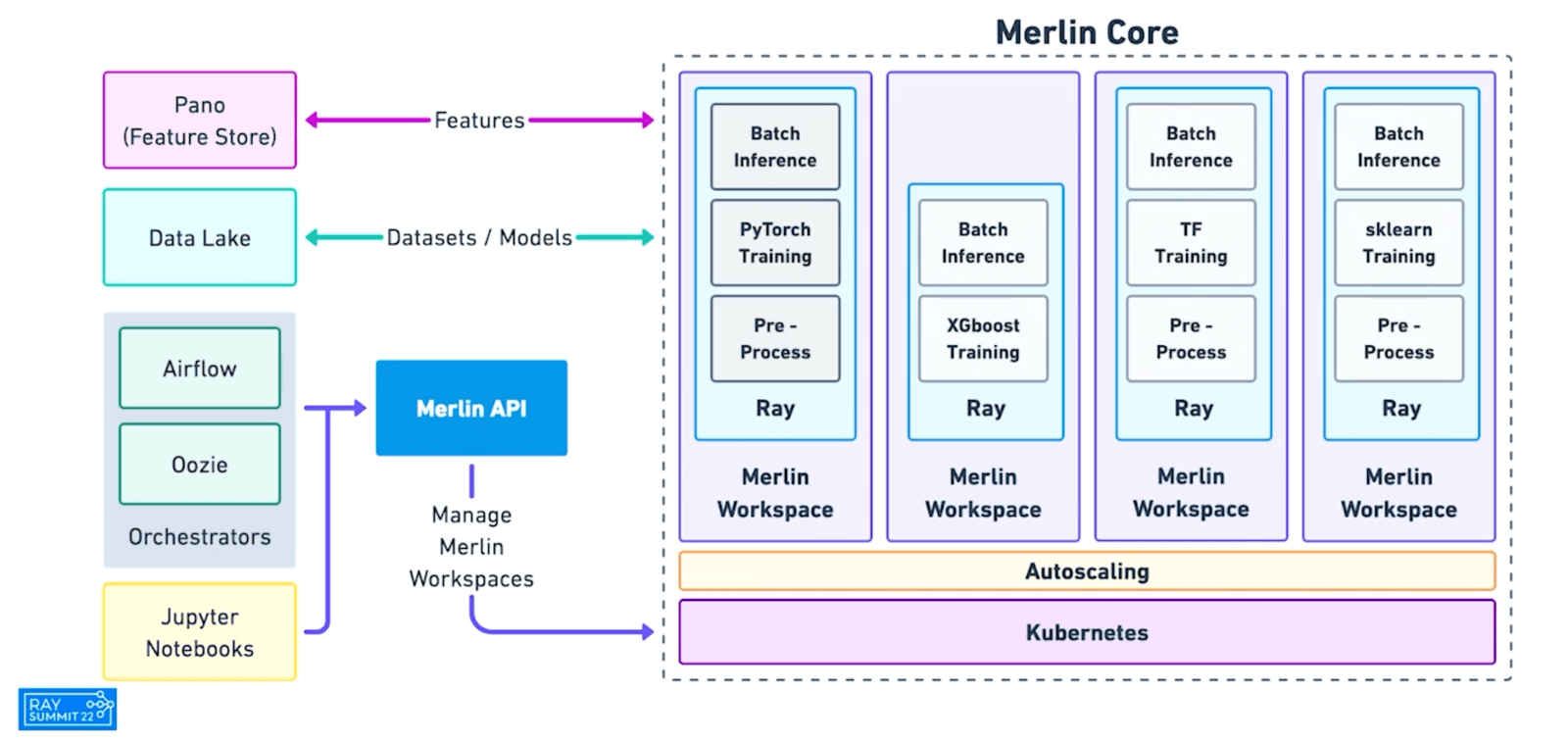
Ray AIR is a unified toolbox for the ML lifecycle, bundling libraries for data, training, tuning, and serving. It's for scaling end-to-end ML workflows on one distributed platform.
Horovod: Scale ML Training Across Many GPUs
Horovod scales a single-GPU training script to hundreds of GPUs with minimal code changes, slashing training time. It's used when models are too big for one machine.
Parameter Servers for Distributed ML Training
A parameter server splits the work in distributed training: central servers hold the model's parameters, while worker nodes pull parameters, compute gradients on data subsets, and push updates back. This enables training models too large for one machine.
Slash ML Training Costs with Spot Instances
Spot Instances are like flying standby for compute: you get a massive discount but can be 'bumped' if someone pays full price. Use them for ML training jobs that can be paused and resumed. The footgun is using them for tasks that can't tolerate interruption.
NVIDIA CUDA: General-Purpose GPU Computing
CUDA unlocks a GPU's thousands of cores for general-purpose computing, not just graphics. It's key for accelerating tasks like machine learning by running the same operation on massive datasets in parallel.
Nix: Reproducible Builds Through Functional Package Management
Nix treats system configuration like pure functional programming, ensuring reproducible builds by isolating every package into a unique, immutable path. It's used for reliable CI/CD and consistent dev environments. The footgun is its steep learning curve.
Secrets Management: Beyond Environment Variables
Treat secrets like cattle, not pets: they should be temporary and replaceable. Use a central vault to dynamically inject credentials into apps at runtime, especially in CI/CD and containerized environments.
Multi-stage Docker Builds: Lean Images, Fast Deploys
Build your app in one container stage and run it in another, separate one. This keeps your final Docker image lean by shipping only the compiled artifact, not the entire build environment, compilers, and source code.
Configuration as Code: Version Control for Your Settings
Configuration as Code treats your system settings like source code: defined in files, versioned, and automatically applied. It's used to manage app settings or service credentials across environments, preventing manual errors.
Dev Containers: Your Dev Environment as Code
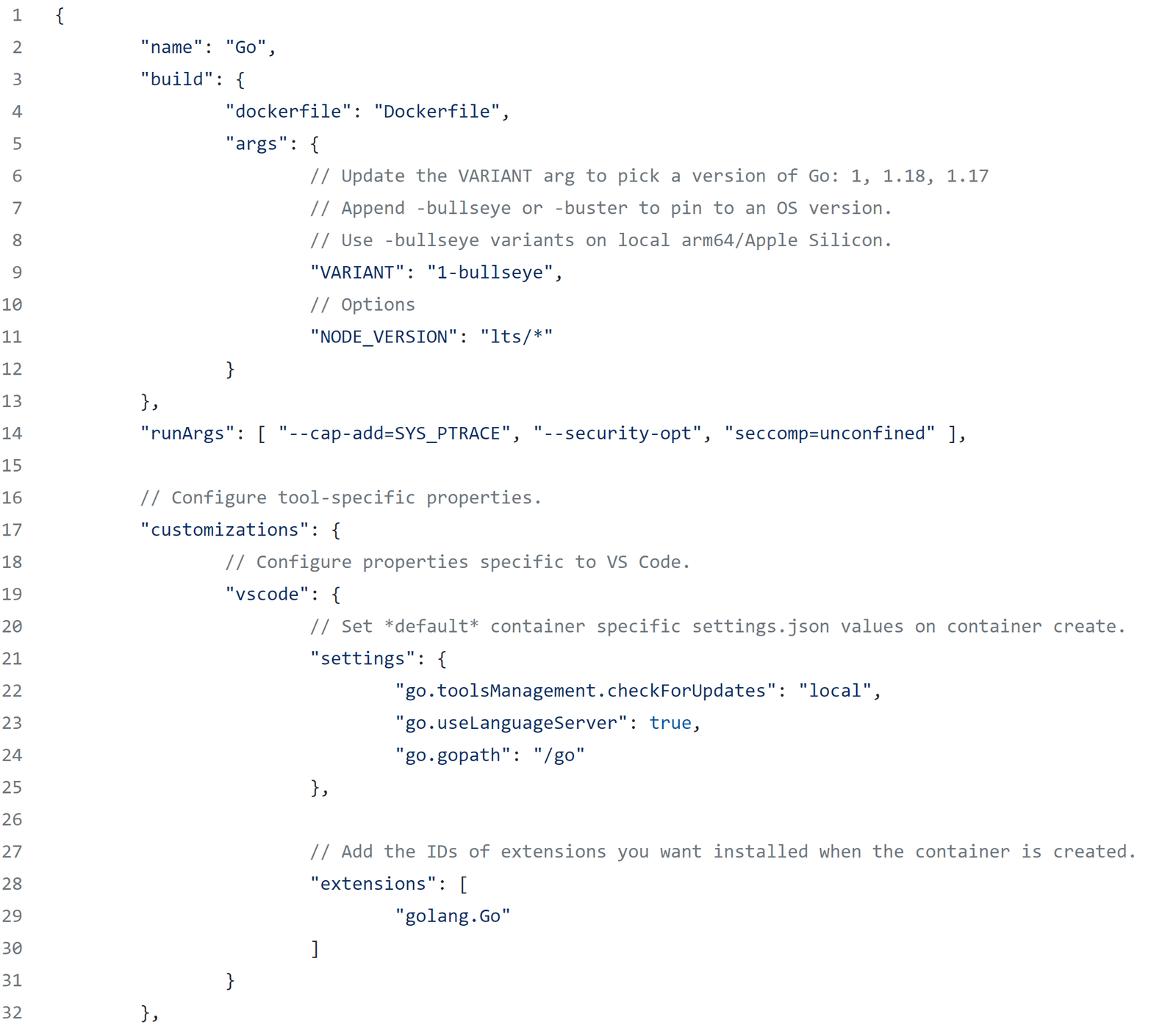
A dev container packages your entire development environment—tools, libraries, and settings—into a single, portable container. Use it to standardize team environments, simplify onboarding, and ensure consistency between local dev and CI.
Docker Bind Mounts: A Portal to Your Host Filesystem
A bind mount is a portal from your host machine's filesystem directly into a container, where changes on either side are reflected instantly. Use it for live code development, but never for production data, as it creates a major security risk.