All bites
The whole library, newest first. Filter by what you are here for, or pick a topic if you already know.
8667 bites
Page 326
RARRA Framework: Retention Over Acquisition
The RARRA framework flips the classic AARRR funnel, prioritizing Retention over Acquisition. In crowded markets, it's cheaper to keep a user than to find a new one. Use it when acquisition costs are high.
Customer Lifetime Value (LTV): A Customer's Future Net Profit
LTV predicts the total net profit a customer will generate over their entire relationship. It's used to set marketing budgets and prioritize features for high-value users.
Churn Rate: How Fast Your Business is Leaking
Churn rate is your business's leak rate—the percentage of customers lost over a period. It's a vital health metric for subscription services like SaaS or streaming. The footgun?

User Activation: Engineering the 'Aha' Moment
User activation engineers the 'aha' moment when a new user first experiences your product's value. It's measured by a key action, like sending a message in Slack, that predicts retention.
The Customer Lifecycle: From Prospect to Advocate
The customer lifecycle maps the journey from first contact to loyal advocate. It's used to decide when to send a welcome email (acquisition), a loyalty discount (retention), or a 'we miss you' offer (win-back). The footgun is focusing only on acquisition.
User Journey Mapping: Seeing Your Product Through a User's Eyes
A user journey map tells the story of a user achieving a goal, visualizing their actions, thoughts, and feelings from start to finish. It's essential for understanding complex, multi-channel processes.
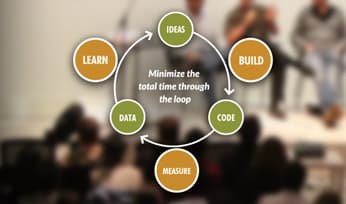
The Pivot: A Structured Change in Strategy, Not Vision
A pivot is a structured course correction, not a restart. You change strategy based on validated learning from your MVP when data shows your initial hypothesis was wrong. The footgun is pivoting on a whim instead of data, or failing to pivot despite it.

ICE Score: A Quick Framework for Prioritizing Ideas
The ICE score is a quick framework for ranking ideas by asking: what's the potential Impact, our Confidence in the outcome, and the Ease of implementation? Growth teams use it to prioritize experiments, balancing big bets with quick wins.

High-Tempo Testing: Move Faster Than Your Channels Decay
High-tempo testing treats growth as a continuous experiment, not a one-time campaign. Since marketing channels decay quickly, this lets you find new wins across the entire user journey.
The Newtype Pattern: Type Safety for Primitives
Wrap a primitive type in a new struct to give it a unique, compile-time identity. A Miles(f64) is different from a Kilometers(f64). Use it to prevent mixing up IDs or units. The footgun: you must explicitly implement or delegate methods for the new type.
Rust's Serde: Taming JSON with Types
Serde JSON translates between human-readable JSON text and native Rust structs, acting as a bilingual interpreter for your data. Use it for web APIs or config files.
Rust's TcpStream: Your Handle to a Network Connection
A TcpStream is Rust's handle to a network connection, closing automatically when it goes out of scope. Use it to talk to servers. The footgun: connect() can block forever; always prefer connect_timeout() in production to avoid hanging.
Rust Enums and Pattern Matching: Type-Safe Alternatives
Rust enums define a type that can be one of several variants, each holding its own data. They're used to model states like Loading/Success/Error or handle optional values with Option<T>.
Rust's Fearless Concurrency: Catch Bugs Before They Ship
Rust's "fearless concurrency" uses the ownership and type system to turn data races into compile-time errors. This allows you to safely use threads, message passing, or shared state without runtime surprises. The footgun is assuming this prevents all bugs.
Rust Lifetimes: Preventing Dangling References
Lifetimes are Rust's compile-time guarantee that a reference never outlives the data it points to. The borrow checker uses them to prevent dangling pointers, a common source of bugs.

Daemonizing Go/Rust Apps: Let the OS Do It
Daemonizing an app means running it as a background service, detached from your terminal. This is essential for web servers or job processors. The common footgun is writing custom daemon logic instead of using a system service manager like systemd.
The FromRequest Trait: Consuming Request Bodies in Axum
Axum's FromRequest trait defines how to create a type by consuming an HTTP request body. It's the core of extractors like Json<T> that deserialize POST data. The footgun: you can only use one FromRequest extractor per handler, as it consumes the body.
Rust's Tower Service: One Trait for Clients, Servers, and Middleware
Tower's Service trait is a universal API for async requests. It models any 'request -> future<response>' flow, unifying clients, servers, and middleware. Use it for HTTP servers or database clients. The footgun: ignoring poll_ready bypasses backpressure.
Terminal User Interfaces (TUIs): GUIs for the Console
A TUI is a graphical interface built from text, offering rich interactivity without leaving the console. Use them for system monitoring (btop), file management, or database clients. The footgun: don't confuse them with CLIs; TUIs are stateful apps.
Rust's Deref Trait: Smart Pointers Acting Like Data
The Deref trait lets a "smart pointer" type act like the data it contains, making wrappers transparent. It enables calling an inner type's methods directly on a wrapper, like using &str methods on a String. Its deref() method must never fail.