Describe your framework for managing tech debt in product discovery.
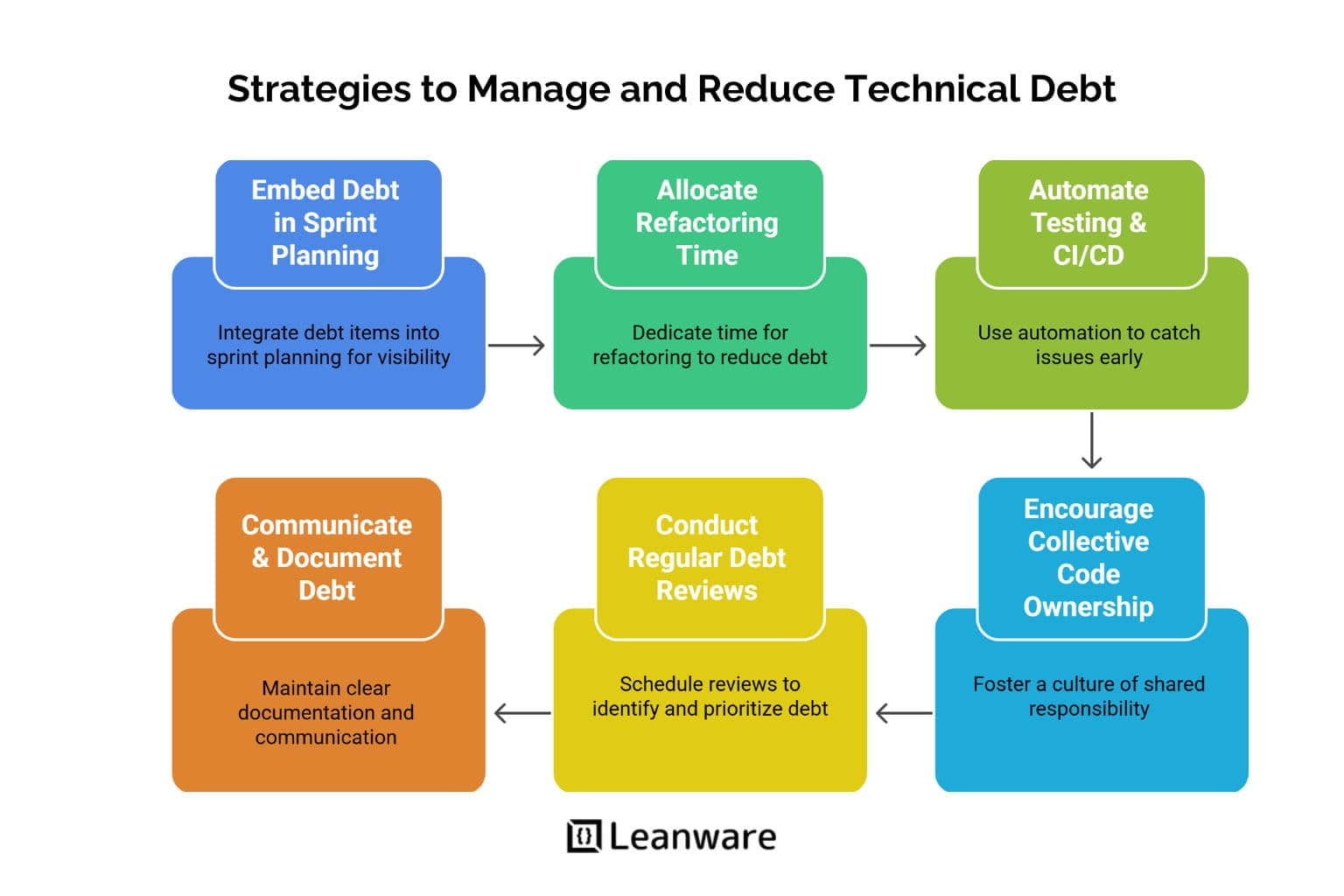
Tests your strategic view of tech debt. A good answer frames debt as a tool, describes a framework for categorizing and tracking it, and explains how to tie repayment to product milestones. A red flag is viewing all debt as bad or lacking a concrete.
What's really being asked
This question tests your ability to treat technical debt as a strategic tool rather than a purely negative outcome. Interviewers want to see if you can balance the product need for speed with the engineering need for long-term maintainability. It assesses your judgment, your process for managing risk, and your ability to collaborate with product to make conscious, documented trade-offs. This is a test of senior-level ownership and strategic thinking.
The full answer
A strong answer provides a structured framework. First, frame the concept correctly: acknowledge that debt, like financial debt, can be a useful tool for accelerating delivery (e.g., for an MVP) if it's managed intentionally. Second, describe a process for managing it: identify and categorize different types of debt (e.g., code, design, testing, documentation). Third, make the debt visible by creating tickets in the backlog, quantifying its impact or "interest rate" in terms of slowed velocity or increased bugs. Finally, detail the repayment strategy. Debt is acceptable when it's a conscious choice to validate a hypothesis, with a pre-defined trigger for repayment. This could be allocating 15-20% of each sprint to debt reduction or tying repayment directly to a product milestone, such as securing funding for the next phase of a feature after a successful MVP.
The mistakes people make
The most common red flag is a vague "we'll fix it later" attitude, which signals a lack of process and discipline. Another is the purist stance that all tech debt is bad and must be avoided; this shows a lack of business acumen. Finally, blaming product managers for forcing shortcuts demonstrates a lack of ownership. A senior engineer collaborates with product to manage the trade-offs as a shared responsibility.
What usually comes next
Expect follow-ups that test your communication and negotiation skills, such as: "How do you convince a product manager to prioritize paying down debt over shipping a new feature?" or "Tell me about a time you intentionally incurred debt to meet a deadline. What was the outcome and how did you manage it?" You might also be asked what metrics you use to track the impact of debt, like cycle time, code churn, or defect rates.
A concrete example
To test a new personalization feature, we needed to launch an MVP in four weeks. The 'correct' architecture required a two-month refactor of our user profile service. Instead, we incurred intentional 'design debt' by building a temporary, standalone service that duplicated some user data. We created a tech debt ticket in our backlog, explicitly linking it to the MVP epic. Our agreement with product was that if the MVP's A/B test showed a 5% or greater lift in engagement, the first phase of scaling the feature would be to refactor the profile service and decommission our temporary solution. The test succeeded, and we dedicated the next full sprint to paying back that debt before adding any new capabilities.
Interview question
What is a key characteristic of strategically managed technical debt in product discovery?
- a.It is always avoided to prevent future slowdowns, prioritizing long-term maintainability over short-term gains.
- b.It is documented and categorized, with repayment scheduled when engineering capacity becomes available.
- c.It is primarily managed by allocating a fixed percentage of each sprint to debt reduction, irrespective of product validation needs.
- d.It is intentionally incurred to validate a product hypothesis, with a pre-defined repayment trigger tied to a product milestone.Correct
Why? this is the answer
The card states that strategically managed debt is a "conscious choice to validate a hypothesis" with a "pre-defined trigger for repayment" often linked to a product milestone. Option D directly captures this. Option C describes a repayment method, but misses the strategic intentionality and linkage to product validation that defines advanced tech debt management.
Just read this? Test yourself on what you have been reading.
Read the original → leanware.co
- #tech debt
- #agile
- #product discovery
- #risk management
You just looked this up. Could you explain it out loud?
That is the part interviews actually test. Tezvyn takes questions like this one and gives you what the interviewer is really checking, the answer that lands, and the mistake that ends the conversation, in the four minutes before your next meeting.
The iPhone app is on the way
We are building it. Until it lands, nothing here is held back from you: every interview card, your saved cards, streaks and the job board all work in Safari, plus hundreds of free practice quizzes of thirty questions each. Sign in and it all carries over to the app the day it arrives.
Want it as an icon? Tap Share at the bottom of Safari, then Add to Home Screen. It opens full screen and the cards you have read stay available offline.
We are hiring for this. Every open role lists the topics its interview covers, so you can prepare for the real thing rather than guessing.
See open roles