How Management's Role Evolves When Scaling Agile
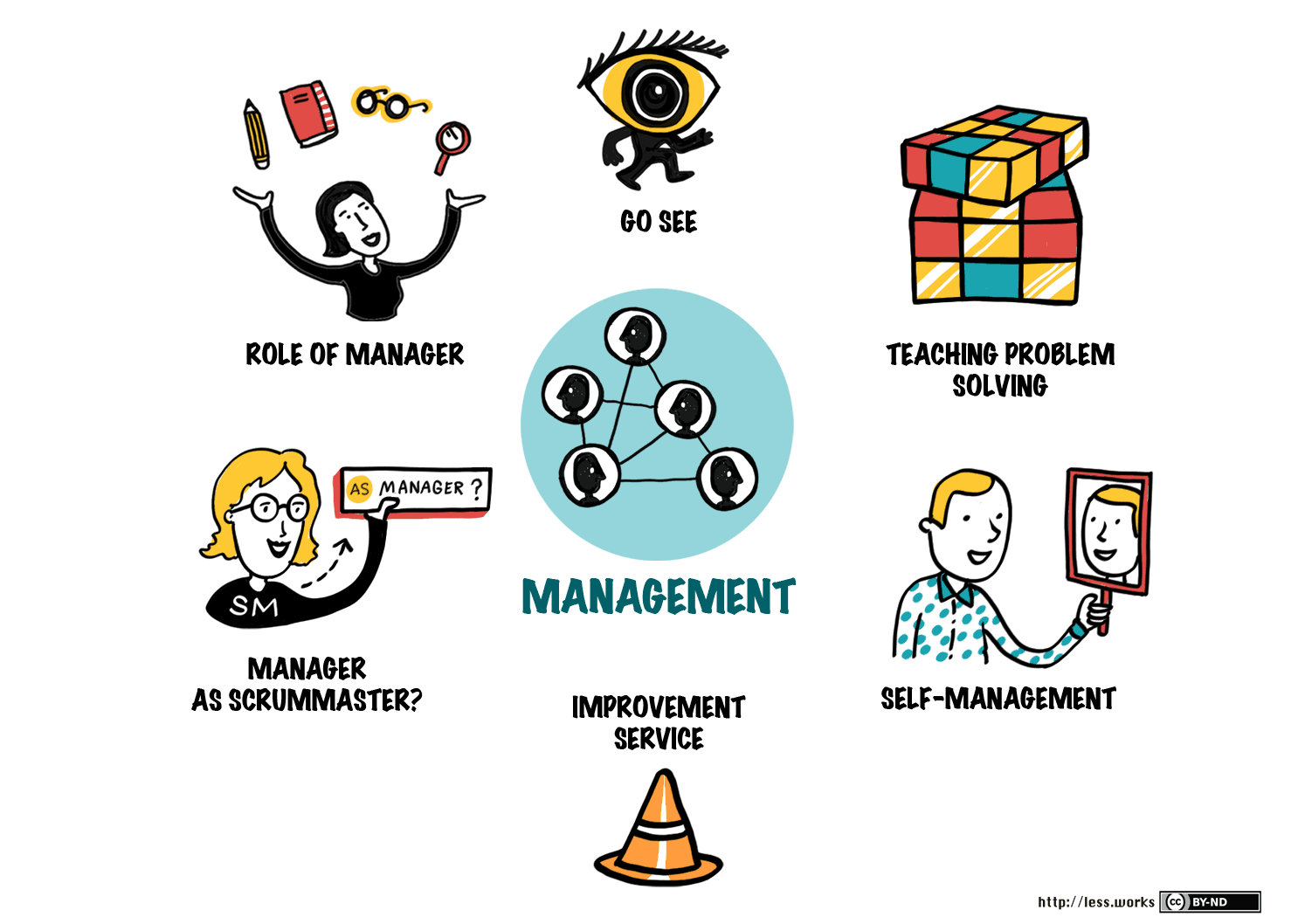
This tests your grasp of servant leadership vs. command-and-control. A good answer contrasts traditional managers (directing work) with enabling managers (removing impediments, teaching problem-solving) as seen in LeSS.
What's really being asked
This question probes your understanding of modern management theory (specifically Theory Y vs. Theory X from McGregor) as applied to scaled software development. The interviewer wants to see if you can articulate the fundamental shift from a manager as a controller of people to a manager as an enabler of systems. In frameworks like LeSS, this means moving from managing people's tasks to managing the environment in which self-managing teams can thrive.
The full answer
First, define the traditional 'command' approach. In this model, managers are responsible for resource allocation, task assignment, and directly resolving cross-team dependencies, often acting as the central point of contact. They own the 'who' and the 'how'. Second, explain the LeSS 'enabling' model. Here, the Product Owner owns the 'what' (the work), and the teams own the 'how' (the implementation). This frees the manager from daily task management. Third, detail the new role. The manager becomes a teacher and coach, focusing on improving the overall organizational system. Their job is to remove systemic impediments, teach problem-solving skills, and foster a culture of continuous improvement. Fourth, contrast dependency management. Instead of a program manager dictating integration plans, the enabling manager ensures teams have the forums and skills for direct team-to-team coordination. Strategic alignment is achieved by clarifying goals and context, not by prescribing solutions.
The mistakes people make
The most common red flag is describing the manager as a 'super Scrum Master'. These roles are distinct. A manager has formal authority, handles HR aspects like compensation and career growth, and works on the organizational system. A Scrum Master is a peer-level coach focused on a team's effectiveness within the framework. Another weak answer is using vague terms like 'empowerment' without giving concrete examples of how a manager empowers teams, such as by changing reward structures or removing bureaucratic approval gates. Finally, avoid conflating the specific management structures of different frameworks, like applying SAFe's Release Train Engineer role to a LeSS context.
What usually comes next
Expect questions like: "How would you handle a team that is consistently underperforming in this model?" or "What metrics would you use to measure the success of your department in a LeSS organization?" or a behavioral question like, "Describe a time you removed a major organizational impediment for your teams."
A concrete example
In a traditional structure, if two teams have a dependency, their managers and a program manager might spend 4-5 hours in meetings creating a detailed integration plan. In a LeSS organization, the enabling manager's job is different. They might spend 30 minutes coaching one of the teams on how to initiate a conversation with the other team directly. They ensure the system allows for this, for example, by encouraging joint backlog refinement sessions. The manager's goal is to make their coordination role redundant over time, reducing management overhead from hours of active intervention to minutes of coaching.
Interview question
In a LeSS (Large-Scale Scrum) organization, how does a manager's primary focus fundamentally shift compared to a traditional command-and-control structure?
- a.Primarily managing individual team member performance and assigning specific tasks to ensure project delivery.
- b.Taking ownership of the product backlog and prioritizing features to ensure alignment with business goals.
- c.Focusing on coaching teams in problem-solving, fostering continuous improvement, and removing systemic organizational impediments.Correct
- d.Acting as a 'super Scrum Master' by facilitating all team ceremonies and resolving all inter-team conflicts directly.
Why? this is the answer
The enabling manager in LeSS shifts from directing work to coaching teams, fostering continuous improvement, and removing systemic impediments to allow self-managing teams to thrive. This is distinct from a 'super Scrum Master' role, which focuses on team-level effectiveness within the framework, whereas a manager handles organizational systems and HR aspects.
Just read this? Test yourself on what you have been reading.
Read the original → less.works
You just looked this up. Could you explain it out loud?
That is the part interviews actually test. Tezvyn takes questions like this one and gives you what the interviewer is really checking, the answer that lands, and the mistake that ends the conversation, in the four minutes before your next meeting.
The iPhone app is on the way
We are building it. Until it lands, nothing here is held back from you: every interview card, your saved cards, streaks and the job board all work in Safari, plus hundreds of free practice quizzes of thirty questions each. Sign in and it all carries over to the app the day it arrives.
Want it as an icon? Tap Share at the bottom of Safari, then Add to Home Screen. It opens full screen and the cards you have read stay available offline.
We are hiring for this. Open roles that interview on agile — each one lists the topics its interview covers.
See open roles