Intermediate interview questions in Agile & Scrum, page 4
How would you shift a Sprint Review from demo to working session?
Tests if you see the Sprint Review as empirical inspection and adaptation with stakeholders. Strong answers reframe it around the Sprint Goal and Increment, gather live feedback on the Product Backlog, and adapt ordering together.
How do you make a Sprint Review more than a demo?
Tests your understanding of Scrum's purpose beyond ceremony. A great answer outlines how an engineer can partner with the PO, structure the meeting for feedback, and ensure that feedback directly influences the backlog.
Shift a Sprint Review from a Demo to a Working Session
Tests your understanding of Sprint Review's purpose: inspection and adaptation. A great answer shows how an engineer can partner with the PO to frame the session around goals, solicit feedback on the Increment, and collaboratively update the Product Backlog.
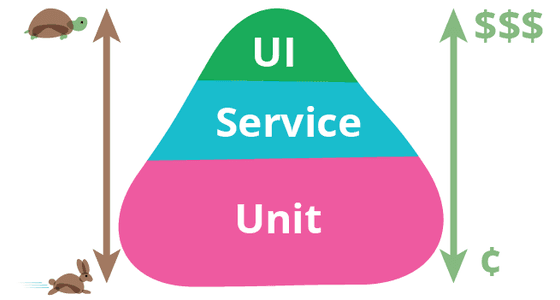
Explain the Test Pyramid and how it guides testing strategy
Favor fast unit tests, a middle service layer, and few UI tests as second defense.
Explain the Test Pyramid and how it guides your strategy.
Tests your grasp of balanced automated testing. Define the pyramid's layers (Unit, Service, UI), explain trade-offs like speed and cost, then apply it to a new service. A red flag is describing the layers without explaining the 'why' behind the shape.
Explain the Test Pyramid and its strategic use
Tests your grasp of balanced testing trade-offs. A good answer defines the Unit, Service, and UI layers, explains the cost/speed rationale, and applies it to a feature strategy. A red flag is describing the pyramid but not its strategic 'why'.
How do you balance emergent design with long-term architectural vision?
Tests reconciling emergent design with intentional architecture. Strong answers cite the architectural runway: just-enough infrastructure ahead via enablers, extended by teams incrementally. Red flag: claiming architecture is fully upfront or purely organic.
Balancing Emergent Design with Long-Term Architectural Vision
This tests your ability to balance agile practice with large-scale system needs. Explain how an "Architectural Runway," built with "Enablers," reconciles emergent design with intentional architecture for near-term features.
Balancing Emergent Design with Long-Term Architectural Vision
This tests your grasp of scaling Agile. A strong answer defines emergent design and intentional architecture, explaining how an 'Architectural Runway' provides the technical foundation to balance them. A red flag is treating this as an 'either/or' choice.

Describe essential CI/CD stages for a containerized app and critical quality gates
This tests your ability to design a commit-to-prod pipeline with quality controls. A strong answer covers: build and unit tests, vulnerability scanning, staging deployment with integration tests, and production rollout with rollback.
Describe a CI/CD pipeline for a containerized web app
This tests your grasp of automated quality control in software delivery. A strong answer details the CI, build, staging, and production stages, emphasizing quality gates like security scans and E2E tests.
Describe the stages of a CI/CD pipeline for a containerized app
This tests your practical knowledge of automated software delivery and risk management. A strong answer outlines CI, build, test, and deploy stages, including container-specific steps like image scanning and quality gates like automated testing and…
How would you introduce Test-Driven Development to a test-after team?
Tests change management and influence without authority. A strong answer maps TDD to team pain points, pilots it on one story type with measurable outcomes like defect rate. Red flag: mandating TDD team-wide immediately or dismissing existing tests.
How would you introduce TDD to a team?
Tests your ability to drive change pragmatically. A great answer outlines a gradual adoption: start with a pilot, gather data on bug rates and velocity, and scale based on demonstrated value. A red flag is demanding immediate, universal adoption.
How would you introduce TDD to a team?
This tests your ability to influence a team and implement change pragmatically. A great answer outlines a gradual adoption: understand context, advocate with data, pilot on a new feature, then scale. A red flag is demanding a sudden, mandatory switch.

What is the Strangler Fig pattern and its use in legacy modernization?
Tests incremental modernization over big-bang rewrites. A strong answer covers the botanical metaphor, building new components alongside legacy, routing traffic, extracting seams, and four activities. Red flag: a long rewrite delivering no value until launch.
What is the Strangler Fig pattern?
Tests your understanding of gradual legacy system modernization. A good answer defines the pattern (new system grows around old), outlines the steps (identify seams, build, redirect traffic), and links it to Agile's incremental value delivery.
The Strangler Fig Pattern for Legacy System Refactoring
Tests your understanding of gradual legacy modernization and risk management. A great answer defines the pattern (new system grows over old), outlines the process (identify seams, build new, redirect traffic), and contrasts it with risky "big bang" rewrites.
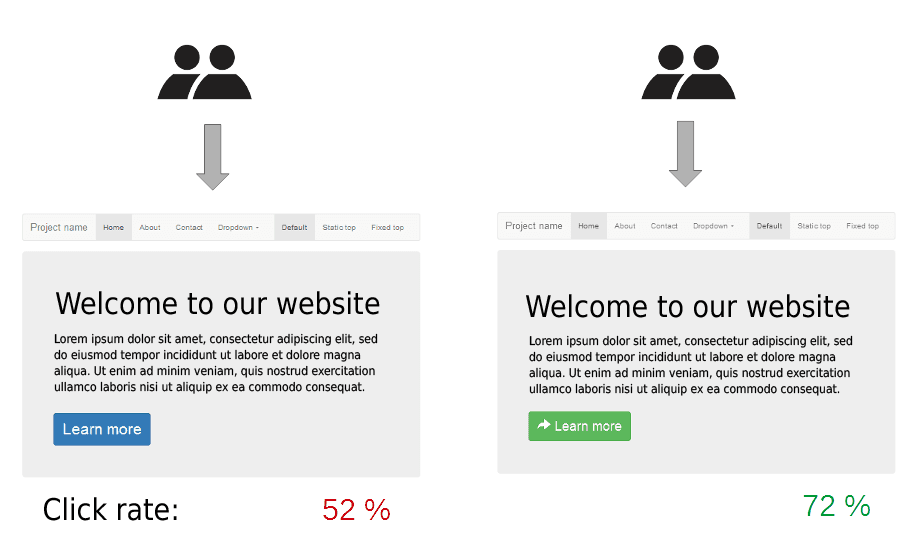
How would you implement an A/B test for a redesigned dashboard?
Tests experiment rigor: randomize stable user buckets, pick one primary metric and guardrails like latency, pre-calculate sample size and runtime with a minimum detectable effect, and validate via backend logging.
How would you A/B test a redesigned dashboard?
Tests translating a vague goal ('more engagement') into a concrete engineering plan. A good answer defines key metrics first, then outlines user bucketing, instrumentation, and statistical analysis.
We are hiring for this. Every open role lists the topics its interview covers, so you can prepare for the real thing rather than guessing.
See open roles