Intermediate interview questions in Agile & Scrum, page 6
What is the purpose of a shared 'Definition of Done'?
Tests your ability to ensure quality and transparency across multiple teams. A shared 'Definition of Done' is a formal description of quality for the integrated Increment. It ensures all work is combinable and shippable.
Purpose of a Shared Definition of Done for Multiple Teams
This tests your ability to maintain quality and transparency across multiple teams. Explain that a shared Definition of Done ensures a consistent quality standard for a usable, integrated Increment, impacting testing by requiring integration and end-to-end…
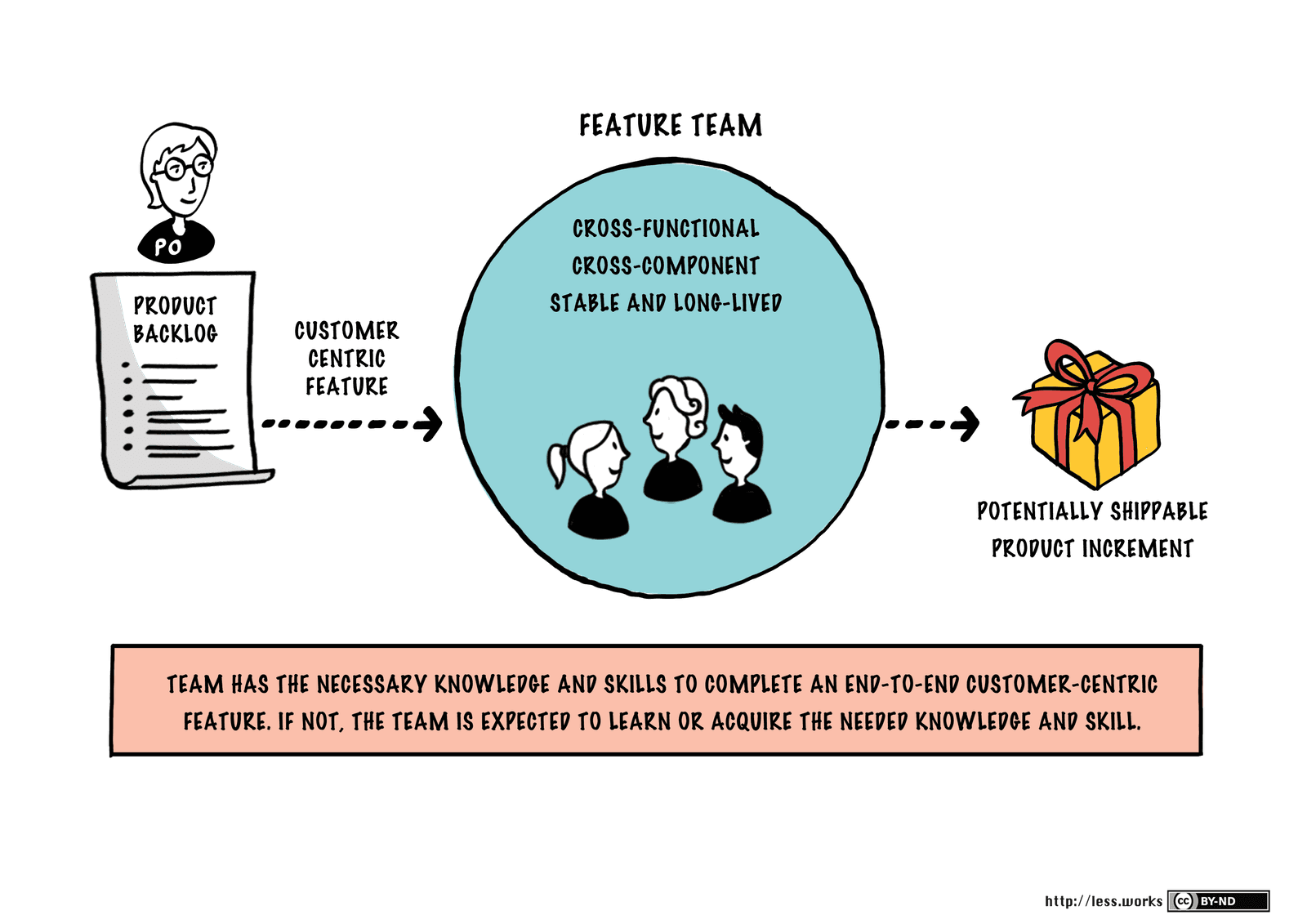
What codebase and CI/CD prerequisites enable LeSS feature teams?
Tests technical enablers for LeSS feature teams. Strong answers cover sub-10-minute CI, trunk-based development, comprehensive test automation, and decoupled architecture. Red flag: claiming coordination replaces shared ownership and continuous integration.
Technical Prerequisites for LeSS Feature Teams
Tests if you can link agile structure to technical architecture. A great answer covers codebase design for shared ownership, a fast CI pipeline for frequent integration, and a robust automated testing strategy.
Technical Prerequisites for LeSS Feature Teams
This tests your grasp of the engineering practices that enable agile scaling. A great answer covers continuous integration for shared ownership, robust test automation, and a loosely coupled architecture. A red flag is focusing only on Scrum ceremonies.

How would you estimate a cross-cutting initiative in PI Planning?
Tests decomposition of cross-cutting work into team enablers with visible dependencies. Good answer: teams estimate own slices in normalized points, map dependencies on the ART board, and reserve IP buffer.
Estimating Cross-Team Initiatives in PI Planning
This tests your ability to lead multi-team estimation. A good answer covers decomposing work, bottom-up team estimates, mapping dependencies, and synthesizing a risk-assessed plan. A red flag is a single top-down estimate that ignores team capacity.
Estimating large, cross-team initiatives in PI Planning
Tests your ability to facilitate collaborative estimation. Break the initiative into features for teams to estimate, then use an ART board to map dependencies. A red flag is providing a single, top-down number without team input.

Compare SAFe and LeSS from an engineer's view
Tests whether you see scaling frameworks as workflow design choices. Answers contrast SAFe's PI planning and RTE-managed dependencies with LeSS's single Sprint planning and team-driven resolution. Red flag: calling them interchangeable without citing autonomy.
SAFe vs. LeSS: Planning, Dependencies, and Autonomy
Tests your grasp of the trade-offs between coordination and autonomy in scaling frameworks. A good answer contrasts SAFe's top-down PI Planning with LeSS's bottom-up, team-focused approach.
SAFe vs. LeSS: Planning, Dependencies, and Autonomy
This tests your grasp of how org structure affects engineering work. Contrast SAFe's top-down, prescriptive nature (central PI planning) with LeSS's bottom-up, team-centric model (direct dependency management). A red flag is reciting buzzwords without context.
Why is velocity as a primary KPI destructive, and what's better?
This tests if you see velocity as a planning gauge, not a performance metric. A strong answer notes points are subjective, cites Goldratt on gaming, and proposes team-driven improvement instead. A red flag is claiming velocity works if averaged over time.
Why is team velocity a poor KPI for agile success?
Tests your grasp of agile principles and Goodhart's Law. Explain velocity is for forecasting, not performance. Detail dysfunctions like point inflation and ignoring quality. Propose outcome-focused alternatives like cycle time.
Why is tracking team velocity as a KPI dysfunctional?
Tests if you know velocity is for planning, not performance. Explain it's easily gamed and measures output, not outcome. Propose metrics focused on value delivery and process improvement like cycle time.
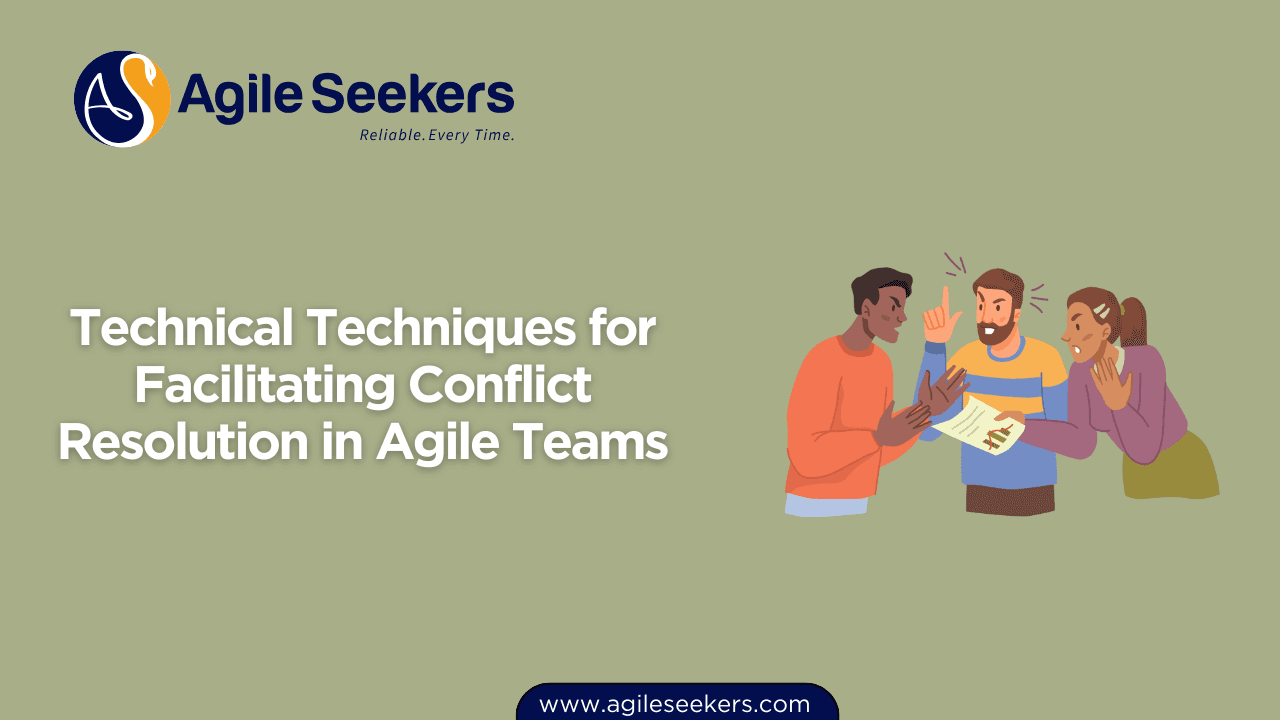
Two senior developers clash on implementation, derailing sprint planning. Your role?
Park or timebox the debate, reframe positions into shared interests with structured dialogue, and drive to a decision or spike.

How do you resolve a heated technical debate between two developers?
Tests your ability to facilitate conflict, moving a team from argument to a structured decision. A great answer involves de-escalating, using a technique like conflict mapping to understand the core issue, and guiding the team to a resolution.
How do you facilitate a heated technical disagreement between two seniors?
Tests your ability to de-escalate conflict and guide a team to a data-driven decision. Acknowledge the issue, separate the people from the problem, use a structured process, and focus on shared goals. A red flag is immediately picking a side or escalating.
Explain backlog refinement: purpose, participants, and outcomes
Tests if you treat refinement as team-wide prep, not a solo PO task. Strong answers cite the full team and stakeholders, with outcomes being ready stories and estimates. Red flag: saying only the PO and Scrum Master attend or that it replaces sprint planning.
Explain backlog refinement: purpose, participants, and outcomes
Tests your grasp of continuous planning for predictability. A good answer defines the purpose (clarify, estimate, prioritize), participants (whole team + PO), and outcomes (a 'Ready' backlog). A red flag is describing it as a one-off pre-sprint meeting.
Explain a backlog refinement meeting's purpose, participants, and outcomes
Tests understanding of a core Scrum ceremony. A good answer defines the goal (clarifying future work), names participants (Dev Team, PO), and lists outcomes (estimated stories).
We are hiring for this. Every open role lists the topics its interview covers, so you can prepare for the real thing rather than guessing.
See open roles