Advanced everything in Agile & Scrum, page 2
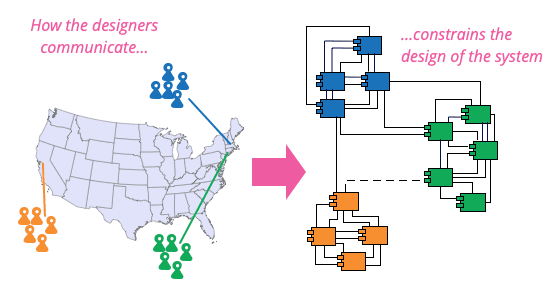
How would you apply Conway's Law to design team structures for microservices?
Map bounded contexts to cross-functional teams; use APIs as contracts; split by decoupling boundary.
How should an EM facilitate reviews in a self-organizing team?
Tests separating feedback from pay, replacing individual ratings with systemic coaching. Cover: framing reviews as career development, biweekly 1:1s for meta-coaching, team raise pools, and obstacle removal. Red flag: stack ranking or hero worship.

Decompose a monolith for scaled agile teams
Tests aligning architecture to team boundaries during incremental monolith decomposition. Cover: bounded contexts with isolated data and sagas, backward-compatible versioned APIs, and replacing shared libraries with duplicated code or versioned SDKs.
Describe a SAFe rule that hinders agility and how to mitigate it
Cite one rigid workflow pattern, show how it delays feedback, then propose a lighter cross-team substitute.
How would you apply Little's Law to optimize Kanban WIP limits?
Tests whether you can operationalize queueing theory in Kanban. A strong answer cites L equals lambda times W, fixes throughput, then solves for a WIP limit that yields a target cycle time.
Design an Upstream Kanban process for product ideas before development
Tests your grasp of pre-commitment demand shaping. A strong answer maps an option-discovery board, defines the commitment point and triage policies, and ties early filtering to reduced downstream variability.

CFD Testing band widens: what does it indicate and what experiments?
This tests flow metric literacy. A widening Testing band means arrivals exceed departures; propose experiments like smaller batches, automation, or dev-test swarming, then measure cycle time. Red flag: blaming testers or demanding headcount without data.
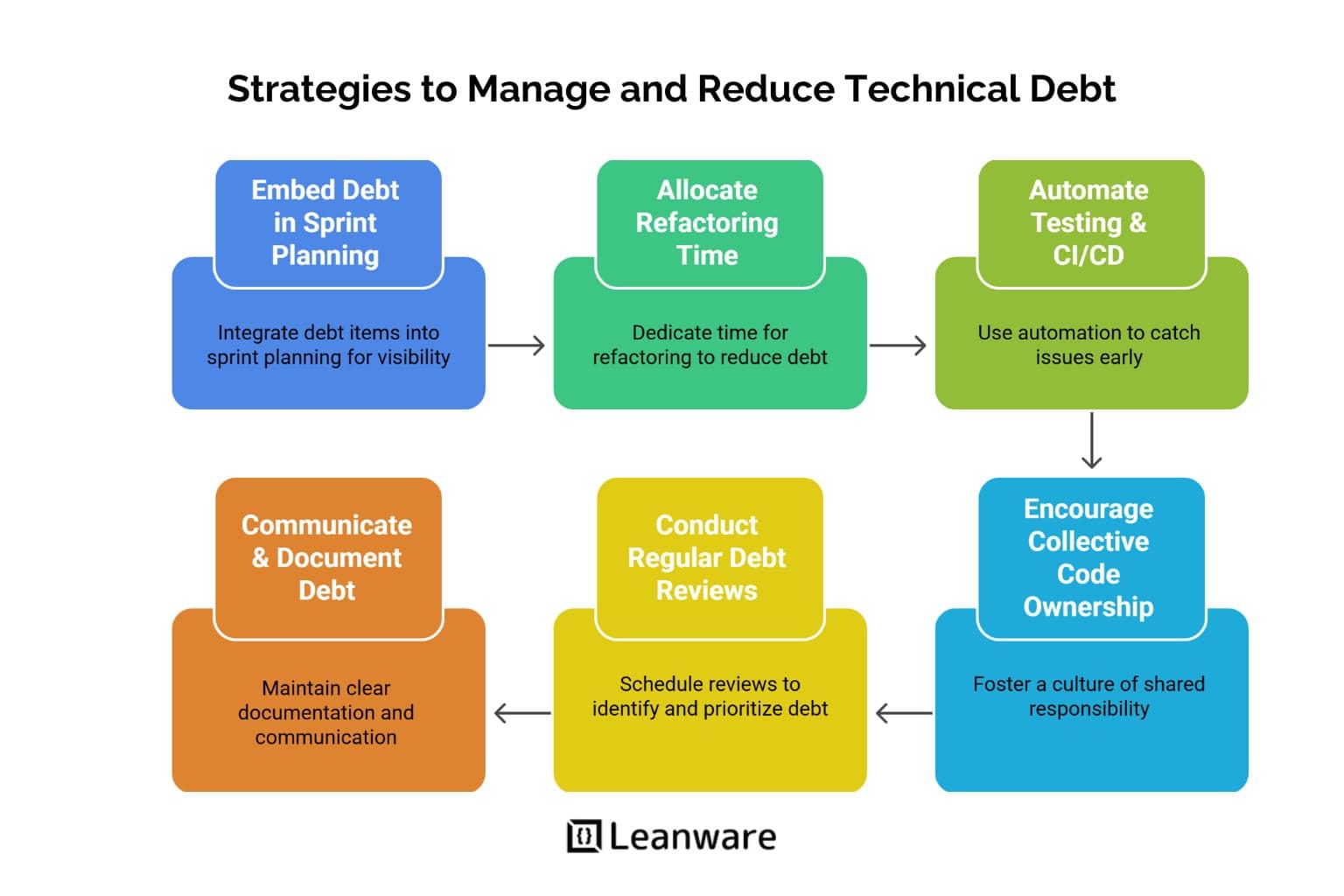
Describe a framework to strategically manage tech debt during product discovery
This tests strategic debt tradeoffs under speed pressure. A strong answer classifies debt by interest, caps MVP debt with guardrails, and reserves fixed sprint capacity for repayment. Red flag: vilifying debt or deferring cleanup without triggers.
When should cross-cutting concerns use a shared versus duplicated solution?
Weigh change frequency and blast radius; decide via fitness function or ADR, not default shared code.
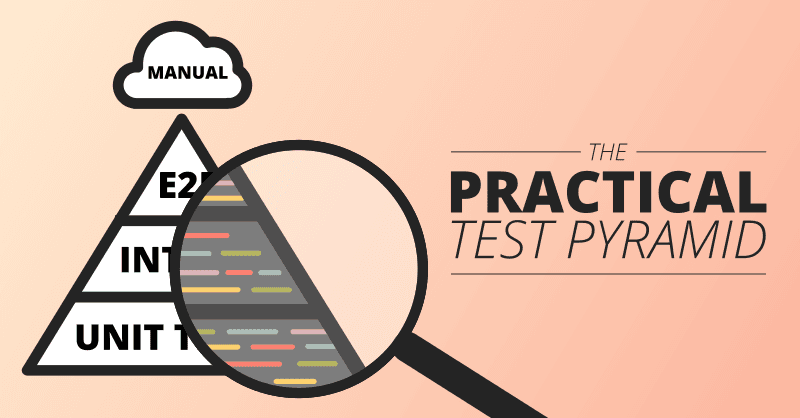
Propose a multi-sprint strategy to fix an inverted test pyramid
Audit E2E for redundancy; scaffold unit/integration tests; migrate per sprint, keep critical E2E; gate on fast feedback.

How does trunk-based development with toggles enable frequent, low-risk releases?
Tests decoupling deployment from release via TBD. Strong answers cover daily small trunk merges with toggles hiding unfinished work, plus the cultural leap from GitFlow's isolated branches to continuous integration and toggle hygiene.
How should the team address poor internal quality when stakeholders are happy?
Tests whether you protect transparency when stakeholders are happy but quality is poor. Answer: At Review, expose the increment's real state—low transparency causes risky decisions; at Retro, inspect why quality degraded and adapt the process.
How would you handle a mandated Definition of Done with legacy debt?
Tests whether you treat the Definition of Done as a negotiable standard or a rigid rule, and if you know how to close the gap via transparency, incremental remediation, and organizational negotiation without shipping unfinished work.

What root causes and retrospective fixes address chronic sprint overcommitment?
Tests systemic diagnosis over blaming the team. Check capacity math, refinement quality, psychological safety, and stakeholder pressure; propose velocity-guided planning, capacity recalculation, and better refinement.
Outline your strategy for influencing organizational change to remove stage-gated releases.
Tests reframing governance around people readiness versus bureaucratic gates. Answer: map the change landscape; pilot Release on Demand with governance cadences for operational readiness; measure via Release, Stabilise, Measure, Adjust.
Where does accountability lie when acceptance criteria miss the user problem?
Tests your grasp of Scrum's empirical accountability and value inspection. A strong answer cites shared Scrum Team ownership, uses the Sprint Review as the adaptation trigger, and proposes outcome-based refinement with stakeholders.
How do the Sprint Retrospective and Definition of Done support empiricism?
Tests if you see the DoD as a transparency standard and the Retrospective as inspect-and-adapt. Explain that the DoD makes true progress visible, enabling honest inspection, while the Retrospective inspects process and adapts the DoD.

How would you implement a software Andon Cord equivalent?
This tests translating Lean stop-the-line into CI/CD culture. Trigger: compile, test, or integration failures. Impact: halt pipeline, block merges, and swarm to fix immediately with collective ownership. Red flag: blaming committers or deferring fixes.
AI Use Creates 'Cognitive Debt' in Scrum Teams
Over-relying on AI for sprint planning and backlog refinement creates "Cognitive Debt," eroding a team's problem-solving skills. While AI boosts productivity, it can eliminate the collaborative friction that builds shared understanding and critical reasoning.
Trade-offs: Product-Based vs. Project-Based Teams
This tests your grasp of how funding models impact team ownership and code quality. Contrast project (temporary, build-only) vs. product (durable, continuous) teams, linking the latter to better knowledge retention and architecture.
We are hiring for this. Every open role lists the topics its interview covers, so you can prepare for the real thing rather than guessing.
See open roles