Intermediate everything in Agile & Scrum, page 12
How to handle user feedback that invalidates your current sprint's work?
Tests your grasp of Scrum's adaptation principle. A great answer involves immediately notifying the Product Owner, assessing Sprint Goal impact, and proposing technical pivots like feature flagging. A red flag is continuing to build the invalidated feature.

Differentiating an MVP from a throwaway prototype
Tests your grasp of strategic technical investment. Differentiate by intent: an MVP is the first version, a prototype is disposable. A great answer introduces Minimum Viable Architecture (MVA) to support future needs.
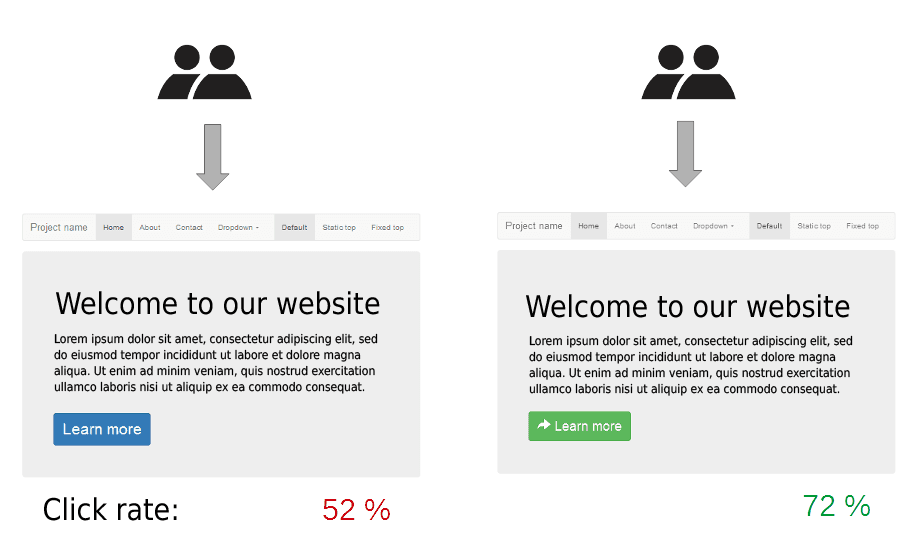
How would you A/B test a redesigned dashboard?
This tests your ability to translate a product goal into a technical plan. A good answer defines "engagement" with metrics, outlines the bucketing and instrumentation strategy, and discusses statistical significance.

The Strangler Fig Pattern for Legacy System Refactoring
Tests your understanding of gradual legacy modernization and risk management. A great answer defines the pattern (new system grows over old), outlines the process (identify seams, build new, redirect traffic), and contrasts it with risky "big bang" rewrites.
How would you introduce TDD to a team?
This tests your ability to influence a team and implement change pragmatically. A great answer outlines a gradual adoption: understand context, advocate with data, pilot on a new feature, then scale. A red flag is demanding a sudden, mandatory switch.

Describe the stages of a CI/CD pipeline for a containerized app
This tests your practical knowledge of automated software delivery and risk management. A strong answer outlines CI, build, test, and deploy stages, including container-specific steps like image scanning and quality gates like automated testing and…
Balancing Emergent Design with Long-Term Architectural Vision
This tests your grasp of scaling Agile. A strong answer defines emergent design and intentional architecture, explaining how an 'Architectural Runway' provides the technical foundation to balance them. A red flag is treating this as an 'either/or' choice.
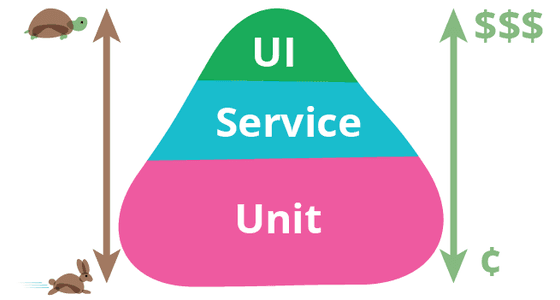
Explain the Test Pyramid and its strategic use
Tests your grasp of balanced testing trade-offs. A good answer defines the Unit, Service, and UI layers, explains the cost/speed rationale, and applies it to a feature strategy. A red flag is describing the pyramid but not its strategic 'why'.
Shift a Sprint Review from a Demo to a Working Session
Tests your understanding of Sprint Review's purpose: inspection and adaptation. A great answer shows how an engineer can partner with the PO to frame the session around goals, solicit feedback on the Increment, and collaboratively update the Product Backlog.
How do you ensure retro ideas become action?
This tests your ability to drive change by treating process improvements as formal work. A great answer suggests adding the top retro item to the next Sprint Backlog, making it visible, accountable, and part of the team's commitment.
Handling Negative Feedback in a Sprint Review
This tests your grasp of the Sprint Review's purpose (inspection, not acceptance). A strong answer has the Product Owner lead a discussion on the feedback, which then informs new, prioritized Product Backlog Items, rather than blaming or committing to…
How do you handle a teammate working on low-priority tasks?
This tests your accountability and interpersonal skills within a Scrum team. A great answer starts with a private, curious conversation, then uses the Daily Scrum to refocus the team on the Sprint Goal, and only then involves the Scrum Master as a coach.
How do you establish a Sprint Goal in planning?
This tests your ability to shift from a task-taker to a value-driver. A great answer involves asking 'why' to find a theme, proposing a goal based on that theme, and then negotiating scope against it. A red flag is passively waiting or confronting the PO.
What do you do when a Sprint Goal is in jeopardy?
Tests your grasp of adaptation over rigid plans. A great answer involves immediate transparency, team problem-solving on how to still meet the Sprint Goal, and negotiating scope with the Product Owner.

How do you break down an epic into user stories?
Tests translating business needs into incremental work. A great answer uses story mapping to define a vertical slice MVP, then creates sprint-ready stories with acceptance criteria. A red flag is just listing features without prioritizing user value.
How do you handle a PO adding work mid-sprint?
This tests your ability to protect the Sprint Goal collaboratively. A good answer acknowledges the PO's intent, proposes a scope swap to make trade-offs visible, and uses the Retrospective for long-term fixes.
What do you do when only frontend work remains in a sprint?
This tests your commitment to team ownership over role specialization. A great answer prioritizes the Sprint Goal, offers to help the frontend devs directly (pairing, testing), and finds other ways to unblock them.

How do you resolve team optimizations causing org-level friction?
Tests your ability to see beyond your team and facilitate org-level change. Gather data on the friction, facilitate cross-team discussions to align on shared goals, and propose structural solutions. A red flag is blaming others or only protecting your team.
How to coach a developer who skips backlog refinement?
This tests your coaching skills and ability to influence peers. First, understand their 'why' in a 1-on-1. Then, frame refinement as an investment to reduce future rework. A red flag is immediately escalating to a manager or being overly dogmatic.
Changing Scope Mid-Sprint: Consequences and Conversations
This tests your grasp of the Sprint Goal's immutability vs. the Sprint Backlog's flexibility. A good answer assesses impact on the Sprint Goal, then negotiates trade-offs with the PO, like swapping an item of equal size. A red flag is a rigid 'no'.
We are hiring for this. Every open role lists the topics its interview covers, so you can prepare for the real thing rather than guessing.
See open roles