Intermediate everything in Agile & Scrum, page 7
Balancing Emergent Design with Long-Term Architectural Vision
This tests your ability to balance agile practice with large-scale system needs. Explain how an "Architectural Runway," built with "Enablers," reconciles emergent design with intentional architecture for near-term features.
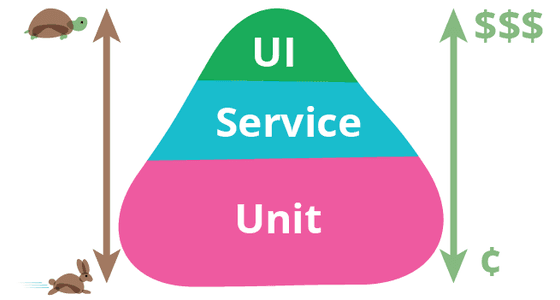
Explain the Test Pyramid and how it guides your strategy.
Tests your grasp of balanced automated testing. Define the pyramid's layers (Unit, Service, UI), explain trade-offs like speed and cost, then apply it to a new service. A red flag is describing the layers without explaining the 'why' behind the shape.
How do you make a Sprint Review more than a demo?
Tests your understanding of Scrum's purpose beyond ceremony. A great answer outlines how an engineer can partner with the PO, structure the meeting for feedback, and ensure that feedback directly influences the backlog.
How do you ensure retro action items are implemented?
Tests your ability to make process improvements concrete within Scrum. A great answer suggests adding the top improvement item from the retro directly into the next Sprint Backlog.
How do you handle negative stakeholder feedback in a Sprint Review?
This tests if you see feedback as successful adaptation, not failure. A good answer has the PO capture feedback as new backlog items for prioritization, without immediate commitment, and the team discusses process improvements in the retro.
How to address a teammate working on low-priority tasks?
This tests your understanding of peer accountability and Scrum roles. A good answer starts with a private conversation, focuses on the Sprint Goal, and uses Scrum events for transparency before escalating.
How do you help establish a Sprint Goal?
This tests your agency beyond coding and your ability to facilitate collaboration. A good answer involves asking probing questions to find a theme, suggesting a value-oriented goal, and getting team buy-in. A red flag is passively accepting the task list.
A mid-sprint task jeopardizes the Sprint Goal. What now?
This tests your grasp of Scrum's core principles: adaptation and prioritizing the Sprint Goal. A great answer involves immediate transparency, collaborating with the Product Owner to renegotiate scope, and adapting the plan. A red flag is suggesting overtime.

How would you break down an epic into user stories?
Tests your ability to turn business goals into independent engineering tasks. A great answer maps user journeys, breaks work into vertical slices, defines acceptance criteria, and prioritizes by value.
How do you handle a PO adding work mid-sprint?
Tests your ability to protect the Sprint Goal via collaboration, not conflict. A good answer uses the Retrospective to discuss impact, proposes a 'one-in, one-out' policy for the Sprint Backlog, and involves the Scrum Master.
What's your responsibility when only frontend work remains?
This tests your commitment to collective ownership over individual tasks. A great answer prioritizes the Sprint Goal, offers to help overloaded frontend devs directly (e.g., testing, pairing), and avoids the red flag of starting future work before helping the…

How do you resolve cross-team friction from local optimizations?
Tests your ability to think beyond your team and address systemic, organizational impediments. A good answer involves gathering data, facilitating cross-team communication, and proposing systemic solutions.
How do you coach a dev who skips backlog refinement?
This tests your ability to coach and connect process to outcomes. First, diagnose the 'why' in a 1:1. Then, frame refinement as a solution to their pain points (e.g., fewer interruptions). A red flag is quoting Scrum rules or immediately escalating.
Handling Mid-Sprint Scope Change Requests
This tests your grasp of the Sprint Goal's immutability vs. the Sprint Backlog's flexibility. Acknowledge the PO's need, assess impact on the Sprint Goal, and negotiate trade-offs. If the goal is endangered, propose deferring or canceling the sprint.
Your Role in a Product Backlog Refinement Meeting
This tests your proactive role in Scrum beyond just coding. A great answer covers decomposing work, asking clarifying questions, estimating effort, and identifying technical risks.
What is the Definition of Ready for a backlog item?
Tests your grasp of upstream quality gates in Agile. Define DoR as a team's checklist for sprint-ready items, explain it protects dev focus and predictability, and give examples like clear acceptance criteria.
How do you handle an urgent mid-sprint feature request?
This tests your understanding of Scrum roles and protecting the Sprint Goal. A great answer redirects the stakeholder to the Product Owner, who then assesses the request's impact and negotiates with the team if it can be swapped in without harming the Sprint…
How does a team forecast work for a Sprint?
This tests if you know the Developers own the forecast, not the PO or SM. A good answer cites past performance, current capacity, and the Product Backlog as inputs. A red flag is saying the Product Owner dictates the work.
Relationship Between Product Backlog, Sprint Backlog, and Increment
This tests your understanding of Scrum artifacts as commitments to goals, not just to-do lists. Define the Product Backlog (Product Goal), Sprint Backlog (Sprint Goal), and Increment (Definition of Done), then trace an item's flow.
Relate Lean's 'Build Quality In' to TDD and CI
This tests your ability to connect historical Lean principles to modern software development. Explain Jidoka as "stop the line," then frame TDD and CI as its software equivalents that prevent defects from propagating.
We are hiring for this. Every open role lists the topics its interview covers, so you can prepare for the real thing rather than guessing.
See open roles