Everything in Agile & Scrum, page 8

How does an EM's role change in an agile model?
This tests your grasp of servant leadership. A great answer outlines the shift from directing work to building team capability through coaching, removing systemic impediments, and managing the team's environment.
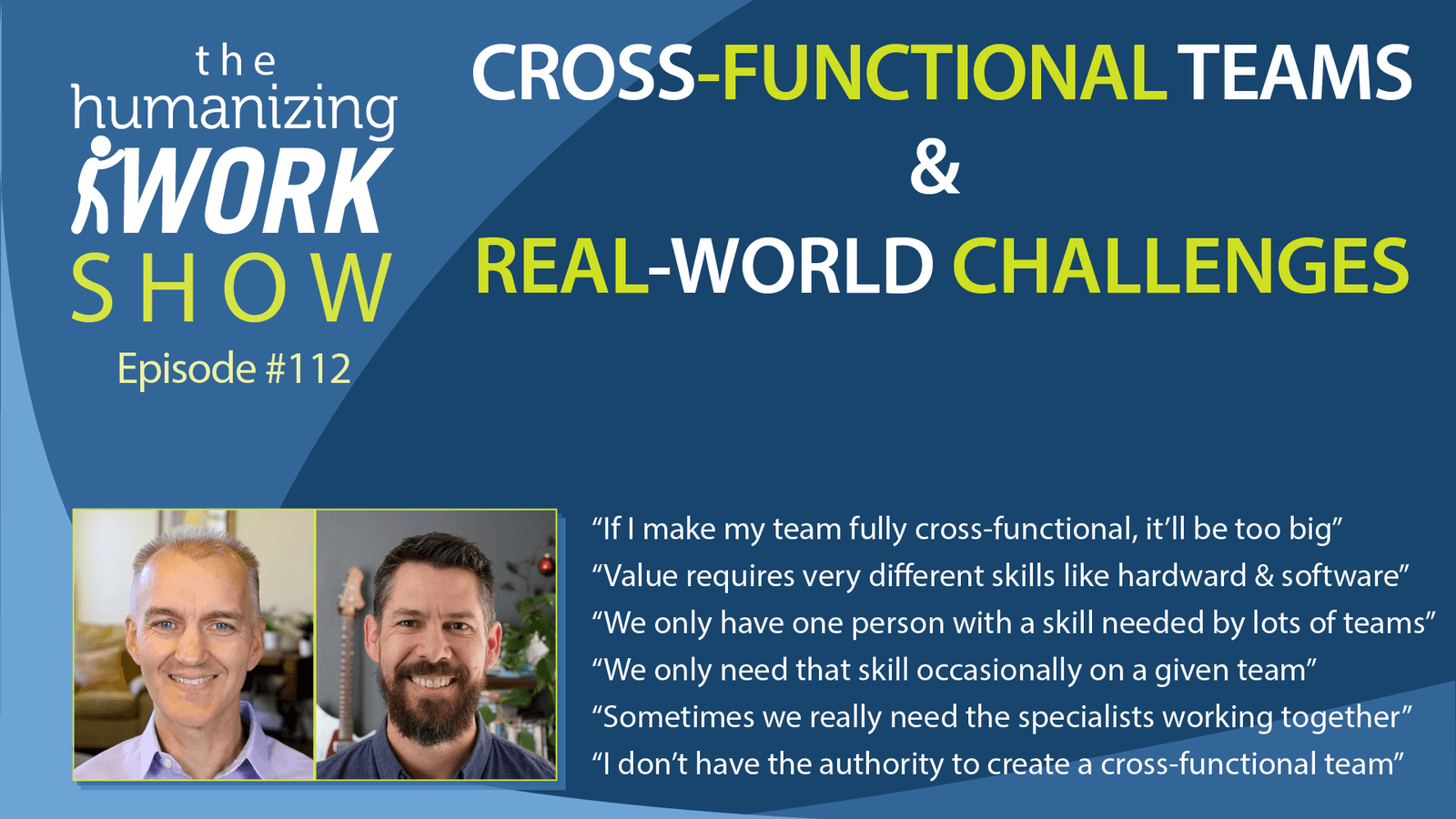
Challenges of transitioning to cross-functional teams
Tests your experience with real-world agile transitions. A good answer covers process friction (new roles), technical gaps (tooling, T-shaped skills), and cultural shifts. A red flag is blaming other roles or giving textbook-only agile answers.
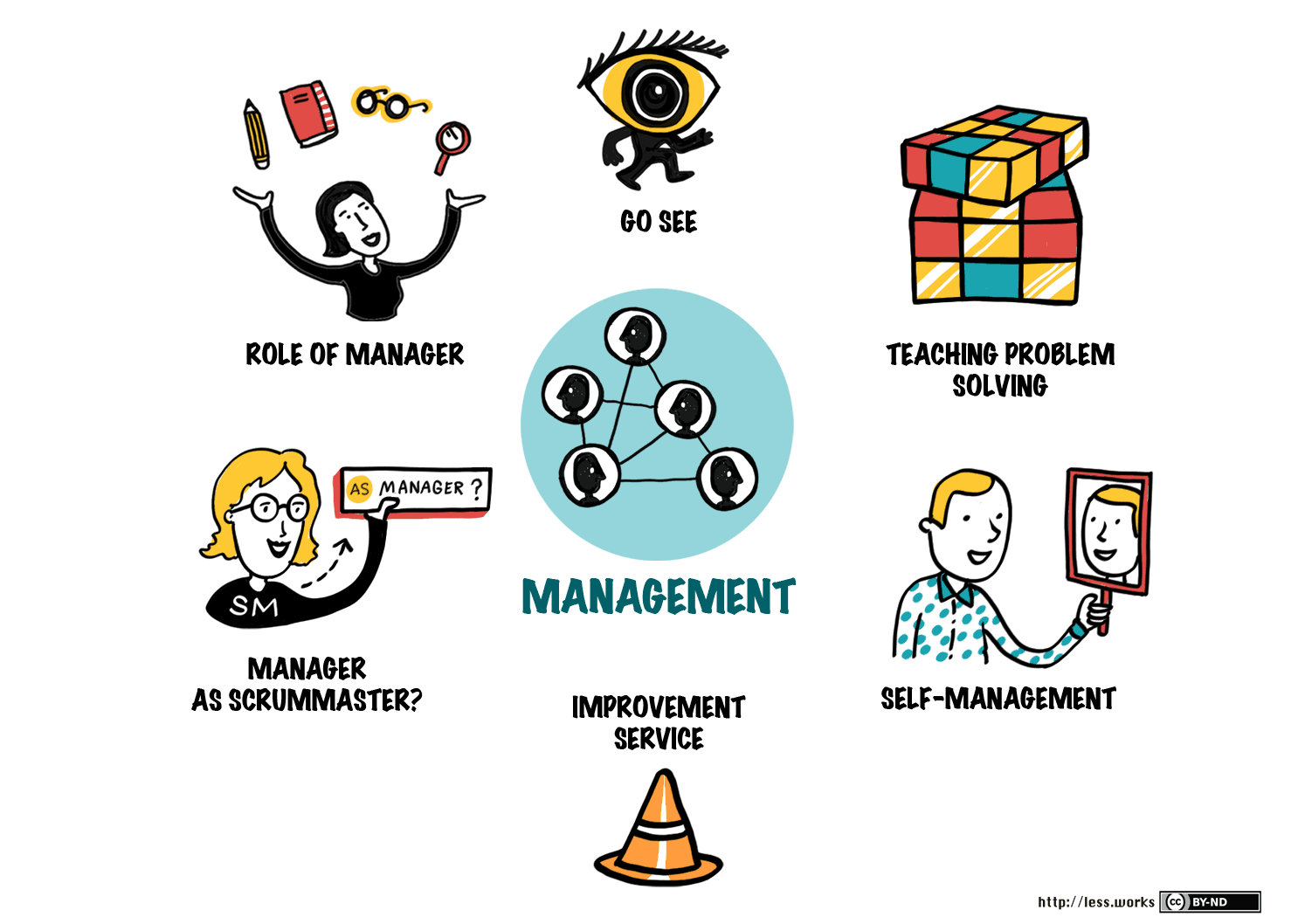
How does management's role evolve in scaled agile frameworks like LeSS?
This tests your grasp of modern agile management, moving from command-and-control to enabling teams. Contrast Theory X (directing) with Theory Y (coaching). In LeSS, managers improve the system and teach, not assign tasks.
What is SAFe's Architectural Runway and how do you build it?
This tests your grasp of balancing proactive technical investment with agile delivery. Define it as the code and infrastructure for near-term features, built via 'Enabler' stories. The red flag is describing it as a rigid, big design up-front (BDUF) plan.

How would you create a probabilistic forecast for 40 stories?
This tests your ability to use statistical methods for forecasting. A great answer explains how to use historical throughput in a Monte Carlo simulation to generate a probability distribution of completion dates, not a single point estimate.
When Does Cycle Time Begin and End?
This tests your grasp of process metrics. Define Cycle Time as starting when active work begins ('In Progress') and ending when it's 'done' (code complete/merged), not when the ticket was created. A red flag is confusing this with customer-facing Lead Time.

Explain Little's Law and its application in Kanban
Tests your grasp of flow metrics beyond the formula. A great answer defines the law (Lead Time = WIP / Throughput), explains the trade-offs (e.g., more WIP increases lead time), and shows how to set WIP limits.
What is the purpose of a WIP limit in Kanban?
Tests understanding of Kanban flow optimization. A good answer explains that WIP limits force task completion, which improves flow, reduces context switching, and exposes bottlenecks. A red flag is describing it only as a way to prevent team burnout.

How would you use a spike to de-risk a story?
Tests your use of Agile spikes for de-risking, not for building features. A good answer defines the goal, sets a strict time-box, and clarifies the deliverable is knowledge (e.g., a POC), not production code. A red flag is merging spike code into main.
Sprint Review vs. Retrospective: Purpose and Participants
This tests your understanding of Scrum's dual feedback loops for product versus process. A great answer defines Review as inspecting the Increment with stakeholders, and Retrospective as inspecting the team's process without them.
Explain story points vs. time-based estimation.
This tests your grasp of Agile philosophy. A good answer defines points as relative effort (complexity, volume, risk), contrasts this with the pitfalls of time, and links it to predictable team velocity. A red flag is mapping points directly to hours.
Explain backlog refinement: purpose, participants, and outcomes
Tests your grasp of continuous planning for predictability. A good answer defines the purpose (clarify, estimate, prioritize), participants (whole team + PO), and outcomes (a 'Ready' backlog). A red flag is describing it as a one-off pre-sprint meeting.
How do you resolve a heated technical debate between two developers?
Tests your ability to facilitate conflict, moving a team from argument to a structured decision. A great answer involves de-escalating, using a technique like conflict mapping to understand the core issue, and guiding the team to a resolution.
Trade-offs: Product-Based vs. Project-Based Teams
This tests your grasp of how funding models impact team ownership and code quality. Contrast project (temporary, build-only) vs. product (durable, continuous) teams, linking the latter to better knowledge retention and architecture.
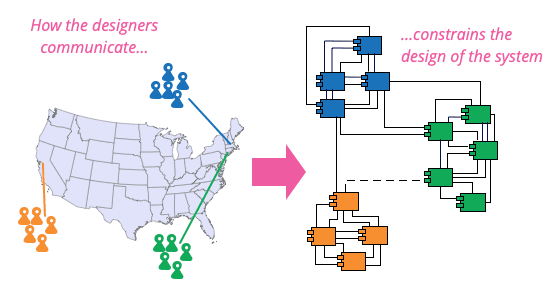
How would you apply Conway's Law to design team structures?
This tests applying organizational theory to technical strategy. A great answer defines the law, explains the 'Inverse Conway Maneuver' by structuring teams around business capabilities, and avoids imposing an architecture without changing team structure…
Why is team velocity a poor KPI for agile success?
Tests your grasp of agile principles and Goodhart's Law. Explain velocity is for forecasting, not performance. Detail dysfunctions like point inflation and ignoring quality. Propose outcome-focused alternatives like cycle time.

SAFe vs. LeSS: Planning, Dependencies, and Autonomy
Tests your grasp of the trade-offs between coordination and autonomy in scaling frameworks. A good answer contrasts SAFe's top-down PI Planning with LeSS's bottom-up, team-focused approach.
Feature teams vs. component teams: pros and cons?
Tests your grasp of how team structure impacts value delivery. Define feature (vertical slice) and component (horizontal) teams. Contrast speed vs. reusability. Red flag: Calling one 'good' and the other 'bad' without discussing trade-offs.
How do you manage performance in a self-organizing team?
This tests your ability to shift from individual performance management to fostering team-based career development. A great answer reframes the goal, uses frequent 1-on-1s for coaching, and decouples raises from feedback.
How can developers partner with the Product Owner in backlog refinement?
This tests your understanding of the developer's role in maximizing value, not just executing tasks. A great answer covers questioning the 'why,' suggesting technical alternatives to meet business goals, helping split stories, and providing realistic sizing.
We are hiring for this. Every open role lists the topics its interview covers, so you can prepare for the real thing rather than guessing.
See open roles