Advanced concepts in AI & ML
The Vanishing Gradient Problem
Training a deep network is like a game of telephone; the error signal (gradient) gets weaker as it's passed back through layers. This happens in deep networks using sigmoid or tanh activations.

LSTMs: Giving Neural Networks a Longer Memory
LSTMs give neural networks a longer memory, letting them connect events across long sequences. They excel at tasks like language translation or time-series analysis where distant context is key.
Continuous Training: CI/CD for ML Models
Continuous Training (CT) is a CI/CD pipeline for models, not code. It automatically retrains and redeploys models to fight performance decay from changing data, a problem known as 'data drift'. The footgun is deploying a new model without validating it first.
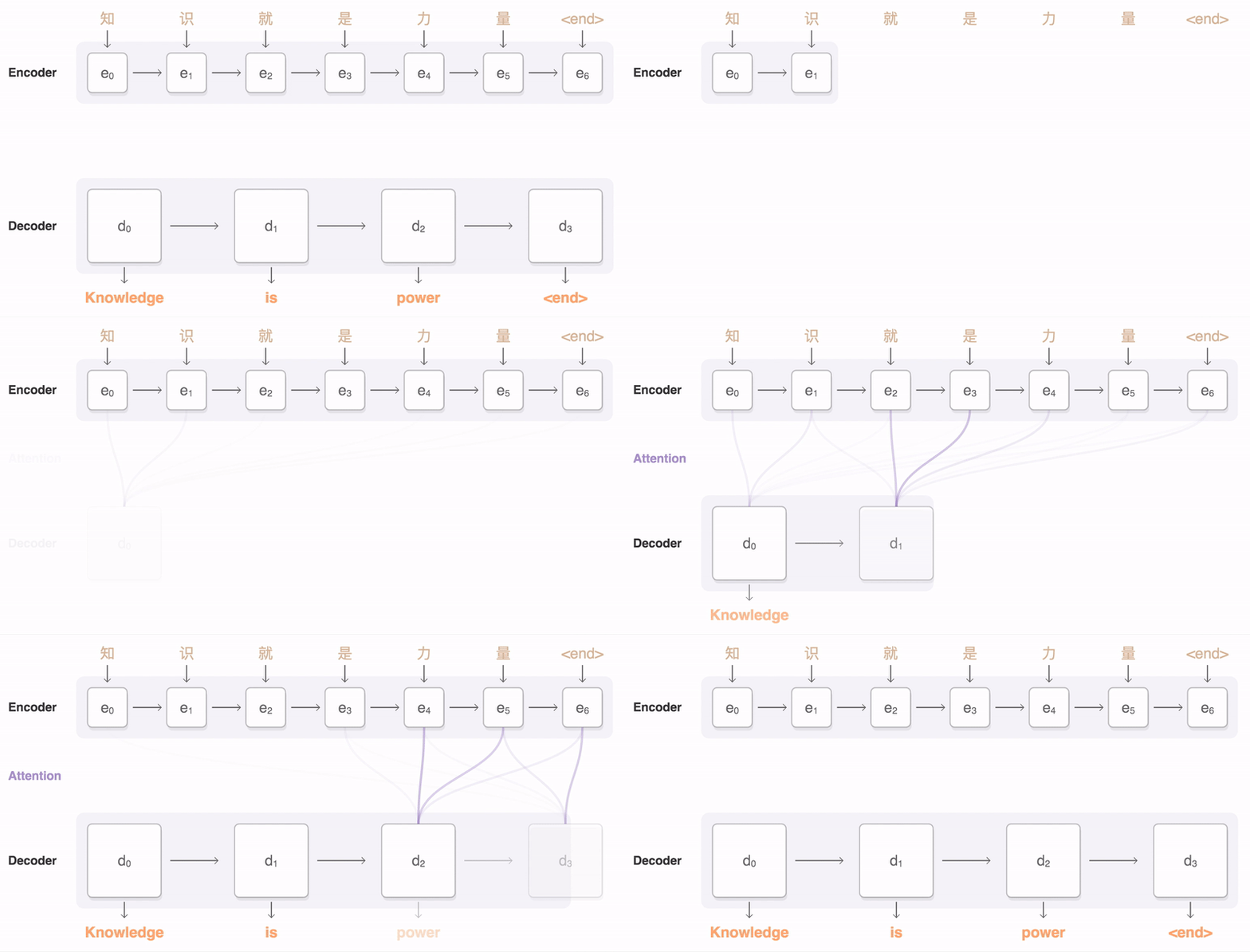
Seq2Seq: Turning One Sequence Into Another
A Seq2Seq model acts like a universal translator, reading one sequence to generate another. It's foundational for machine translation and text summarization. The main footgun is its fixed-size context vector, which can forget details from long inputs.
Causal Inference: Proving Cause, Not Just Correlation
Causal inference goes beyond correlation to ask "did X *cause* Y?". It's used to prove a new feature drove engagement or a drug improved outcomes. The main footgun is mistaking association for causation, ignoring confounding variables.
Data Drift vs. Concept Drift: When Models Go Stale
Your ML model's accuracy decays when the real world no longer matches its training data. This is drift. It happens when user behavior changes (concept drift) or input data distributions shift (data drift).
Uplift Modeling: Who to Target, Not Just Who Will Convert
Uplift modeling finds who to target by predicting the *change* in behavior from an action, not just the final outcome. It's used in marketing to decide who gets a discount, optimizing spend. The footgun is confusing it with a simple conversion model.

Radiometry: Measuring Light as Physics, Not Perception
Radiometry measures light's physical power, not how humans perceive it. It's for objective energy measurement in computer vision or physics simulations, using watts, not lumens. The footgun is confusing it with photometry, which is weighted for human vision.
ML Metadata: The Logging Layer for ML Pipelines
ML Metadata is the logging layer for your ML pipeline, tracking every dataset, hyperparameter, and model version. It's crucial for debugging failed runs by tracing a model back to its exact data.

BRDF: Modeling How Surfaces Reflect Light
A BRDF is a function that describes a surface's appearance by defining how it reflects light from any incoming direction to any viewing direction. It's used in rendering engines to create materials like brushed metal or velvet.
Cross-Attention: How Models Connect Two Ideas
Cross-attention lets a model, like a translator, focus on relevant parts of an input (e.g., a sentence) to generate an output (the translation). It's used in machine translation and image captioning. The footgun is confusing it with self-attention.

Bayer Filter: Faking Full Color with a Filter Grid
A Bayer filter is a hack for capturing color with one sensor: a checkerboard of red, green, and blue filters is placed over the sensor grid. This is how most digital cameras work. The footgun is that the raw output must be 'demosaiced' to create.
Transformer Preprocessing: From Text to Tensors
Transformers don't read text; they read numbers. A tokenizer is the translator, converting sentences into numerical tensors the model understands. This is the mandatory first step for any NLP task. The footgun is using a tokenizer that doesn't match the model.
MLE: Find the Parameters That Make Data Likely
MLE tunes your model until observed data looks inevitable. Use it to fit distributions to logs, traffic, or errors. The footgun: it assumes your distribution family is correct; under a wrong model, it finds the best-fitting wrong answer with high confidence.
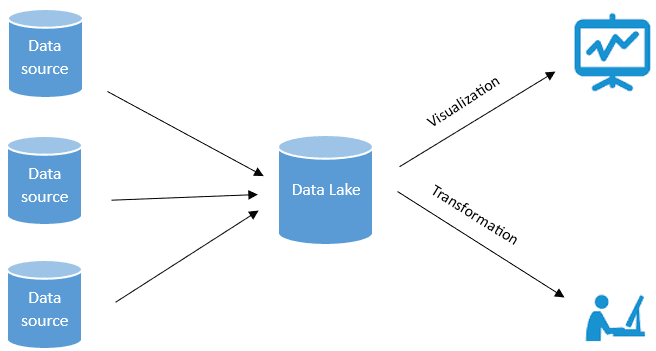
Data Lake: A Single Repository for Raw Data
A data lake is a central repository that stores vast amounts of raw data in its native format. It acts as a single source for analytics and machine learning, but without proper management it can become a useless "data swamp".
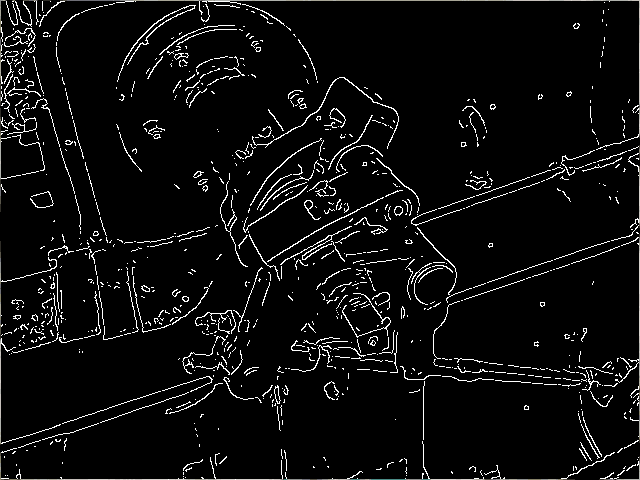
Canny Edge Detector: Finding True Edges
The Canny detector finds true edges by identifying sharp, connected intensity changes. It's used in object detection and feature extraction where clean edge maps are vital.

SVD: Eigendecomposition for Any Matrix
SVD treats any matrix as rotation, then scaling, then rotation. It generalizes eigendecomposition beyond square normal matrices to any real or complex matrix.

Affine Transformations: Move, Scale, and Rotate Without Bending
An affine transformation is a way to move, scale, rotate, or shear an object while keeping all lines straight and parallel lines parallel. It's used everywhere in computer graphics.
What is a Large Language Model (LLM)?
An LLM is a neural network trained on vast text data to process and generate human-like language. It's the core technology behind chatbots, enabling them to generate, summarize, and translate text. Its reliability depends entirely on its training data.
The Jacobian Matrix: A Derivative for Multiple Dimensions
The Jacobian matrix is the multi-dimensional version of a derivative. It's a grid of partial derivatives showing how a small change in each input locally affects each output of a vector function. Don't confuse the matrix with its determinant.
We are hiring for this. Every open role lists the topics its interview covers, so you can prepare for the real thing rather than guessing.
See open roles