Easy concepts in AI & ML, page 2

Activation Functions: Making Neural Networks Nonlinear
An activation function acts as a gatekeeper for a neuron, deciding what signal to pass on. It introduces non-linearity, allowing networks to learn complex patterns. A network with only linear activations collapses into a simple, less powerful model.
5 Whys: Find the Root Cause, Not the Symptom
The 5 Whys technique finds a problem's root cause by repeatedly asking "Why?" to trace a cause-and-effect chain. Use it in post-mortems to understand system failures. The footgun is blaming people instead of asking why the process allowed the error.

Pinhole Camera Model: Projecting 3D to 2D
The pinhole camera model is a simple formula for how a 3D world flattens into a 2D image. It's the basis for 3D reconstruction and augmented reality, relating an object's real-world position to its pixels.
RGB Color Model: Mixing Light, Not Paint
Think of RGB as mixing colored spotlights. Red, green, and blue light are added together to create the colors on your screen. The main footgun is confusing this with print's subtractive model, where mixing colors makes black, not white.

Image Histograms: Visualizing an Image's Tonal DNA
An image histogram is a bar chart of an image's brightness, showing pixel counts from pure black to pure white. It's used in photo editing to instantly judge exposure, revealing clipped shadows or blown highlights.
Data Lake vs. Data Warehouse: Raw vs. Refined Data
A data lake is a vast pool of raw data; a data warehouse is a library of refined data ready for analysis. Lakes store everything for future ML or data science; warehouses power BI reporting on clean metrics.

Vector Spaces: A Playground for Vectors
A vector space is a collection of vectors with strict rules for how they can be added or stretched. It's the foundation for linear algebra, used in graphics and physics. The footgun: not every set of vectors forms a valid space.

ETL: Extract, Transform, Load
ETL moves data through three phases from sources to containers. It handles one or more inputs and outputs via software that automates the process on recurring schedules or in batches. The footgun is defaulting to manual runs when automation is typical.
Grayscale Conversion: Seeing in Shades of Gray
Grayscale conversion simplifies an image by removing color, representing each pixel's brightness as a single value. It's a key preprocessing step in computer vision for tasks like OCR, where shape matters more than color.
Data Labeling: Teaching Machines What to See
Data labeling gives raw data meaning so a machine learning model can learn. It's used to prepare datasets for tasks like object detection in images or sentiment analysis in text. The footgun: low-quality labels directly limit your model's performance.
Transformer: The Final Linear and Softmax Layers
A Transformer's final linear layer acts as a classifier, converting the decoder's output vector into raw scores (logits) for every possible word. The softmax function then turns these scores into probabilities, allowing the model to pick the most likely next…

Image Scaling: Resizing Pixels Without Ruining Them
Image scaling isn't just stretching a picture; it's inventing or discarding pixel data. It's used everywhere from displaying thumbnails to making 1080p video fit a 4K screen.

Causal Language Modeling: The Autocomplete Engine
Causal Language Modeling is like a powerful autocomplete, predicting the next word based only on what came before. It's the engine for text generation in chatbots, creative writing tools, and coding assistants. The footgun: it can't see future words.
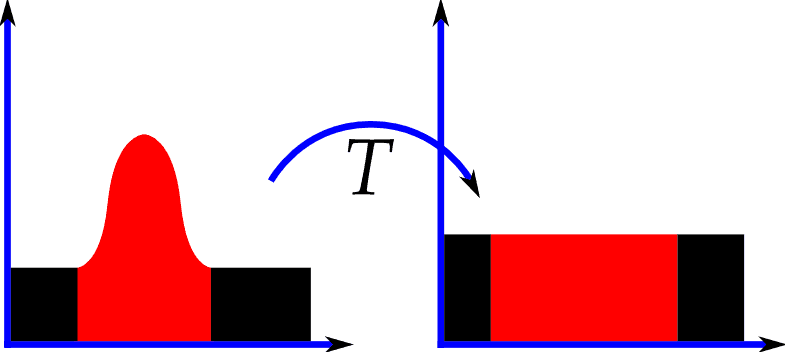
Histogram Equalization: Spreading Out Pixel Brightness
Think of histogram equalization as automatically stretching an image's contrast. It takes dark or washed-out images and spreads their pixel brightness values across the full available range, revealing hidden details. The footgun: it can amplify noise.

Common Crawl: A Free Snapshot of the Entire Web
Common Crawl is a public library of the internet—a massive, free snapshot of web text and links. It's the raw material for training many LLMs and for academic research on web-scale data. The footgun: it's unfiltered, containing everything from facts to spam.
Harris Corner Detector: Finding Sharp Changes in Images
The Harris detector finds corners by looking for points where image intensity changes sharply in all directions. It's used in image stitching and object tracking to find stable feature points. A key weakness is its sensitivity to image scale.
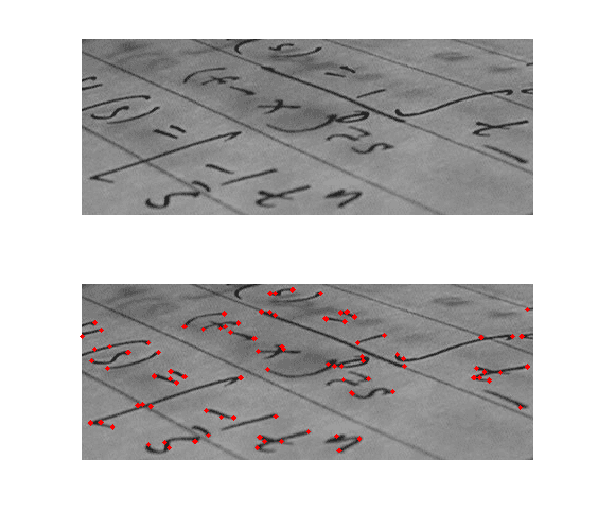
Corner Detection: Finding Stable Points in Images
Corner detection finds stable reference points in an image by looking for areas where pixel intensity changes sharply in multiple directions. It's used to track objects in video, stitch panoramas, and recognize objects by their features.
Hough Transform: Finding Shapes by Voting
The Hough Transform finds shapes by letting pixels "vote" for all lines or circles they could belong to. It's used to detect features like road lanes in noisy images.
Prompt Engineering: Guiding LLMs to Better Answers
Prompt engineering means structuring instructions, context, constraints, and examples to make a model's output more useful for a task. For example, asking for JSON with a schema and one valid example can improve format consistency, but prompting alone cannot guarantee accuracy.
Zero-Shot Prompting: Ask, Don't Show
Zero-shot prompting is asking an LLM to do a task without examples, relying on its pre-existing knowledge. Use it for simple tasks like basic translation or sentiment analysis where instructions are self-explanatory, but expect it to fail on complex tasks.
We are hiring for this. Every open role lists the topics its interview covers, so you can prepare for the real thing rather than guessing.
See open roles