Easy concepts in AI & ML, page 5

Model Cards: The 'Nutrition Label' for AI Models
A model card is the nutrition label for an AI model, summarizing its ingredients, intended use, and risks. Found in model repos, it details training data, performance, and ethical guardrails.

Artificial Neural Networks: Learning from Examples
Think of an ANN as a digital brain that learns from examples, not explicit code. It's a network of simple nodes that adjust their connections to spot patterns. They power image recognition and language translation, but are only as good as their training data.

Word Embeddings: Turning Words into Math
Word embeddings turn words into vectors, where distance equals a difference in meaning. They power features like search relevance and text classification by letting algorithms 'understand' context.
Convolutional Neural Networks: Finding Patterns with Filters
A CNN learns to spot features by sliding optimized filters over data like images, audio, or text. It's the go-to for computer vision, but a common mistake is thinking it's the only modern tool, as transformers sometimes replace it.

Transfer Learning: Don't Train Models from Scratch
Transfer learning means not training a model from zero. You start with a model pre-trained on a large, general dataset, then fine-tune it for your specific task. This is common in image recognition, using a general model to learn a niche classification.
Workflow Engine: The Conductor for Your Business Logic
A workflow engine conducts your business logic, ensuring complex tasks run in the right order. It's for multi-step processes like order fulfillment or data pipelines. The footgun is building one from scratch—you'll poorly reinvent state management and retries.

Attention in Vision: Teaching Models Where to Look
Attention teaches a model where to look in an image by dynamically weighting important pixels or features. It's used in object detection to focus on relevant regions. The footgun is assuming it's free; attention adds computational cost and complexity.

Generative Adversarial Networks (GANs): A Forger and a Detective
A GAN pits two neural networks against each other: a Generator that creates fakes and a Discriminator that spots them. This adversarial game forces the Generator to produce highly realistic outputs, like photorealistic faces. The main footgun is mode collapse.
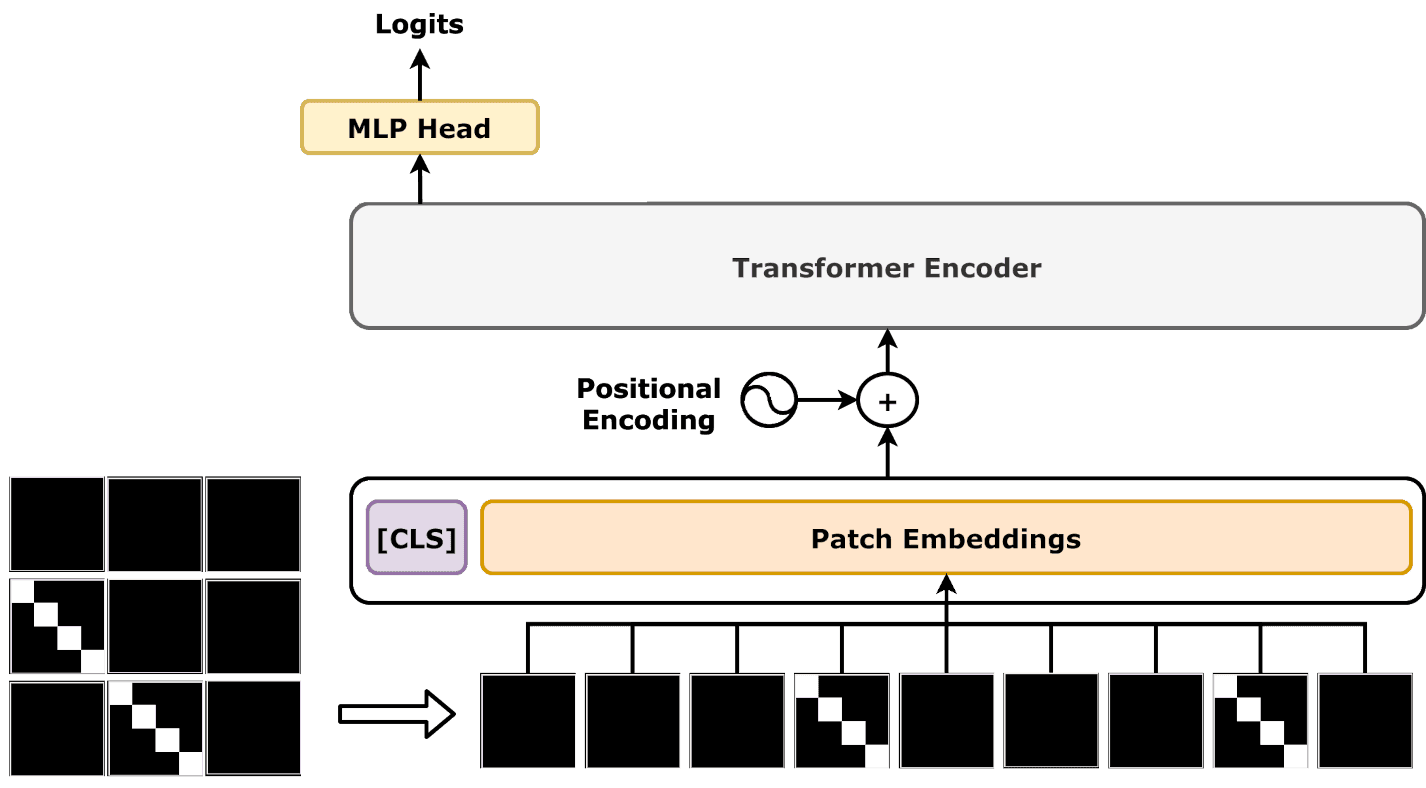
Patch Embedding: Turning Images into Words for Transformers
Patch embedding chops an image into a grid of squares, turning each into a vector. This lets sequence-based models like Transformers "read" images. It's the core of Vision Transformers (ViTs), but it discards the fine-grained detail inside each patch.
KV Cache: Don't Recompute, Just Remember
KV Cache speeds up LLM text generation by storing intermediate calculations (Key/Value vectors) instead of recomputing them for every new token. It's a standard optimization in inference engines.

Google TPU: Built for Matrix Math
A TPU is a specialist ASIC, not a faster GPU; it trades graphics flexibility for matrix-math throughput per watt. Google deploys them for TensorFlow, JAX, and PyTorch at scale. They excel at CNNs but can lag on tasks needing rasterization or recurrent logic.

PaaS: The Managed Platform for Building Applications
PaaS gives you a ready-to-use development environment, handling the OS and middleware so you can just code. It's used to accelerate app development for web, IoT, or ML. The main footgun is vendor lock-in, making future platform migrations difficult.

MLaaS: Your Machine Learning Lab in the Cloud
Machine Learning as a Service (MLaaS) provides the key ingredients for ML—data, compute, and expertise—as a cloud service. This lets teams build models for forecasting or spam detection without buying expensive hardware.
Hadoop: Processing Big Data on Cheap Hardware
Hadoop processes massive datasets by distributing work across many cheap computers, assuming some will fail. It's used for large-scale batch processing, not real-time queries. The footgun is treating it like a database instead of a batch processing framework.

Azure Machine Learning: A Service on Microsoft's Cloud
Microsoft Azure is a general-purpose cloud platform for building applications. It provides the global infrastructure and tooling support upon which specialized services, like Azure Machine Learning, are built.
HDFS: Store Big Data on Cheap, Unreliable Hardware
HDFS stores huge files across many cheap computers by assuming they will fail. It achieves reliability by replicating data, not by using expensive hardware. Use it for batch processing, but avoid it for low-latency access or many small files.
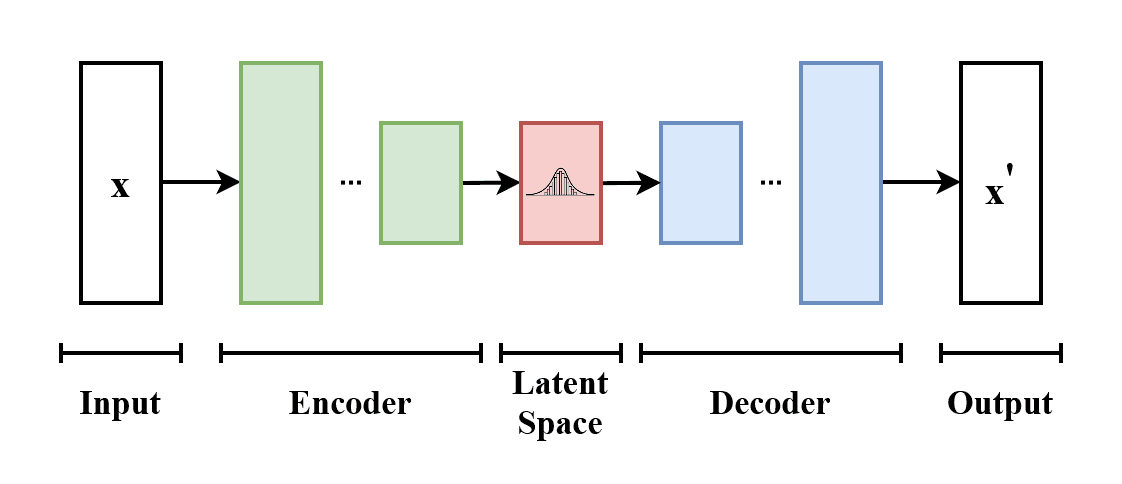
Variational Autoencoders: Learning to Generate Data
A VAE learns to create new data by compressing examples into a "latent space" of core features and then decoding from it. It's used for generative art and data augmentation, but its outputs can be blurrier than those from other models like GANs.
Latent Space: A Map Where Distance is Similarity
A latent space is a map of concepts where distance equals similarity. Similar items are clustered together, which powers image generation and recommendation engines. The footgun is that the map's dimensions are abstract, not human-interpretable features.

Data Bias: When AI Inherits Our Flaws
Generative AI learns patterns from its training data. Data bias occurs when this data contains skewed perspectives or stereotypes, which the model then reproduces and amplifies. This is why an image generator might default to stereotypes.

Text-to-Image Generation: From Words to Pixels
Text-to-image models act like a digital artist, translating language into visuals. They're used to create art, marketing materials, and prototype designs. The main footgun is prompt ambiguity, which can lead to bizarre or nonsensical images.
We are hiring for this. Every open role lists the topics its interview covers, so you can prepare for the real thing rather than guessing.
See open roles